FIND YOUR RACKET
 COMPARE MODELS
In the quest to play your best, it is important to have solid fundamentals. Those same fundamentals can save you in a match when nothing is going right or you are going through a rough patch. One of them is the forehand. A fairly easy, intuitive shot, it can be used in many ways to put your opponents under pressure. If your forehand is shaky, your opponents will notice and exploit it. That is why it is important to be solid on both sides. Here are some tips to make your forehand rock-solid!
The basics of the padel forehand
Hitting techniques
First, you need to choose your grip: how you hold the padel racket. To start with, aim for a flat shot with a continental grip or one that is slightly angled. Later, you can vary your grip to produce different spins and surprise your opponents. Your grip matters because it affects the direction the ball travels after your shot.
Beginners should use a continental grip and swing from low to high. At higher levels, many shots are played with a more open racket face to give the ball slice (backspin). This gives you more control and keeps the ball lower. However, slice is used more often on the backhand than the forehand and remains a defensive shot.
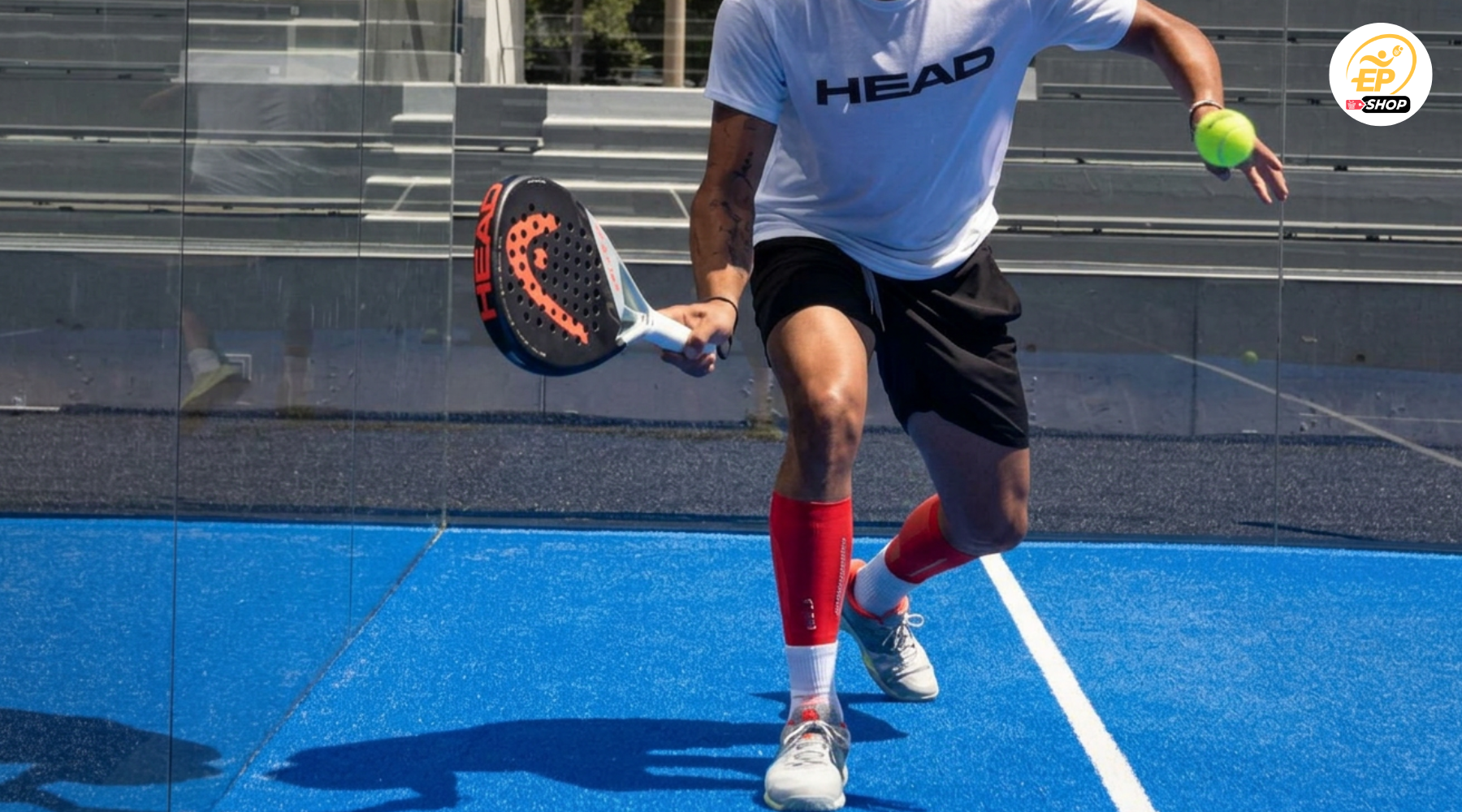
To give your ball more substance and send it in the direction you want, it is important to move forward with it and follow through. Whether or not the ball has come off the glass, ideally you should make contact while stationary and use the momentum of your shot to move forward with the ball, usually taking at least one step, or more if you want to follow your shot to play a volée. Think of your racket as a scarf that you bring across to your left shoulder if you are right-handed. This will help you follow through with your arm and move your right foot forward.
Reading your opponents’ game
Now that you know how to hit a forehand, it is time to decide where to send it. In padel, it is essential to know that power is not always your friend and that a powerful shot is sometimes not the answer. The aim is to build the point, which is most often won at the net. So you need to reach this attacking position. Lobs are your best ally for doing that, especially on the forehand, where they are much easier than on the backhand.
The safer option on the forehand is to play diagonally so that neither you nor your partner is as exposed to your opponents’ replies. However, when your opponents are at the net and the ball is there to be played, the best option is a fairly slow return towards the service line, between the two players. If they decide to play it as a volée, they will have to make contact below net height, which is never easy and may give you an attackable ball. If they let it pass, it should bounce a second time before hitting the glass, making it difficult to retrieve. All without using power.
How can you improve your padel forehand?
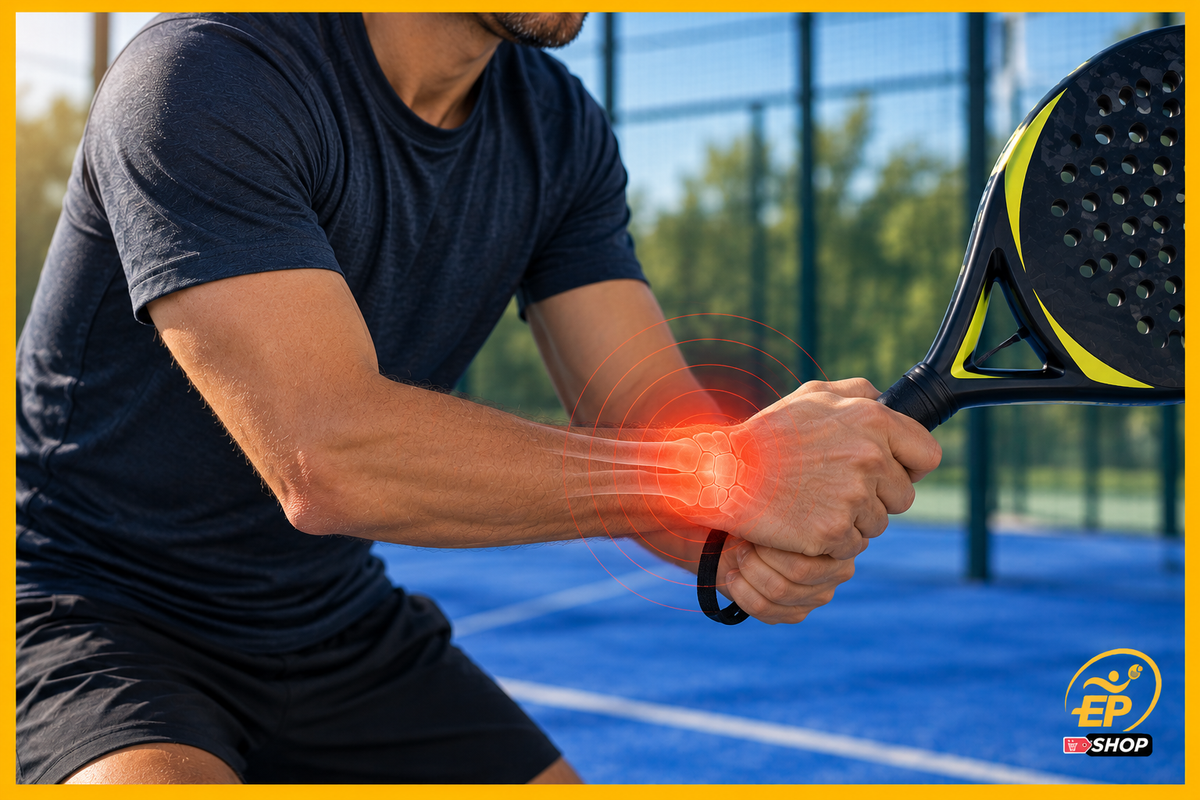
There are several things to consider, including, of course, your choice of padel racket. Despite all the technique and tactics you can learn, if the racket suits your level and playing style, learning will be much easier. There is no single best padel racket, only rackets suited to different padel players. If you are a beginner using a racket that is too demanding, your shots will be out of control and you will struggle to control the ball. You could also injure yourself because of the racket’s stiffness. The impact of racket weight is another injury risk: top-of-the-range rackets are often heavier.
Conversely, if you play at an advanced level with a softer, less explosive racket, your shots may not suit that type of racket and you could risk tendinitis or other injuries. Check our product pages and other articles to find out what type of racket you need to take your game to the next level!
Practical tips for perfecting your forehand
To improve at padel, you need the same thing as in any sport: repetition. As you repeat the movement, your forehand will become more and more reliable and solid. Playing padel matches, especially against different types of players, will help you develop your range of shots to suit your opponent’s game. Taking lessons with a coach at a padel club will also give you a fresh perspective on your game and specific drills to address weaknesses, such as improving your game at the net, for example.
Watching professional players can teach you a great deal about technique, but even more about tactics, particularly in the women’s game, where players rely less on power and more on touch. Look up the different Premier Padel broadcasters on YouTube or TV. If you spot a match between very good players at your club, take a moment to watch — you are sure to pick up a thing or two!
How can you make the most of your forehand?
When your opponent mishits a shot and sends back an easy ball, whether it is slow or straight, it is time for you to take action! You then need to choose an attacking strategy based on the situation: a lob if your opponents are far forward on the court, a topspin shot if they are at the back, or a smash if the ball’s trajectory allows it and you are well positioned. What matters is where you make contact with the ball: that will determine whether your attack succeeds.