FIND YOUR RACKET
 COMPARE MODELS
What are the different types of smashes in padel?
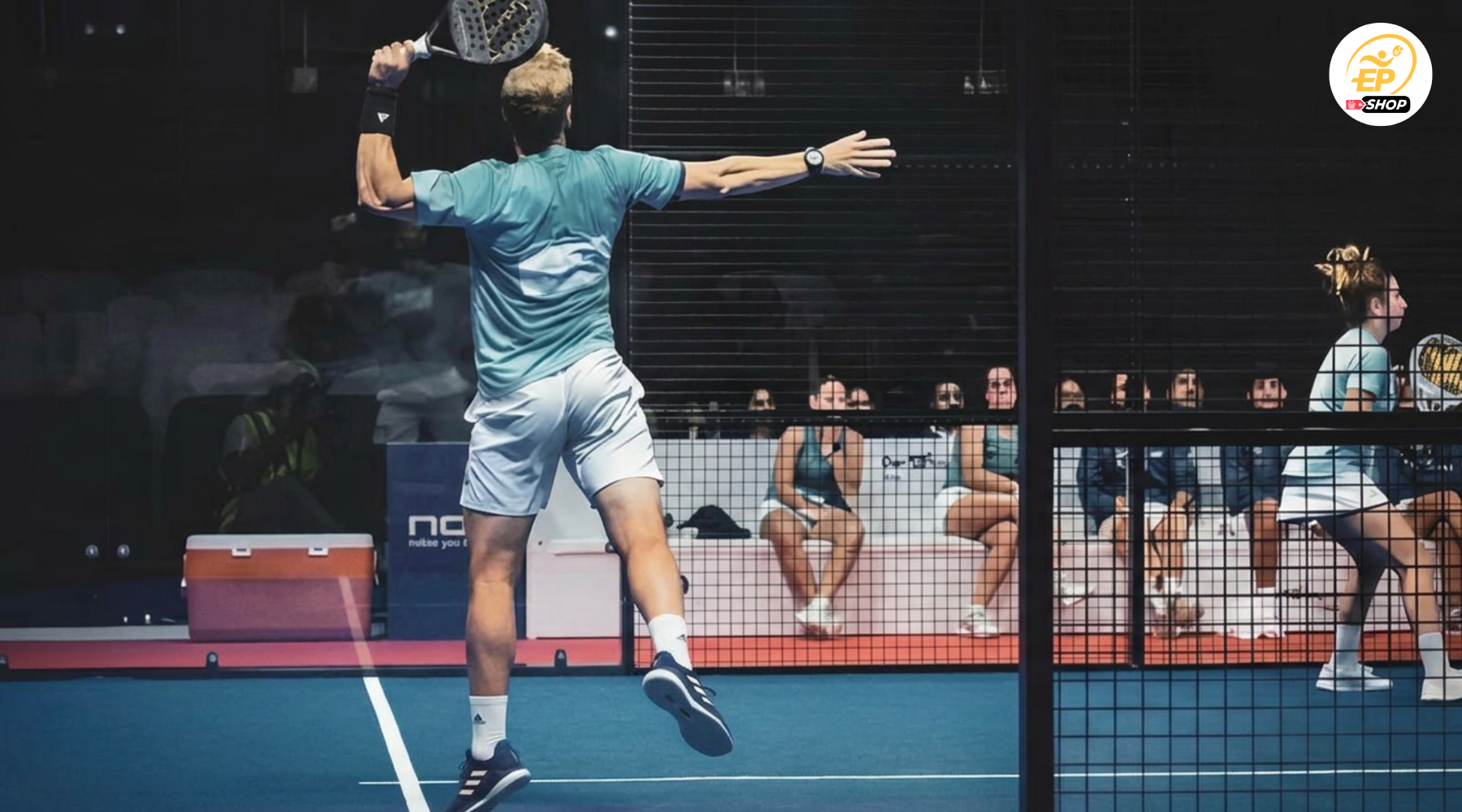
The powerful smash
The first instinct when a ball arrives high is to hit a hard smash to punish the opponent. And that is not necessarily a bad idea! When executed well, a powerful smash can be devastating if it comes back high enough on the right side of the court or if it goes out in "par 3" or "par 4". We will return to these shots later.
However, it is not the solution to use in every situation either for several reasons. First of all, the harder you hit, the more likely you are to miss your shot and therefore lose the point. Moreover, if you do not hit hard enough, your opponent will have a chance to return the ball and surprise you. That is why it is sometimes (often) useful not to hit with all your strength.
The placed smash
An alternative to the hit smash, it is often less risky. You need to use your head more than your arm, while trying to add spin. The idea is to place the ball where the opponent is not in order to win the point, or to create an even shorter ball that is even easier to attack. Spin can be added to create even more angle and put the opponent under even more pressure. Topspin is more suited to finishing smashes, whereas slice is very useful for placing your balls, so choose the shot best suited to the game situation (and your abilities).
Other overhead shots can also be useful in many situations, such as the bandeja and the vibora, but they are not considered smashes in their own right.
How can you get your smash out of the court? 4 tips for your "par 3".
The « par 3 » smash or the « x3 » smash is a smash that leaves the padel court. But not just any smash that leaves the court: it goes out through the side of the court. It is called « par 3 » because the ball exits through one of the two sides of the court, which measures 3 metres high.

The aim of this shot is to make the ball bounce off the back glass so that it exits through the side. This finishing smash should be distinguished from the Bandeja and the Vibora, which are two other shots to master on a padel court.
Seen this way, the par 3 smash seems quite simple to perform, but you will see that there is real technique behind this shot!
1. Use topspin to make the ball kick off the glass after it bounces
It is very important to use topspin, as it enables the ball to leave the court. For those who have played tennis, it is the « kick » serve motion that players use to make the ball bounce high enough on the opponent's backhand.
In padel, it is the same, and thanks to this spin, the ball will rise again after bouncing off the glass.
You can also practise this exercise, which will help you feel the movement you need to make in order to put spin on the ball.
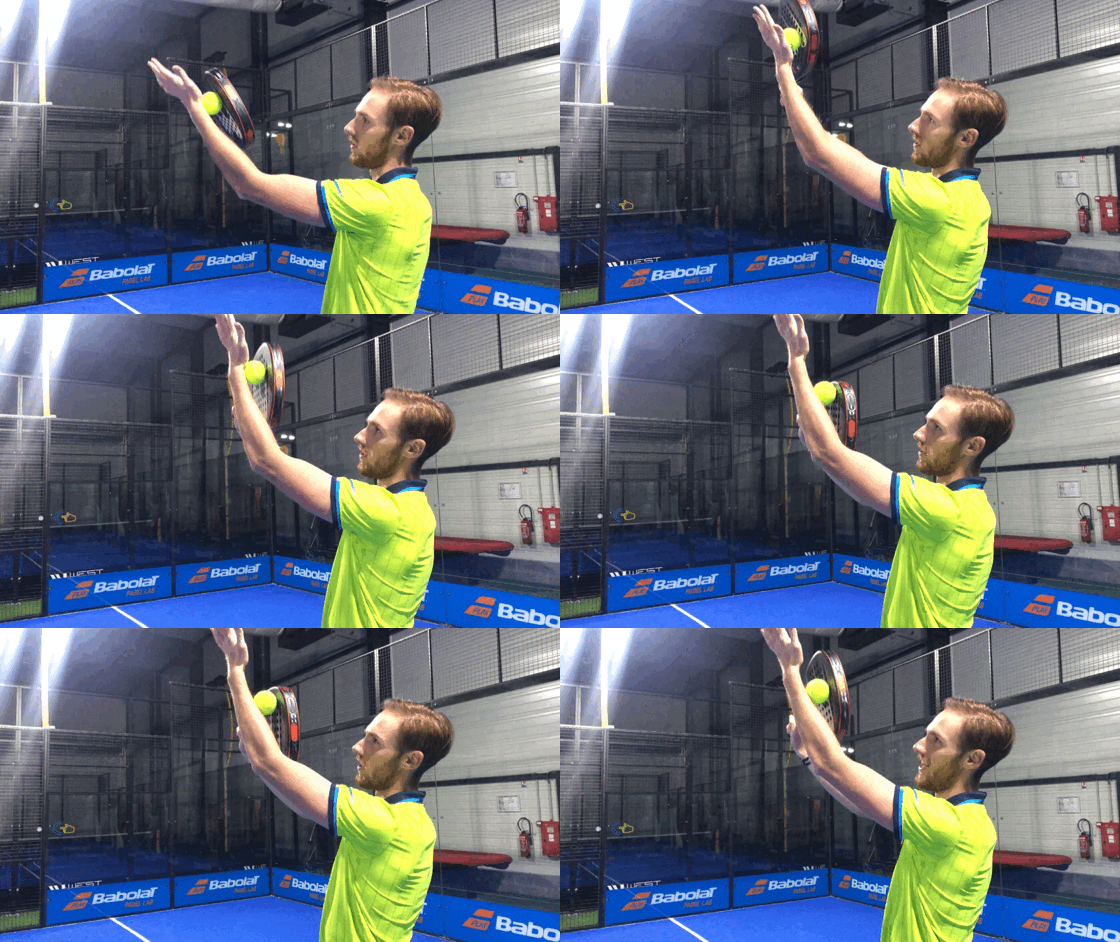
You can also use your wrist to brush up the ball as much as possible and increase its spin so that it can kick off the glass as much as possible.
2. Take the ball slightly behind you while moving forward
The par 3 is not a smash like the others. Indeed, for this special shot, you need to consider these 2 points:
- Position yourself in front of the ball to take it slightly behind you. This technique will allow you to increase the spin you give the ball
- Move forward into the court to put maximum power into the ball without forcing with your arm. Transferring body weight forwards is very important in padel, especially on a par 3 smash. It allows you to give the ball power and length that you will not have if you do not move forwards when playing your shot.
You will notice that the most difficult thing is to get a ball out of the court while executing the movement backwards. In this case, to maximise your chances of success, you will need to stop moving backwards in order to put as much commitment as possible into the ball at the moment of impact.
3. Have a head-heavy racket
Yes indeed! It may be a detail, but it will be easier to perform a par 3 smash with a diamond-shaped racket or a teardrop-shaped racket than with a round racket.
But let's be clear: if you cannot do it with a round racket, you will not be able to do it with a powerful padel racket either. Indeed, the type of racket used will not affect the player's technique in any way. If you do not have the right technique, we first advise you to correct this technical flaw through our advice or lessons with experts before considering changing your padel racket. Do not hesitate to get a padel licence to make the most of it.
If you already have the right technique, it is thanks to a powerful racket that you will be able to hit more padel balls out of the court. With this style of rackets, you will find it easier to get past the famous 3-metre mark with your smashes out of the court !
4. Do not be too greedy
Greed… It is one of the most common flaws on padel courts. We often think we are stronger than we really are, which leads us to hit too hard, play unnecessary drop shots, or aim for the fence too often: in short, being too greedy!
These poor shot choices often occur on the smash. Players tend to want to hit the ball too hard and from too far away on a smash. This most often results in an easy ball for the opponent to play, as it has not left the court.
That is why we advise you to attempt the par 3 only when you are 90% sure of getting the ball out of the court.
Mastering your smash: do not forget the equipment
As mentioned above, the racket does not make the player, and smash technique (par 3 or otherwise) cannot be improvised. However, certain products can help you perform in this area. First of all, racket shape. We have already mentioned it, but the weight of diamond-shaped rackets is balanced towards the top of the face, so overhead shots are more effective thanks to inertia.
Racket manufacturers have also looked into this question: what can be done to improve a racket's power and its effectiveness for smashes? At Bullpadel, weights have been developed that can be clipped onto different parts of the racket, such as the handle but especially the racket head. You can therefore keep your favourite racket while adding explosiveness. Be careful though: this technology is only compatible with Bullpadel.