FIND YOUR RACKET
 COMPARE MODELS
Key takeaways
-
The cost of constructing a padel court varies considerably, from an entry-level price for a kit to a substantial investment for a professional turnkey installation. Prices can range from 10,000 euros to over 250,000 euros depending on the options and finishes selected.
-
The initial investment is not limited to the court structure. Hidden costs, such as ground preparation, pouring the concrete slab, and lighting, represent major expenditure items that can double the budget of a basic project.
-
The profitability of a padel club is directly linked to economies of scale and diversifying revenue streams. Clubs with 3 to 7 courts offer the best balance between initial investment and an optimised financial return by pooling fixed costs.
-
The initial capital payback usually takes 2 to 5 years, or even 1.7 years in the most favourable scenarios. For a 10-year projection, it is crucial to factor in a recurring budget for annual maintenance and refurbishing major components like the synthetic turf.
The cost of building a padel court: a modular pricing structure
The cost of constructing a padel court is not a single figure, but a broad range that depends mainly on its location, design, and the quality of the chosen materials. A detailed analysis reveals a modular pricing structure, ranging from the most basic kit to the most sophisticated installations.
Outdoor court
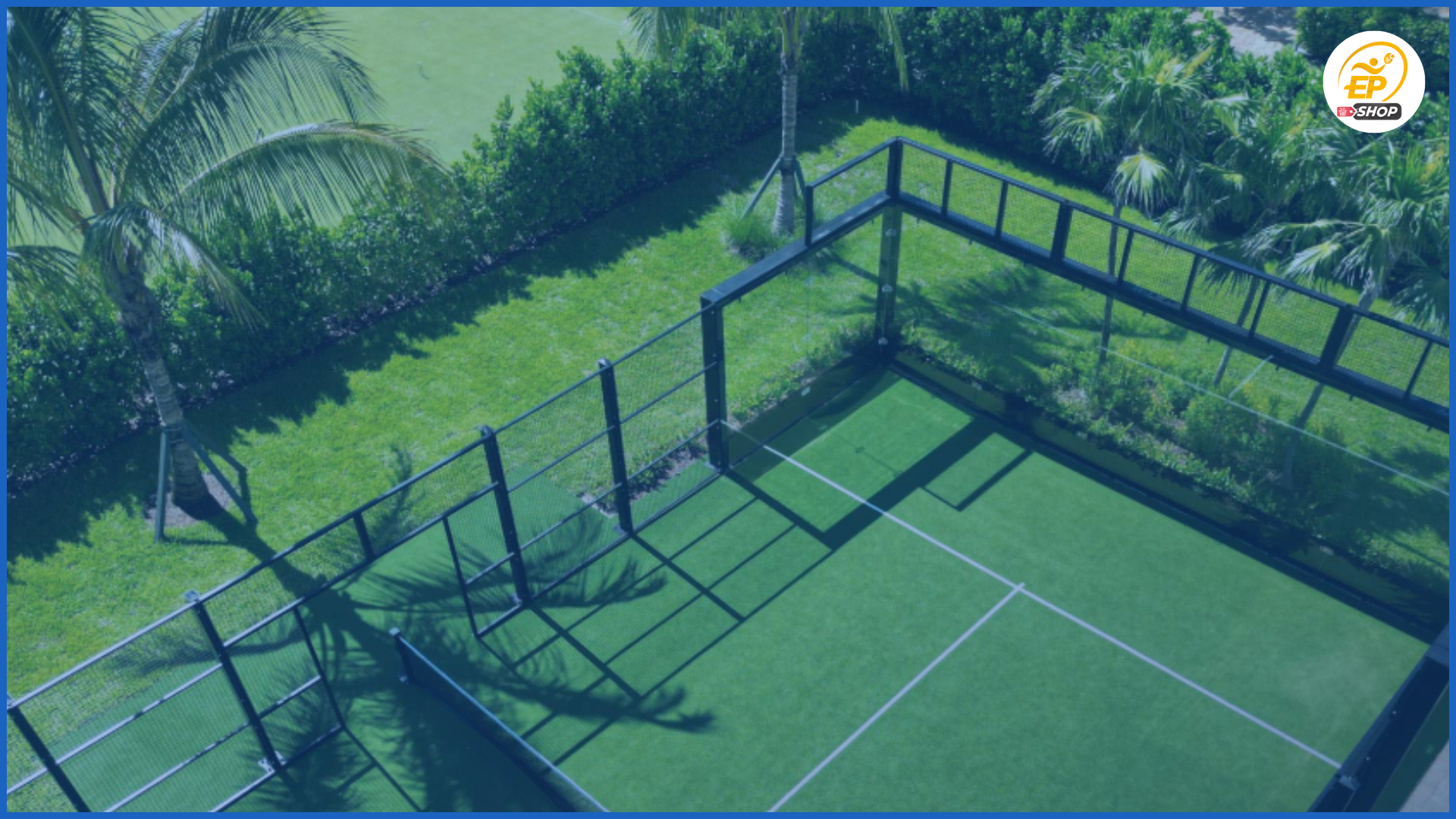
An outdoor court represents the most common and accessible option. The observed prices for such an installation generally range from 25,000 euros to 70,000 euros. This wide price range is explained by the nature of the project: is it a simple structure kit or a "turnkey" solution?
Padel court kits are often offered at very attractive prices, starting between 10,000 and 20,000 euros. However, this price only covers the court structure components. A typical quote for a 23,000 euro excl. VAT kit does not include essential expenses, such as materials delivery, installation crew accommodation, or plant hire required for installation. While budget-friendly, these packages require the buyer to cover significant cost items.
Conversely, "turnkey" projects offer a complete solution. The price then includes all works, from earthworks through to laying the slab and the court itself. Specialist companies and the French Tennis Federation (FFT) estimate a realistic price for a complete outdoor court between 60,000 and 65,000 euros excl. VAT. This rate gives a more accurate view of the total investment for a regulation-compliant project.
A premium variant of the outdoor court is the panoramic court. Preferred in tournament venues for its visibility, this type of court features glass walls without corner posts, offering an unobstructed view for spectators and broadcasts. Its cost ranges between 35,000 and 90,000 euros.
Canopied or indoor court: which one to choose?
Installing canopy structures radically changes the financial picture, turning the court into an infrastructure that can be used all year round, whatever the weather. The canopied court, an intelligent compromise, is sheltered by a metal canopy or a timber/steel structure.
Its price ranges from 50,000 to 120,000 euros. It offers the benefits of all-weather play without the massive costs associated with constructing a complete building. The largest investment involves creating an indoor padel court. The cost of this type of project ranges from 100,000 to 250,000 euros.
The majority of this budget is allocated to the construction or fitting out of the building itself. The metal canopy alone can cost from 60,000 to 150,000 euros , making the building's structure the main expense, far exceeding the padel court itself.
| Padel court type | Price range (structure only or kit) | Price range (turnkey) | Key features | Advantages |
| Outdoor | 10 000 € - 35 000 € | 25 000 € - 70 000 € | Steel structure, tempered glass, synthetic turf | Lowest initial cost, installation flexibility |
| Panoramic | Not applicable | 35 000 € - 90 000 € | Glass walls without corner posts | Aesthetics, maximum visibility for spectators |
| Canopied | Not applicable | 50 000 € - 120 000 € | Outdoor structure with roof (canopy) | All-weather use, sun protection |
| Indoor | Not applicable | 100 000 € - 250 000 € | Installation in an enclosed building | Optimal year-round use, weather-independent |
The critical factors that truly drive the final price
Beyond generic price ranges, the final total cost of a padel court is determined by technical factors and quality choices that are not always evident in standard quotes. Understanding these expenditure items is crucial to forecasting the total investment.
Ground preparation, the foundations of the project
The most significant and most frequently underestimated cost is ground preparation. The construction of a padel court, whether outdoor or indoor, requires a stable and perfectly flat foundation, generally a concrete slab around 10 cm thick. The cost of this 220-square-metre slab can amount to 12,000 euros excl. VAT, or between 10,000 and 15,000 euros.
Data analysis reveals that the price difference between a court kit and a "turnkey" solution is not simply a difference in margin, but the inclusion of these civil engineering works. An entry-level price of 20,000 euros for a kit can turn into a 35,000 euro project once the concrete slab is added and transport and labour costs are included. The investor must therefore consider the overall project, and not just the price of the structure, to avoid unpleasant financial surprises.
Structure and materials
Materials are at the core of the court's quality and durability. Choosing high-quality components increases the initial investment but lowers long-term maintenance costs.
-
Tempered glass: 10 mm tempered glass is generally sufficient for indoor use, but thicker 12 mm glass is recommended for outdoor courts to better withstand weather stresses. Each glass panel can weigh up to 180 kg, which directly impacts transport and installation costs.
-
Steel: The thickness of the steel and its treatment (galvanisation and epoxy paint) are indicators of the structure's robustness. A stronger structure with 2.5 mm posts and 5 mm mesh will be more expensive, but will provide better stability and greater safety for players.
-
Synthetic turf: Synthetic turf is the most common playing surface. Its quality directly influences the playing experience. Choosing a professional turf, such as the Mondo Supercourt used on the World Padel Tour, involves a higher initial cost but ensures better performance and a longer lifespan. It also requires the addition of 8 to 12 kg of silica sand per square metre to maintain its properties.
LED lighting: necessity and long-term profitability
Lighting is a crucial expense to enable evening court usage. The cost of an LED lighting installation can vary significantly, with unit prices for floodlights ranging from 113 to 899 euros. Lighting requirements depend on the intended use of the court.
A court intended for recreational use only requires an illumination level of 200 lux, whereas a professional competition court, compliant with FIP standards, requires 1,000 lux lighting. This difference translates into using more powerful light fittings and in greater numbers.
Although the initial investment in an LED system is higher, this technology offers substantial long-term financial benefits. LED fixtures consume up to 75% less energy than traditional systems and have a much longer lifespan. An investor who chooses to invest more in quality lighting from the outset makes a strategic decision that will result in a significant reduction in operating costs and increased profitability over time.
Profitability and 10-year outlook
Assessing the profitability of a padel court requires a financial forecast that goes beyond the initial investment to account for operating costs and revenue generation over a decade.
Annual operating and maintenance costs
Court maintenance is a recurring yet predictable expense. An annual budget of 2,000 to 5,000 euros is recommended to keep the court in top condition. This amount covers routine operations such as cleaning the glass walls, weekly brushing of the synthetic turf, and redistributing the silica sand.
An analysis of component lifespan reveals a cycle of major expenses that an investor must anticipate. While the metal structure and the glass can last over 20 years, synthetic turf has an average lifespan of 6 to 8 years and must be replaced. Similarly, LED lighting, although durable, has a life cycle of around 10 to 12 years. These major replacement costs must be factored into a 10-year financial projection.
The business model: maximising turnover
The turnover of a padel club relies on two pillars: court rental and ancillary revenue. The average hire price of a court in France is 32 euros per hour. For a well-managed club, annual revenue per court can reach between 40,000 and 70,000 euros.
However, ancillary revenue streams are crucial for optimal profitability. They can account for 20% to 40% of total turnover and include:
-
The sale of gear (pro shop) and equipment, estimated between 10,000 and 20,000 euros per year.
-
Group lessons and coaching clinics, which can bring in between 20,000 and 40,000 euros per year.
-
Revenue from a bar or snack service, which can generate between 15,000 and 30,000 euros per year.
-
Organising tournaments and corporate events, which can add between 5,000 and 25,000 euros per year.
Adopting commercial strategies, such as subscriptions or passes, is essential to build customer loyalty and secure recurring revenue, which is the key to financial stability.
10-year return on investment
The return on investment (ROI) of a padel club is often considered fast, and can be achieved in 2 to 5 years, or even 1.7 years in a very optimistic scenario. Although accurate, this assessment does not take into account the entirety of the infrastructure's life cycle.
A savvy investor does not merely focus on the initial payback, but on the net cash flow over a full decade. This model involves an initial amortisation phase, a capital expenditure phase for major refurbishments (around year 6 for the turf), and then a new phase of stable profitability.
Studying different club models clearly shows that profitability is a function of scale. Clubs with 3 to 5 courts offer the best trade-off between initial investment and profitability. Economies of scale on fixed costs (reception, changing rooms) and revenue diversification are maximised in this setup, resulting in a better return on investment.
| Configuration | Average initial investment | Annual turnover per court | Payback period | Potential net margin |
| 1 court | 80 000 € - 150 000 € | 40 000 € - 50 000 € | 4–5 years | 10 % - 15 % |
| 3 courts | 180 000 € - 450 000 € | 50 000 € - 60 000 € | 2–3 years | 17 % - 27 % |
| 5 courts | 300 000 € - 750 000 € | 45 000 € - 55 000 € | 2–3 years | 15 % - 25 % |
| 10 courts | 600 000 € - 1 500 000 € | 50 000 € - 70 000 € | 2 years | 15 % - 35 % |
Figures are estimates and may vary depending on location and ancillary revenue.