FIND YOUR RACKET
 COMPARE MODELS

Two-player padel, also called singles padel or 1-on-1 padel, is played on a reduced court 6 metres wide and 20 metres long, with the same rules as standard padel, except that no partner is needed. It is the ideal solution when only two of you want to play, or to strengthen your solo game: more intense cardio, greater precision and fewer organisational constraints. This format is attracting more and more padel players who want to improve quickly.
Key takeaways
-
Two-player padel is played on a court 6 m wide, compared with 10 m for standard doubles.
-
The rules remain identical to doubles padel: underhand serve, only one bounce on the ground, tennis-style scoring.
-
Without a singles-standard court, the alternative of playing diagonally on a standard court works just as well.
-
This format is not approved for official competition: it is a recreational and training practice.
-
By increasing the number of balls played per player, two-player padel particularly strengthens footwork and shot precision.
Contents
-
Where does padel come from?
-
The specifics of 1-on-1 padel
-
1-on-1 Padel VS standard Padel
-
The advantages of solo padel
-
Limitations to consider
-
Frequently asked questions
-
Conclusion
If you are a regular player, you have surely experienced this frustration before: desperately looking for a fourth player to complete a match. Faced with this organisational headache, more and more enthusiasts are turning to two-player padel, also known as singles padel or 1-on-1 padel.
Discover this variation, which not only solves your scheduling problems but also proves to be a formidable tool for boosting your physical intensity and precision on court!
Where does padel come from?
Before discussing the singles variation, let us remember that the history of padel dates back to the 1960s. Enrique Corcuera, a Mexican businessman, wanted to create a racket game suited to his garden, playable on a smaller court and accessible to his family.
He had the innovative idea of combining tennis and squash, building a court surrounded by walls and opting for solid and perforated rackets. By using slower balls than in tennis, he made the game easier to master. This is how a sport now popular worldwide was born!
The specifics of 1-on-1 padel
Playing padel solo (without a partner) considerably changes the approach to the game, both in terms of space and the rules applied.
1. The singles padel court: reduced dimensions
The singles padel court retains most of the features of a standard court (synthetic turf, 3-metre glass walls, fencing). However, the dimensions change to accommodate only two players:
-
Width: 6 metres (compared with 10 metres for a doubles court).
-
Length: 20 metres (sometimes 18 metres depending on the facilities).
2. The rules of the game: what changes?
Although singles padel is not officially governed by international competitions, players apply the same rules as standard padel:
-
The serve is performed underhand, after a bounce, diagonally.
-
Walls are an integral part of the game.
-
The ball is only allowed one bounce on the ground.
-
Points are scored in the same way as in tennis (15, 30, 40, Game, Set to 6 games, Tie-break).
3. The alternative on a standard court: diagonal play
Finding a court 6 metres wide in France can still prove difficult. The perfect alternative? Cross-court padel (or diagonal play) on a standard court measuring 20x10m. In this format, whether a ball is valid depends on where it lands: you only play in the opposite half to yours (diagonally). It is an excellent exercise for practising pinning down your opponent and perfecting your returns.
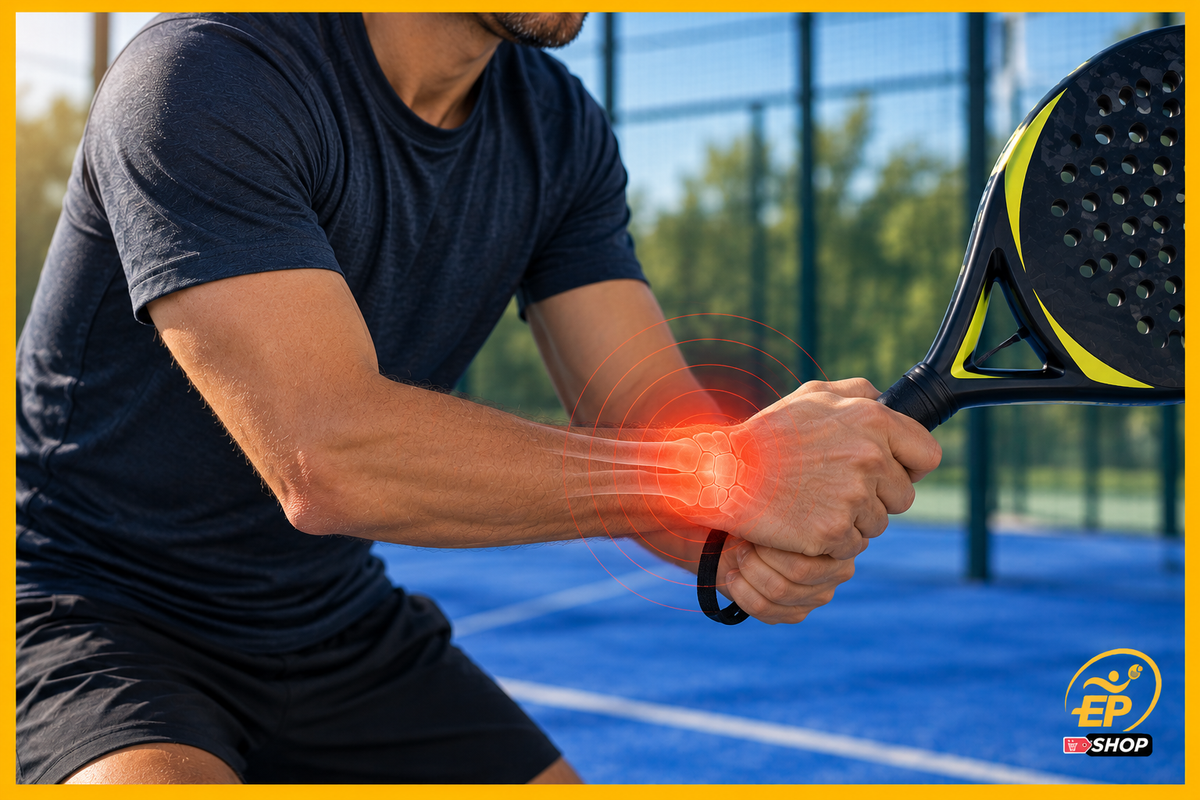
As you play twice as many balls as in doubles, choosing your padel racket becomes even more important: a more manoeuvrable pala with a balanced face helps you sustain rallies without tiring your wrist.
1-on-1 Padel VS standard Padel: The match
Padel without a partner offers a very different experience from doubles. Here is a clear comparison to find out whether this format is right for you.
The advantages of solo padel
-
Simplified organisation: Finding just one opponent is much quicker than organising a game with four players.
-
Maximum playing volume: Without a partner, your opponent cannot "freeze you out". You play every ball, making the session much more cardio-intensive and dynamic.
-
Focus on technique: The need to aim for smaller areas forces you to master the direction of your shots.
-
Physical development: Covering the court alone requires greater mobility, agility and responsiveness.
-
Ideal transition for tennis players: Tennis or squash players find familiar reference points (1v1) while getting used to playing with glass walls.
Limitations to consider
-
Rental cost: Renting a court (even one specifically for singles) is often more expensive per person, since the price is divided by two rather than four.
-
No competition: Singles padel remains a recreational or training practice; there are no official tournaments.
-
A different dynamic: Tactics learned in 1v1 are not always transferable to doubles. Solo play encourages targeted attacks and patience, whereas doubles require perfect synchronisation with your partner.
-
Less sociability: padel is renowned for its team spirit and highly social aspect. Playing alone deprives you of your teammate's moral support in crucial moments!
Two-player padel is also an excellent test of your level: if you want to know where you stand before returning to the standard format, take a look at our article on padel levels to compare your progress with that of other players.
Frequently asked questions
Can you play two-player padel on any court?
Yes, provided the game is adapted: on a standard 20x10m court, you play diagonally (cross-court padel), limiting valid balls to the opposite half of the court. A court with singles dimensions (6x20m) remains the option that most faithfully recreates the feel of 1-on-1 padel, but it is still rare in France.
What are the specific rules of 1-on-1 padel?
The rules are broadly identical to standard padel: underhand diagonal serve, only one bounce allowed, walls in play, tennis-style scoring. Only the width of the court changes, reducing the available angles and tightening the game.
Is two-player padel more tiring than standard padel?
Yes, significantly. Without a partner to cover part of the court, each player hits twice as many balls and covers more distance. It is an excellent physical complement, provided you adapt your warm-up accordingly.
Are there singles padel tournaments?
No, singles padel is not approved by the official padel governing bodies, as padel is by definition a doubles sport. Two-player padel is therefore played recreationally, in training or among friends, without rankings or dedicated competition.
Conclusion: Which skills will you improve?
1-on-1 padel is an exceptional training laboratory. By hitting twice as many balls as usual, you will significantly expand your technical repertoire.
Mastery of shots, reflexes at the net, surgical precision, variety of spin and reading trajectories... All the fundamental aspects are heavily worked. While this variation will never replace the tactical and social appeal of a real doubles match, it will undoubtedly make you a much stronger and more formidable teammate in your next four-player matches!
Fancy giving it a go? Head to our selection of men's and women's padel rackets to find the pala suited to your 1-on-1 playing style.