FIND YOUR RACKET
 COMPARE MODELS
You know padel, but where does this sport, seemingly inherited from both tennis and squash, come from? Discover its full history and the evolution of this sport in the following lines.
If you’re still wondering what this sport is all about, take a look at this article for an explanation: what is padel?
The origins of padel
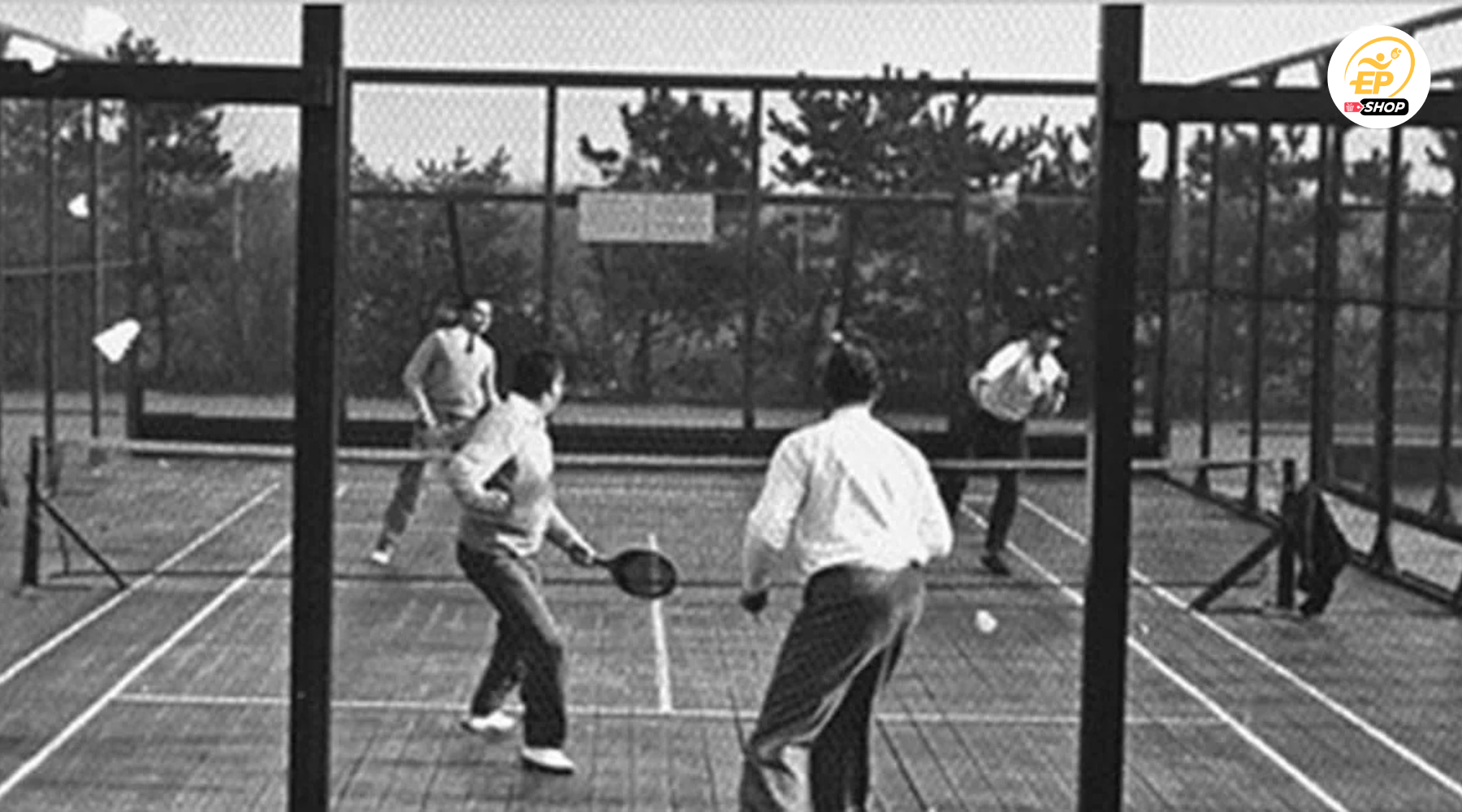
Padel is a racket sport that originated in the 1960s in Mexico. It was invented by Enrique Corcuera, a Mexican businessman who sought to adapt tennis to a more limited space. To do so, he marked out a court with walls and a net, giving birth to a new sport.
This unique concept quickly crossed the Atlantic to be adopted in Spain, where it experienced rapid growth. The first padel tournaments began to emerge, thanks to the growing number of enthusiasts.
The expansion of padel in Spain and around the world
Spain is ultimately considered the modern birthplace of padel. In the 1980s and 1990s, the sport benefited from institutional support and the construction of numerous padel courts throughout the country. Iconic Spanish players began to popularise padel, attracting more and more enthusiasts.
In Latin America, particularly in Argentina, padel quickly became a national sport. Argentina is now one of the most dominant countries on the international professional padel scene.
Since the 2000s, padel has gained ground in other regions of the world, particularly in France, Italy, Sweden and Portugal.
A look at the history of padel tournaments
The rise of padel led to the creation of major professional circuits, the most iconic of which was long the World Padel Tour (WPT). Launched in 2013, the WPT brought together the best players and organised prestigious tournaments around the world every year, contributing significantly to the sport's popularity. The players' WPT ranking was long a benchmark in the world of padel.
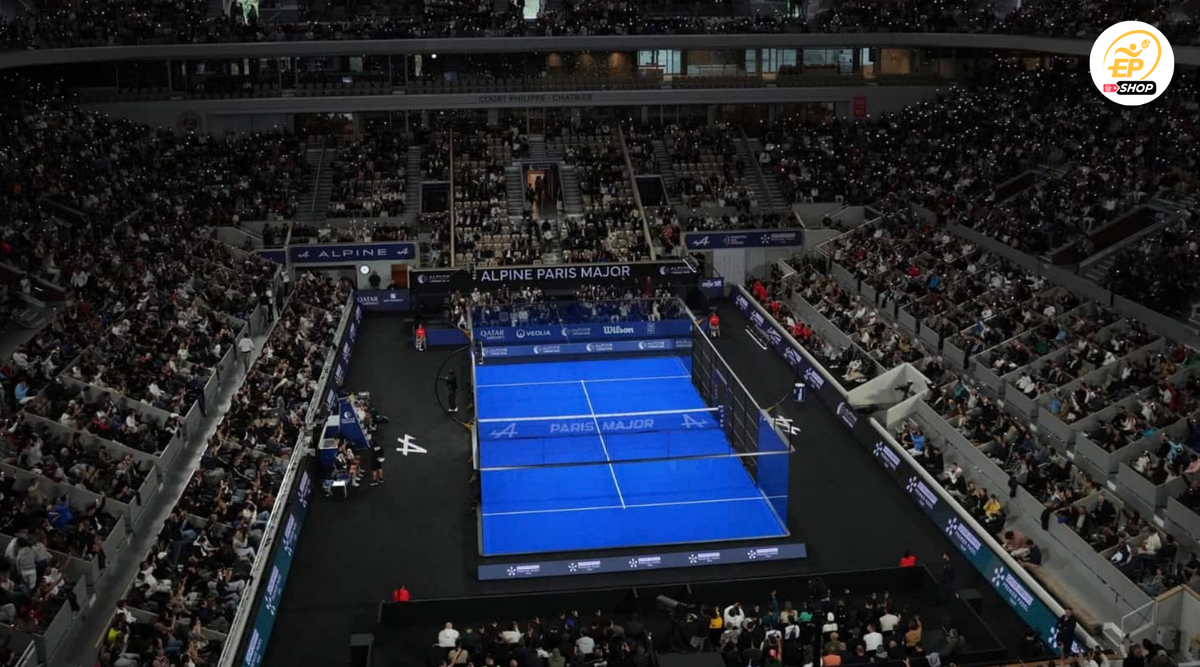
At the same time, the International Padel Federation (FIP) played a key role in the development and regulation of padel worldwide. In 2022, with the support of Qatar Sports Investments (QSI), the FIP launched a new professional circuit called Premier Padel. This circuit, benefiting from solid funding and a global vision, quickly gained recognition and offers an innovative competition format that attracts many top-level players.
In 2023, a historic milestone was reached with the acquisition of the World Padel Tour by Qatar Sports Investments. This merger made it possible to unify the two circuits under the banner of Premier Padel, now recognised as the sole global professional circuit, regulated by the FIP. This unification aims to provide a coherent structure and strengthen the growth of padel internationally.
Padel in France and the rest of Europe
In France, padel is booming thanks to the involvement of the French Tennis Federation (FFT), which oversees its development. The number of padel courts has soared in recent years, rising from just a few dozen in the 2010s to more than a thousand today.
One of the first people to popularise padel in France was Laura Clergue, a former professional player who is now a TV pundit. Meanwhile, national tournaments such as the French Padel Championships are gaining prestige and attracting more and more amateur and professional players.
In Europe, Italy is another country that has experienced very rapid growth in padel. Supported by the Italian Tennis Federation, this sport is now as popular as tennis among amateurs. Sweden, thanks to massive investments by personalities such as Zlatan Ibrahimović, has seen the creation of hundreds of new courts. Other countries such as Germany, the United Kingdom and Belgium are also following this trend.
The evolution of equipment and the rules of the game
The rules of padel, inspired by tennis, have been standardised to encourage fast-paced play that is accessible to all players. In its early days, padel had local variations, particularly in Argentina and Spain, where court dimensions and some rules differed slightly.
The International Padel Federation (FIP), founded in 1991, gradually harmonised these rules, setting, for example, the net height (0.88 m at the centre), the court dimensions (10x20 m), and the specific conditions for using the walls. In addition, adjustments have been made over the years to improve the flow of play, such as the introduction of the let rule on serve in 2020 on certain professional circuits.
With the growing popularity of the sport, equipment has also evolved to become increasingly sophisticated:
- Padel rackets are now made with advanced materials and are becoming ever more sophisticated to optimise playing performance.
- While players used to wear tennis shoes, padel shoes are now specially designed to provide better grip on padel courts.
- A whole range of equipment has been developed by brands, from major sports manufacturers to dedicated padel brands. For example, players use specially designed padel bags to carry their equipment.
A few anecdotes to remember to shine off the court
The first padel court in Spain
In 1974, Prince Alfonso de Hohenlohe, a close friend of Enrique Corcuera, discovered this sport during a trip to Mexico. Convinced of the potential of padel, he built the first courts in Spain, at the famous Marbella Club. This is where it all began for Europe.
The explosion of padel in Argentina
In the 1980s, Argentina had more than 10,000 padel courts and more than 2 million regular players, an impressive figure for a still young sport.
A sport that attracts stars: many football personalities, such as Lionel Messi and Neymar, are great padel enthusiasts and own their own private courts.