FIND YOUR RACKET
 COMPARE MODELS
What is the volée in padel?
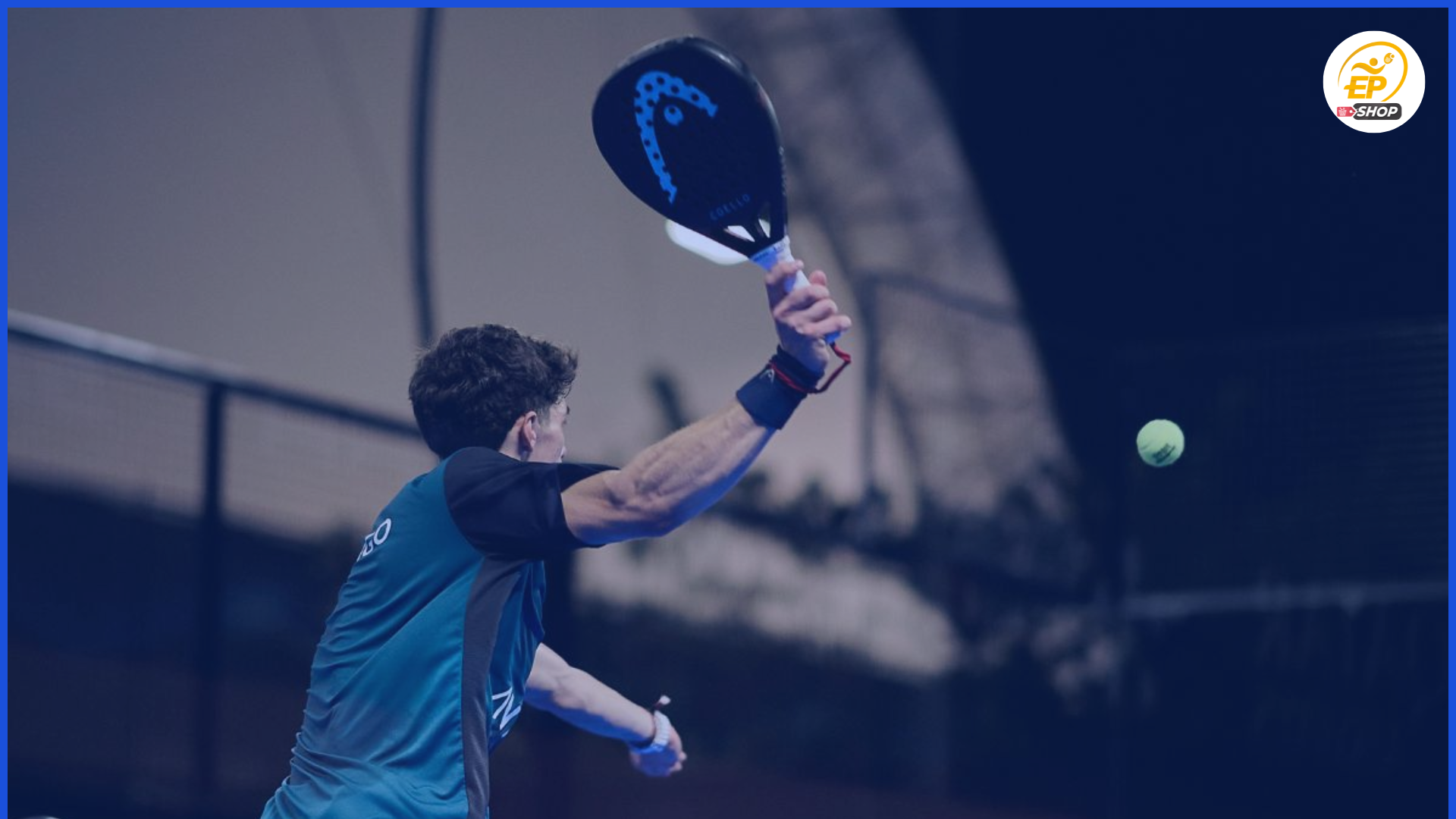
The volée in padel is a particular shot: it involves hitting the ball before it touches the ground. The player generally positions themselves near the net to cut off the rally and apply pressure.
In tennis, the volée is a quick movement, sometimes instinctive. In padel, it has an even more strategic dimension: it allows you to take control of the court and dictate the pace of the point. It is found in every match, from games between friends to professional tournaments.
It quickly becomes clear that those who master the net often have the advantage. The volée is therefore a fundamental of modern padel, just like the lob or the smash.
To better understand the frame in which this shot is played, take a look at our article on the rules of padel, which explains in detail how the game works.
Technical basics: posture, grip and impact
Body and foot position
It all starts with your stance. The best players are constantly moving but always balanced.
-
Feet apart and knees bent: this allows you to react quickly
-
Body weight forward: you attack the ball instead of absorbing it
-
Dynamic ready position: hold the racket in front of you, slightly above waist height
-
Short, quick movements: small lateral steps to cover the net area without losing balance
A good padel shoe makes all the difference here: grip, stability and comfort help you move smoothly.
The racket grip
The continental grip is the reference. It allows you to switch seamlessly from forehand to backhand. Keep the wrist firm, and guide the ball slightly with the arm without overdoing it.
A manoeuvrable padel racket with a good balance of control and precision makes playing a volée much easier.
Impact with the ball
- The golden rule: hit in front of yourself
-
Too late : the ball flies past you
-
Too early: the shot lacks precision
The ideal contact point is slightly above the net. Keep your movements short and controlled: a volée is not about power but about tactical adjustment.
The two types of volées: blocking and attacking
The blocking volée
It is the most defensive. It is used against a fast ball, hit hard by the opponent.
-
A very short swing, almost a “wall”
-
Simply return the ball, using its speed
-
Objective: neutralise the opponent’s attack and regain control of the point
The attacking volée
It comes into play when the ball arrives slower or poorly placed.
-
A slightly broader swing, firm wrist.
-
You guide the ball slightly to give it direction and speed.
-
You can target the court corners, or directly the opponents’ feet to put them under pressure.
A good padel player can switch between these two versions depending on the situation, much like a musician alternates between a gentle rhythm and acceleration.
Types of volées by height
-
Volée high: at head height or above, it often sets up a smash in padel
-
Volée intermediate: the most common, requiring control and consistency
-
Volée low: the most delicate, it requires you to get down quickly and play more defensively
Common mistakes to avoid when playing a volée
-
Seek power: the harder you hit, the less control you have
-
Moving back instead of forward: the net is dominated by moving forward, not by being passive
-
Poor timing: waiting for the ball too late, or taking it too early
-
Racket too low in the ready position: you lose time
-
Insufficient anticipation: failing to read the opponent’s movement
Every mistake has its correction. For example, to avoid hitting too hard, focus on the target to reach rather than the speed of the ball
Tips for improving your volée in padel: drills and strategy
Practical drills
-
Series of volées at the net: your partner sends regular balls to work on repetition
-
Footwork drills: quick movement exercises with cones or resistance bands
-
Reflex drills: surprise balls or balls at an accelerated pace
-
Match situations: play points with the obligation to finish at the net
Vision and anticipation
The volée is not just a technical shot; it is also a matter of reading the game.
-
Read the trajectory from the opponent’s strike.
-
Target weak areas: opponents’ feet, court corners, side walls.
-
Communicate with your partner to close the gaps.
And the other transition shots: chiquita and bajada
If the volée remains the main weapon for dominating the net, other transition shots also allow you to regain the initiative.
The chiquita is played from the back of the court: a slow, precise ball at the opponents’ feet to force them to lift the ball.
The bajada, meanwhile, is played after the bounce off the back wall and turns a lob into a powerful attacking shot.
These two techniques, complementary to the volée, enrich your tactical arsenal and also deserve to be mastered.
Progression by level to master the volée
Beginners
-
Focus on posture: feet, knees, body weight
-
Favour the blocking volée: a simple, compact swing
-
Objective: do not try to win the point, but to stay in the rally
Intermediate players
-
Introduce the attacking volée
-
Work on ball placement: aim wide, look for the corners
-
Vary the height of volées to develop adaptability
Advanced
-
Combine a volée with a padel smash, or a volée with a drop shot
-
Use the volée to build a tactical sequence: push your opponent back, move them around, wear them down
-
Work on complementarity with your partner to lock down the net
The volée in a match
In a match, the volée is everywhere.
-
On the padel serve : the server moves forward and looks to finish the point at the net.
-
On the return: a quick volée can surprise your opponent and change the dynamics of the point.
-
In defence: the blocking volée is often the best solution to stay alive in the rally.
-
In decisive moments: a well-placed volée is worth more than a brutal hit.