FIND YOUR RACKET
 COMPARE MODELS
Padel: how to serve well?
In padel, the serve is played underhand, diagonally, after letting the ball bounce once and hitting it below waist height. It is the only shot where you are fully in control of your movement, without pressure from your opponent: make the most of it by varying direction, spin and power, and take the upper hand from the start of the point. A good serve also prepares your move up to the net, a key attacking position in padel.
Key takeaways
-
The serve is hit below the waist, diagonally, after a mandatory bounce on the ground.
-
Varying the direction (central T, side glass, receiver's body) unsettles the opponent far more than power alone.
-
Unlike tennis, the point is rarely won directly from the serve: precision prime over brute force.
-
After serving, moving up to the net is systematic in order to take an attacking position.
-
Two consecutive service faults (two missed serves) give the point to the opponent.
Contents
-
Padel serve: the basic rules
-
Our tips for serving well in padel
-
FAQ
The serve, this crucial shot that starts play in padel, may seem simple and less technical than in tennis. However, do not be fooled: as soon as a padel player improves their level and masters the fundamentals of a good serve, they can quickly gain a considerable advantage in the match.
In this article, we will reveal the secrets of an effective padel serve. From court positioning to hitting technique and subtle strategies, we will guide you step by step to help you develop a formidable serve.
Padel serve: the basic rules
Before exploring our tips for improving your serve, you should first make sure you know the basic rules of padel:
- The serve must be played diagonally, from the right side to the left or from the left side to the right.
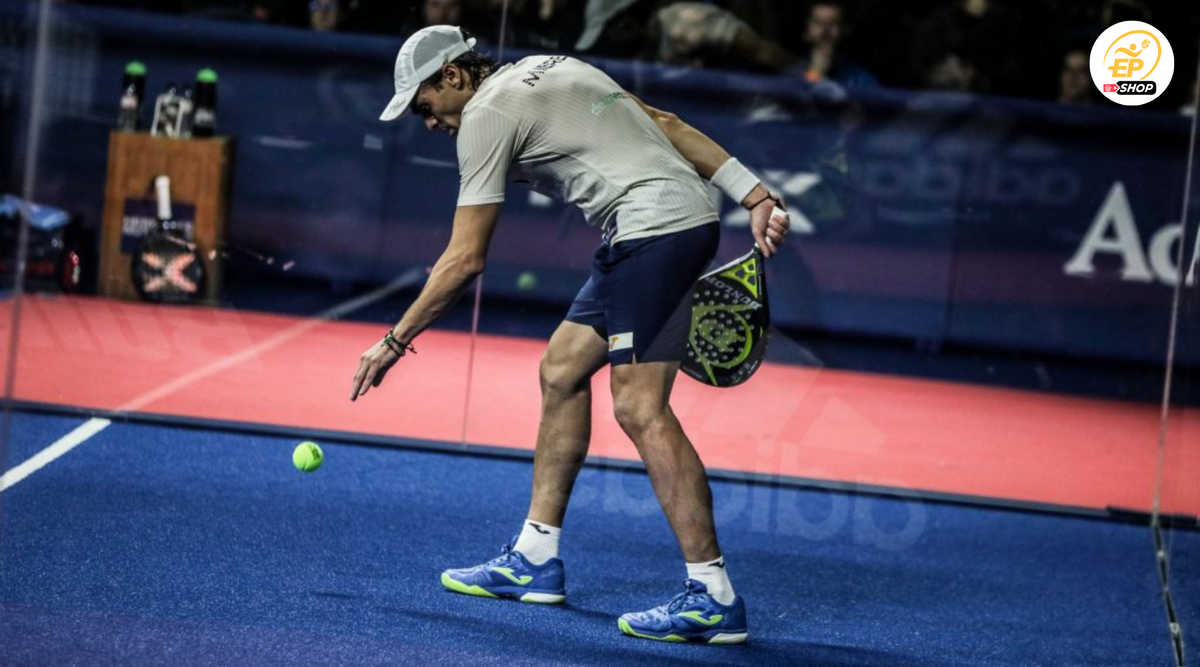
- The server must hit the ball below waist height and let it bounce once before striking it.
- The server must stand behind the service line and cannot cross it before hitting the ball.
- The ball must go over the net and land in your opponent’s service box. If the ball hits the net, then bounces on the ground and onto the side fence, you must play a second serve. If conditions allow players to leave the court to retrieve a smash that goes over the back wall, a serve that hits the net and then leaves the court through the side gate must be replayed (a let). A serve is also replayed if, after touching the net, the ball bounces twice on the court or bounces on the ground and then off a glass wall.
- The server must alternate sides for each point, starting on the right.
- If the serve hits the side glass before landing in the service box, it is a fault. If the server commits a fault, such as incorrect foot positioning or serving out, they are allowed a second serve. If they commit another fault on the second serve, the opponent wins the point.
- The server must observe the time limit, usually a maximum of 25 seconds.
Our tips for serving well in padel
Position yourself correctly
The ideal position for your padel serve involves several key steps.
When preparing the shot, position your feet so that your toes point in the direction you want to send the ball, with your left foot slightly forward (if you are right-handed). Bend your knees slightly and raise the racket with your elbow at shoulder height, using a hammer grip, also known as the continental grip.
Drop the padel ball to your right (again, if you are right-handed) and slightly in front of you. Strike it at its highest point, without making contact above waist height. Shift your weight forwards as you strike. The rules require at least one foot to be on the ground when you hit the ball.
To finish the shot, let the racket follow its natural path towards your opposite shoulder. Then use that momentum to move quickly towards the net and get into position for the volée.
This sequence of movements contributes to an ideal serving position, offering power, precision and preparation for the next phase of play.
A good serve also starts with a good grip: if your padel racket is too heavy or poorly balanced for your build, your serving accuracy will suffer, even with flawless technique.
Choosing your shot strategy
Varying your serving strategy in padel is essential to keep your opponent on their toes and maximise your chances of success. By alternating between short, long, fast and spin serves, you can unsettle your opponent, prevent them from settling into their game and create opportunities to take control of the point from the outset.
Shot direction
To serve successfully in padel, it is crucial to vary the direction of your shot so your opponent cannot predict where to position themselves. When serving from the right, generally alternate between the central "T" and the side glass. From the left, favour the side glass to make it harder for your opponent to return the serve effectively. Occasionally surprising your opponents with a powerful serve towards the receiver’s body can also force errors.
Spin
Ideally, try to put slice or brushed spin on the ball so the bounce catches your opponent off guard.
Power
Although a powerful, fast serve is more likely to unsettle the receiver, do not hesitate to vary this parameter throughout the match.
Managing your effort to stay strategic
It is essential to manage your effort when serving. It is better to conserve your energy by using a more controlled serving technique rather than focusing solely on power. Unlike tennis, the point is rarely won directly from the serve.
By controlling the power of your shot, you can target specific areas of the court, create difficult angles for your opponent and minimise errors. This approach helps you remain accurate and keep control of the game, favouring tactical play over brute force.
Communicate with your playing partner
Remember, padel is a team sport, so communication is crucial during a match. By maintaining a constant dialogue and supporting each other, you increase your chances of winning.
Before serving, you can discuss the direction of your serve, your approach to the point or the type of return you expect. During the point, you can tell your partner where your opponents are, for example. If you are taking time to build that understanding, our article on mental preparation for padel offers exercises to strengthen trust and communication in doubles.
Preparing your arm before serving
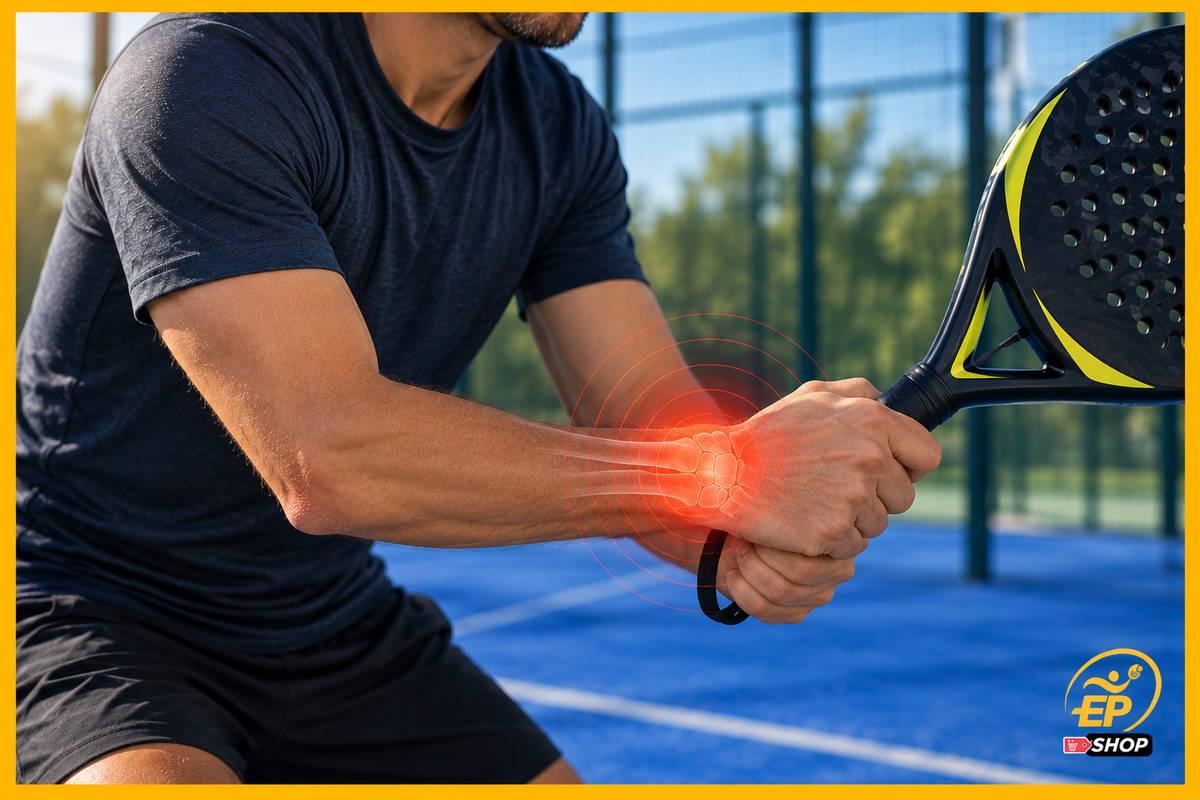
The serving motion places considerable strain on the shoulder and wrist, in a movement repeated several times per set. Before stepping onto the court, a few arm rotations and practice serves in the air can help avoid unnecessary tension: our guide to warming up for padel details a complete routine of cardio, mobilisation and technical drills, to adapt depending on whether you are playing a training session or a match.
FAQ
Who serves first in padel?
In friendly matches, the deciding-point method is generally used. Once all four players have touched the ball, the team that wins this point serves first. However, at the start of an official match, a draw is held to determine which team serves first and has the right to choose its side of the court.
How do you return a serve in padel?
The serve must be returned after the first bounce: returning it with a volée is prohibited. The ball must be sent back to the opponent's side before a second bounce on the ground, but it may make a second bounce off one of the court walls. The player returning the first serve of the match (on the right) must continue to serve in the same diagonal for at least the entire first set. Players may then change diagonals at the start of each new set.
How should you serve in padel?
In padel, the serve is played diagonally from the service box. The server must bounce the ball once in their own half of the court before hitting it. The shot must be made below or at waist level and diagonally towards the opponent's service box. The serve alternates between the two receivers after each point scored.
How do you move up to the net after a serve?
After serving in padel, it is strongly recommended to move towards the net to take an attacking position. You will then be ready to intercept balls that bounce near the net and attack them with a volée. This position allows you to put extra pressure on your opponent by controlling play and looking to finish the point quickly.
What should you do in the event of a double fault on serve?
As in tennis, a double fault (two consecutive missed serves on the same point) automatically gives the point to the opposing team. To avoid it, it is better to secure a less powerful but reliable first serve, while becoming more aggressive on subsequent points once you are confident.
Can the padel serve be an attacking weapon?
Yes, even if the point rarely ends directly from it. A serve varied in direction and spin forces the returner to adapt constantly, opening up angles for the next volée and making it easier for your team to take the net.