FIND YOUR RACKET
 COMPARE MODELS
What is the chiquita in padel?
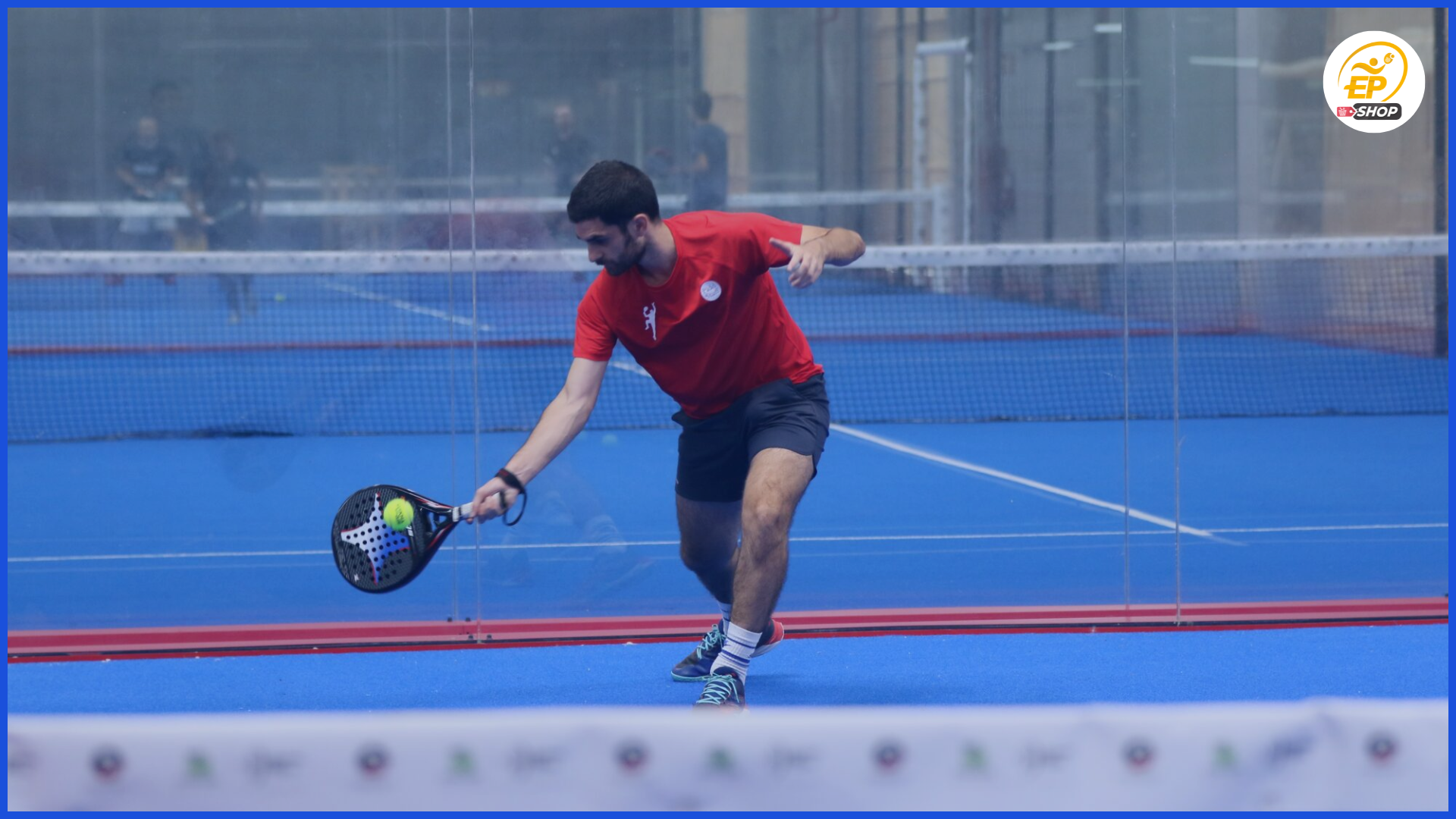
The chiquita is a shot that intrigues many players, especially beginners. Its principle is simple: play a slow, low ball from the back of the court, landing at the feet of opponents already positioned at the net.
Unlike a powerful ball or a lob, the chiquita relies on precision and touch. The aim is to surprise, break the rhythm, and regain ground for yourself and your partner.
Why and when to use the chiquita?
The chiquita is not a purely defensive shot, nor a frontal attack. It is a transition shot.
-
When you are pinned to the back of the court and your opponents dominate the net, the chiquita allows you to regain control.
-
It is used to force an awkward volée from the opponent, often a low volée difficult to handle.
-
Used well, it gives you time to move up to the net and turn defense into attack.
On the other hand, poorly weighted, the chiquita becomes an easy ball that the opponent can smash. Hence the importance of knowing how to choose the right moment.
The technical basics of the chiquita
Position on the court
-
The shot is played from the back of the court, often after defending off the glass.
-
The player should stay balanced, with knees bent and racket low to guide the ball.
-
The right padel shoes help you maintain good footing on synthetic surfaces, especially in a defensive position.
Movement and ball contact
-
The chiquita requires a short, controlled movement.
-
Your padel racket stays slightly open, following a gentle upward path.
-
The goal is to apply backspin to the ball so that it drops quickly.
Target zones
-
Mainly the feet of opponents at the net.
-
Sometimes slightly cross-court to surprise.
-
Never high-looping or too long, at the risk of giving away an attacking ball.
Chiquita, bandeja, vibora, bajada: what are the differences?
-
The bandeja: a control shot, played overhead, mainly used to slow the game down and hold the net.
-
The víbora: a more aggressive version of the bandeja, hit with slice to make the return difficult.
-
The bajada: an attacking shot played from the back of the court, after the rebound off the glass, which turns defense into offense.
-
The chiquita: a tactical shot executed from the back, with a slow, low ball to the opponent's feet, to prevent them from attacking and create an opening.
In short, the chiquita is a shot based on precision and building the point, while the bajada relies more on power and timing to regain the advantage.
Common mistakes
-
Too much power: the ball rises and becomes an easy target for a padel smash.
-
Poor timing: if you hit too early, the ball goes into the net; too late, it goes out.
-
Wrong target: aiming at the centre or at the opponent's racket offers little advantage.
-
Repetitive execution: if you always play the same chiquita, the opponent will adapt.
The chiquita in team tactics
In doubles, the chiquita allows you to:
-
Force a low volée from the opponent.
-
Create an opening to move forward with your partner.
-
Break the rhythm of rallies and surprise opponents.
-
Regain confidence after a defensive phase.
It is therefore a shot that requires coordination with your partner: when one plays the chiquita, the other must already be ready to move forward.
To take your game further, explore our complete guide to padel techniques to expand your range of shots and surprise your opponents.
Progression by level
Beginners
-
Learn to control the ball without looking for power.
-
Focus on precision: always aim for the opponent's feet.
-
Do not try to play the chiquita too often: a simple shot is enough.
Intermediate players
-
Introduce variations: cross-court, down the line, faster or slower.
-
Playing the chiquita as a transition to move up to the net.
-
Learn to combine chiquita and lob depending on the situation.
Advanced players
-
Disguising intentions: alternating powerful shots and chiquitas within the same rally.
-
Know how to use the chiquita to build the point, not just to defend.
-
Develop the ability to play it off the glass with consistency.
Drills to improve the chiquita
-
Repeated chiquitas: partner at the net, you play ten consecutive chiquitas at their feet.
-
Zone variation: alternating right and left to surprise.
-
Defense → chiquita → rush sequence: work on the transition to the net.
-
Academy training: guided sessions where the coach sets sequences to build muscle memory.
A good drill (a targeted, repetitive exercise) is to combine the chiquita with other shots: the volée, lob or serve.
The chiquita in a match: concrete examples
-
Scenario 1: you back up, the opponent crushes the ball. Rather than defending hard, you play a chiquita at their feet → they return a high volée, you move forward and regain the initiative.
-
Scenario 2 : in a tournament, against an aggressive pair, alternating chiquita and lob helps break their rhythm and make them doubt.
-
Scenario 3: in advanced competition, some professional players use the chiquita as a tactical weapon to slow down a tense rally.