FIND YOUR RACKET
 COMPARE MODELS
Behind every powerful smash and every well-placed volée, there are muscles working quietly. Knowing and strengthening these key areas can transform your game… and your stamina on court.
Padel: a complete sport that works the whole body
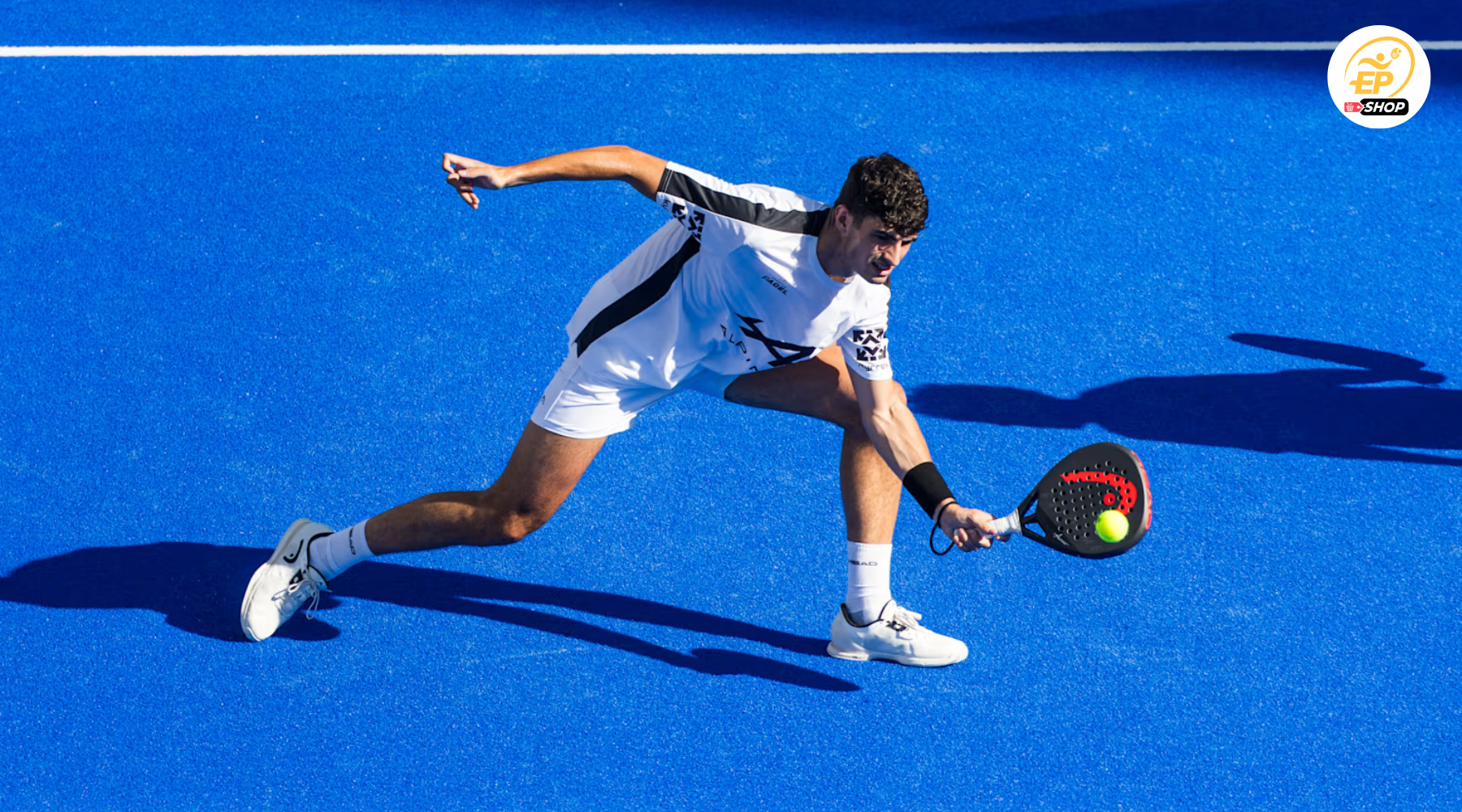
Padel is an explosive, fun and physical racket sport that engages a wide variety of muscle groups. Contrary to what you might think, it is not just the arms or shoulders that are used, but indeed the whole body.
The repeated movements on the padel court engage both the upper and lower body. Good physical fitness and targeted muscle strengthening work help prevent injuries, improve performance and keep you playing longer.
The most heavily used muscles during a padel match
1. Legs: the foundation of power
The calves, quadriceps, hamstrings and glutes are the first to be called upon in padel.
-
The quadriceps and hamstrings provide quick bending and explosive drive.
-
The calves work with every lateral movement or change of direction.
-
The glutes contribute to shot power and stability.
These muscle groups are engaged with every step, every jump, and during all forward or backward runs. Don't forget to get yourself a good pair of padel shoes!
2. The core: constant stability
The core (abdominal muscles, lower back, obliques) is essential for:
-
Stability during shots
-
The transfer of power between the legs and the upper body
-
Torso rotation movements during smashes or volleys
A strong core also reduces the risk of back pain, which is frequent among players with weak core stability.
3. The upper body: control and power
Arms and shoulders
-
The biceps are involved in arm flexion, especially on serve or return.
-
The triceps are used during arm extension (smash, bandeja…).
-
The shoulders (deltoids) ensure mobility and shot accuracy.
Forearms and wrists
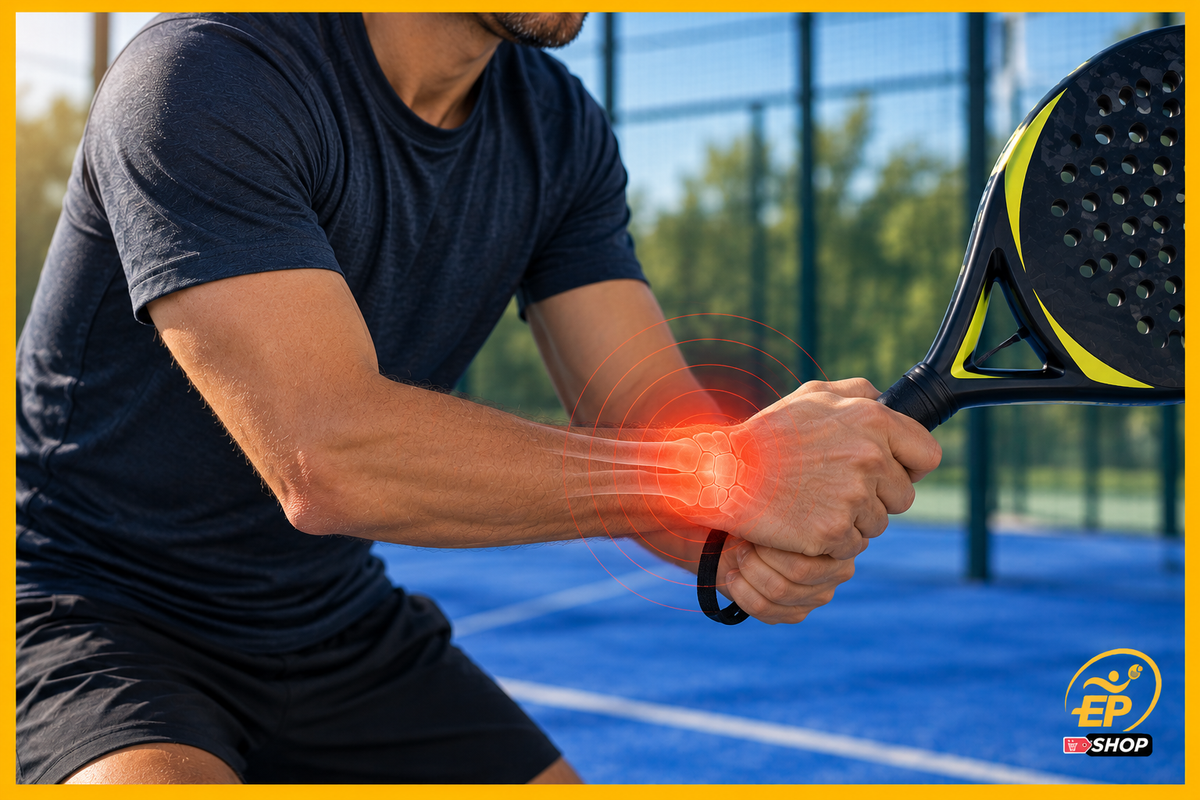
The forearm is constantly active to hold the padel racket, absorb shots and adjust spin. The wrist also plays a crucial role in volleys, viboras or sliced backhands.
Why strengthen these muscles when playing padel?
To prevent injury
Padel injuries are often caused by a muscle imbalance or excessive fatigue. Targeted strengthening helps you absorb impacts better and limit joint overload, especially in the knees, shoulders or elbows.
To improve performance
A strong player hits harder, moves faster, and recovers better. Muscular conditioning also improves endurance, coordination and reaction speed.
Find out how to analyse your padel performance to identify more precisely the areas for improvement.
Exercises and tips to strengthen padel muscles
We have dedicated a complete guide to advise you on the best padel exercises, but here is a list that summarises which exercise targets which muscle:
Lower body strengthening
-
Squats (with or without weights) for thighs and glutes
-
Dynamic lunges to simulate movements on court
-
Box jumps for power and explosiveness
Core and torso
-
Standard plank and side plank
-
Russian twists with a medicine ball
-
Supermans to strengthen the lower back
Upper body and arms
- Press-ups and pull-ups
- Resistance band exercises for the shoulder rotators
-
Bicep curls and tricep extensions at the gym or with dumbbells
Don't forget to complete your routine with well-planned padel stretches after exercise.
Gym training vs padel-specific conditioning
The gym is ideal for building a solid muscular base. However, physical preparation for padel must include functional movements close to real play: changes of direction, balance, coordination.
A good balance is to do:
-
1 to 2 "classic" weight training sessions per week
-
1 session dedicated to padel exercises (dynamic core training, unilateral strengthening, etc.)
Equip yourself with a good padel bag to carry your gear, your padel clothing, your water and your strengthening accessories.
Fuel your muscles properly to play better
Sports nutrition and recovery
Nutrition is fuel for your muscles. To support muscle growth and recovery:
-
Eat enough protein (meat, eggs, pulses)
-
Don't forget complex carbohydrates and healthy fats
-
Remember to stay hydrated regularly
Worth reading: our guide on padel nutrition to learn all the right habits to adopt.
FAQ – Muscles used in padel
Does padel really work every muscle?
Yes, it is a complete sport that engages the legs, abs, back, arms and shoulders. It is also an excellent cardio workout.
Which muscles should you strengthen first?
The legs (thighs, glutes, calves) and core (abdominals, lower back) should be worked as a priority to improve your stability and footwork.
Can padel replace a gym workout?
No. It is an excellent complement, but not a substitute. To prevent injury and improve, you should include strength training sessions, and of course never skip your padel warm-up.
Do you need gym workouts to improve at padel?
It is not mandatory, but highly recommended. Even without a gym, bodyweight exercises or resistance band workouts at home can be enough.