FIND YOUR RACKET
 COMPARE MODELS
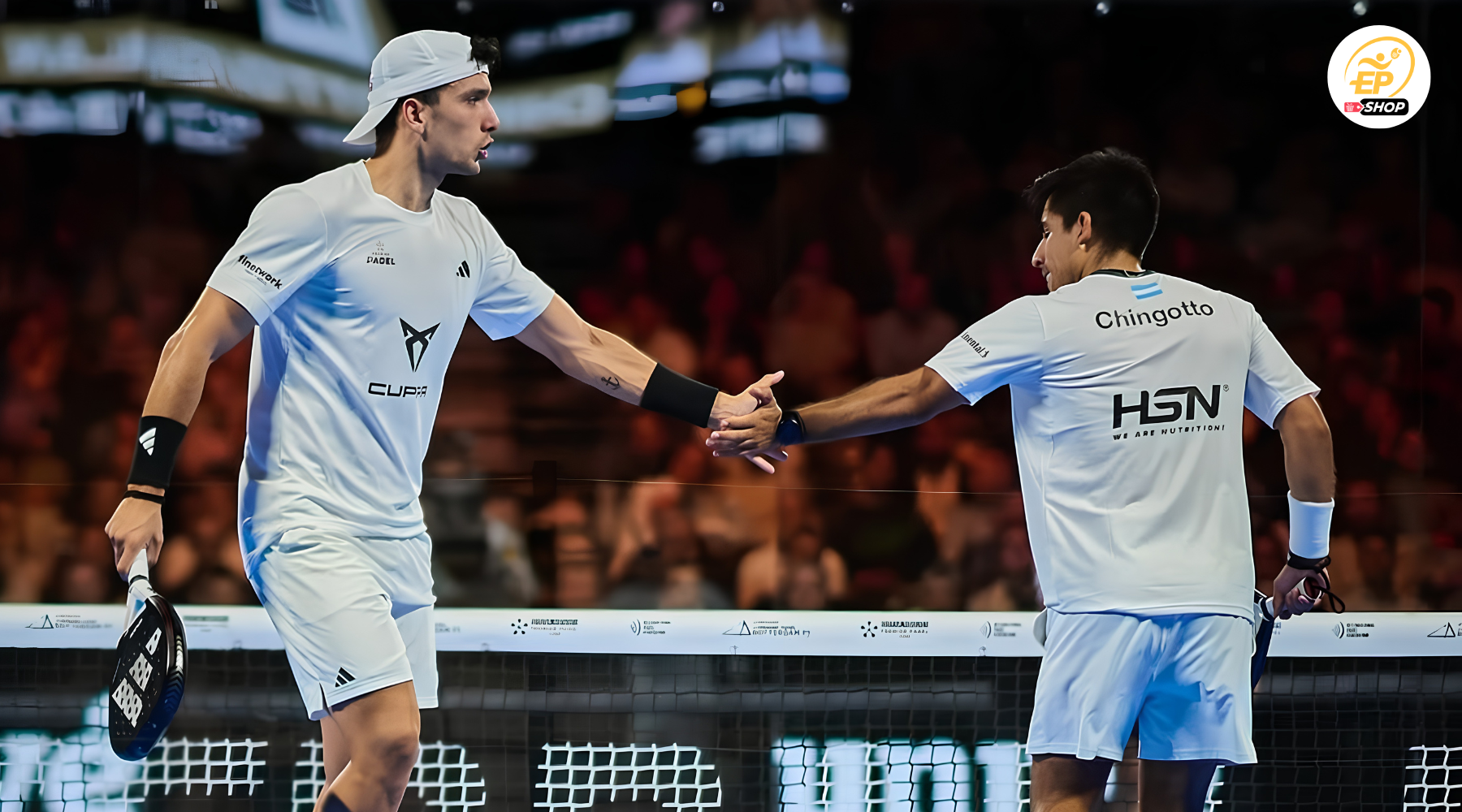
There is a subtle understanding, an exchanged glance at the right moment, a voice that reassures or motivates. In padel, you never play alone: every movement, every shot, every move up to the net is built as a pair. And when communication flows smoothly, the game becomes more precise, more instinctive… almost choreographed.
In this sport, communication between partners is much more than an asset: it is the foundation of performance.
Why is communication essential in padel?
Padel is above all a doubles sport, where cooperation is as important as technique. Yet many players neglect the communication aspect… until a misunderstanding costs them a decisive point.
As with doubles padel strategy, talking on the court helps anticipate shots, position yourself better and avoid collisions.
Before the match: lay the foundations
Good communication in padel starts well before the warm-up. Briefly talking with your partner helps clarify several points:
- Who takes the balls in the middle?
- What attitude should you adopt at the net?
-
What serving strategy should you use?
This avoids confusion once play gets underway. It is also the time to recall certain padel rules to avoid any disagreement on the court.
During rallies: talk, but accurately
On the court, effective communication relies on short, precise and well-synchronised words:
- “Mine!”, “Leave it!”, “Cross-court!”
-
“Lob!”, “Move back!”, “Move up!”
These simple instructions help anticipate movements and optimise positioning. They are important, especially during phases of net play in padel, where every second counts.
Furthermore, balls in the middle are often a source of doubt. It is best to establish automatic habits from the warm-up, or even discuss them off court to find a padel partner with whom you are on the same wavelength on the matter.
Non-verbal signals and body language
Words are not the only thing that matters! As padel is fast-paced and often noisy, it is useful to establish hand signals:
- Hand behind the back to indicate a direction when serving (widely used when serving in padel)
- Eye contact to signal a lob or a volée
-
Body positioning to suggest specific coverage
These subtle signals enable an instant reading of the game and develop real padel game awareness, essential at a high level.
Between points: stay connected
Good communication does not stop at the rally. Between two points, taking a few seconds to encourage or readjust the strategy is crucial:
-
A systematic high-five (strengthens cohesion)
-
A positive look even after a mistake
-
Key phrases: “We keep our rhythm”, “Play deeper”, “We stay back for now”
These routines help create a climate of trust that is essential for staying clear-headed during phases of defensive play in padel, which require patience and coordination.
Managing mistakes without tension
Managing mistakes is often a sign of good (or bad!) communication in padel. When an error occurs, the most important thing is to avoid blaming each other. A constructive way to do this is to:
-
Praise the intention, even if the shot is missed
-
Refocus on the team: “We’ll get there”, rather than “You missed it again”
-
Suggest a concrete solution (“Should I cover more in the middle?”)
This attitude helps maintain a healthy atmosphere, where everyone remains committed without fear of making a mistake next time.
Good to know: It also comes down to choosing the right equipment – a suitable padel racket, comfortable padel clothing and stable padel shoes allow you to play more freely and therefore communicate better.
In business: a powerful driver of cohesion
Padel communication is also a widely used tool in business. More and more organisations are arranging corporate padel sessions to strengthen team cohesion. Why ? Because this sport brings together all the qualities sought after in the professional world:
- Active listening
- Role allocation
- Mutual support
-
Collective responsiveness
On the court, colleagues must learn to trust each other, communicate effectively and work together in action. It is a real tool for team building, fun yet educational.
FAQ – Padel communication
Do you need to talk a lot during a match?
No, the idea is not to talk too much. It is better to speak little, but usefully: clear instructions, synchronised with the game.
What if my partner never says anything?
You can encourage them to establish a few simple codes: keywords, gestures… and lead by example by being communicative yet supportive yourself.
Can you use subtle signals as in tennis?
Yes! Especially for serving or net coverage. The key is to agree in advance.
Does padel communication change depending on the level?
Absolutely. The higher the level, the more precise, faster and often non-verbal communication becomes. But even recreationally, it remains essential for improving and enjoying yourself.