FIND YOUR RACKET
 COMPARE MODELS
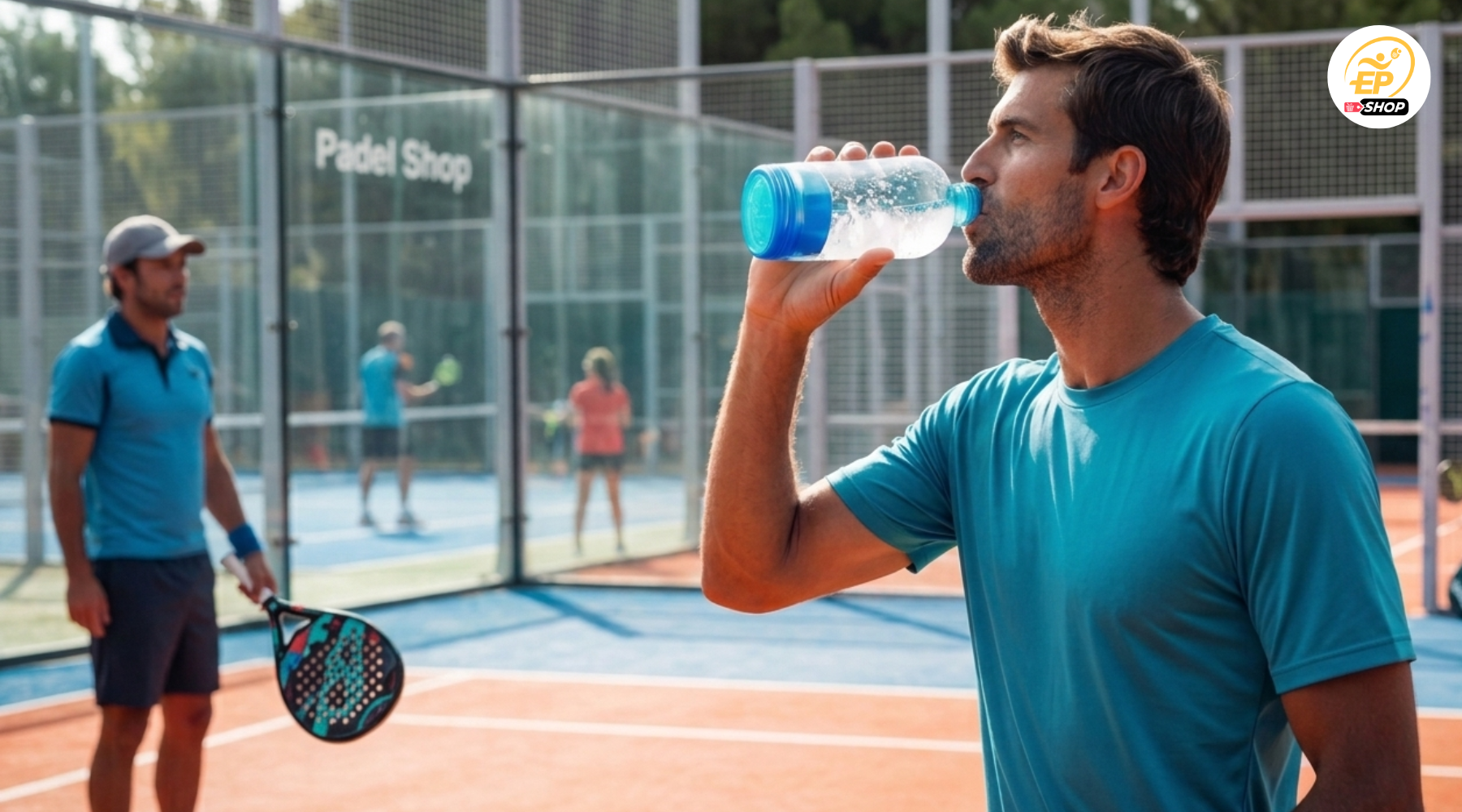
A well-hydrated player is a player who lasts. What if victory started with your water bottle?
Why is hydration essential in padel?
Hydration in padel, as in all sports, is an often overlooked pillar of sporting performance, even though it directly affects endurance, the precision of your movements, concentration and the prevention of padel injuries.
A player who loses more than 2% of their body weight in water may see their performance drop significantly.
During an outdoor match or in a poorly ventilated hall, sweating is even more significant. It is estimated that a padel player can lose between 0.5 and 1.5 litres of water per hour, in addition to losing essential mineral salts (sodium, potassium, magnesium).
These losses, if not compensated for, can cause muscle cramps, energy dips or even a risk of feeling unwell.
Before the match: prepare your hydration properly
Anticipate to perform
Good hydration starts before you even step onto the court. It’s recommended to drink 500 to 600 ml of water around two hours before the match, then 200 to 300 ml just before your padel warm-up.
This habit helps maintain a good level of intracellular water, which is essential for proper muscle function. If the session is planned in high heat or a humid environment, using slightly salted drinks (such as sodium-rich mineral water) can also help stabilise reserves.
Nutrition and hydration: a winning duo
A balanced diet will also help you stay well hydrated. Before a match, we recommend prioritising:
-
Complex carbohydrates (brown rice, sweet potato), for sustained energy intake
-
Water-rich fruits (watermelon, melon, orange)
-
Foods rich in potassium (banana, avocado)
This type of padel diet supports natural hydration and reduces the risk of sudden energy slumps. If you’d like to explore the subject further, read our article on padel nutrition.
During the match: drink smartly
Frequency and quantity: consistency is key
During a padel match, do not wait until you are thirsty to drink. The feeling of thirst appears too late compared with the actual deficit. Ideally, drink 100 to 200 ml every 15 to 20 minutes, taking small sips.
Also remember to take a break for hydration during changeovers or time-outs. An insulated bottle or a water bladder in your padel bag can make all the difference, especially in the height of summer.
Don’t neglect your hydration during training sessions and padel drills either.
Water or energy drink?
- For a short or low-intensity session: mineral water.
- For a long match or in high heat: an isotonic drink containing fast-acting carbohydrates (6-9 g/100 ml), sodium and potassium.
-
Some products, such as those from Mulebar or Overstim.s, are specially formulated for sports exertion.
Avoid soft drinks, coffee or overly sugary juices: they can disrupt water metabolism and harm your padel performance.
Good to know: here are the keys to analysing your padel performance effectively.
After the match: recover well to come back stronger
Fast, controlled rehydration
The muscle recovery phase is crucial. After exercise, it is recommended to weigh yourself to determine your water-related weight loss. You should drink 1.5 times this lost weight to compensate effectively.
Example : you lose 800 g → you need to drink around 1.2 litres within the following 2 hours.
Mineral-rich water or a recovery drink (such as mixes with electrolytes, proteins and carbohydrates) promotes a faster return to balance.
Post-match nutritional intake
Sports recovery is not limited to water. After an intense match:
- Consume energy bars rich in carbohydrates and protein
- Include foods with vitamins and minerals (almonds, eggs, dried fruit)
- One can also take a dietary supplement in the event of prolonged exertion or persistent fatigue
The takeaway is clear: don’t neglect your hydration or nutritional intake. Both are integral to your physical preparation for padel.
Adjusting your hydration according to conditions
The climate directly affects hydration needs:
- Heat: increases sweating → greater need for water and mineral salts
- Cold: reduced feeling of thirst → risk of silent dehydration
-
Altitude or wind: accelerated dehydration → watch out for signs of fatigue
A regular player must therefore adapt not only their equipment, but also their hydration habits to the weather.
Choosing the right hydration equipment and products
Effective products for padel
Within the frame of a well-managed sports nutrition plan, the right products are:
- Natural isotonic drinks
- Energy bars (Mulebar, Baouw)
- Energy gels and powders to dilute
-
Magnesium, zinc and vitamins B and C supplements
The padel shop at your club or from specialist brands often offers a selection suited to the needs of padel players.
You’ll also find all the padel equipment you need, from padel shoes to a complete range of padel clothing, at Esprit Padel Shop.
What should you put in your padel bag?
As well as your padel racket, your padel bag should also contain:
- An insulated bottle or filtered water bottle
- An ready-to-drink energy drink
- One or two protein bars
-
Electrolyte powder (just in case)
FAQ – Padel hydration
How much should you drink for a padel match?
Around 1 to 2 litres of water, spread before, during and after exercise, depending on temperature and intensity.
Are energy drinks essential?
They are recommended in extreme conditions (heat, long match) or for players looking to optimise their performance. Otherwise, a well-chosen mineral water may be enough.
What signs indicate dehydration?
- Sudden fatigue
- Loss of concentration
- Cramps
- Dizziness
-
Very dark urine after the match
Can you drink too much?
Yes: overhydration can cause an imbalance of sodium in the blood (hyponatraemia). Drinking too much and too quickly can be harmful. It is better to drink often, in small quantities.