FIND YOUR RACKET
 COMPARE MODELS

A padel licence is an official authorisation issued by the French Tennis Federation. It is required to enter sanctioned tournaments and appear in the national rankings. You get one through an FFT-affiliated club, apply online via the Ten’Up app, and it covers a full sporting year from 1 September to 31 August. Since 2022, a dedicated padel licence has been available separately from the tennis licence, with the option of a multi-rackets licence.
Key takeaways
|
Padel is booming. Once you get hooked, you may find yourself starting to compete in official events — and competitions and tournaments mean you’ll need a padel licence.
In this article, we will explore in detail what you need to know about it, from the application process to the benefits it brings, including the associated costs. Let's discover everything you need to know about the padel licence, in France and even if you want to play abroad.
What is a padel licence?
The padel licence is an official authorisation issued by the French Tennis Federation (FFT) in France. It is essential for fans of this sport and allows you to take part in competitions.
Remember that there are no official competitions for one-on-one padel.
Licence validity and format
The FFT licence is valid for one year, from 1 September to 31 August. The earlier you get it in the season, the longer you can benefit from it. It is generally available from the June before its validity begins. It is now electronic, and you’ll receive an email from the FFT confirming that it is valid. In practice, there is no longer a physical card: your licence appears directly in your Ten’Up account, and that is the status the tournament referee checks when you enter a tournament.
The different types of licence
Since September 2022, the FFT has distinguished the padel licence from the tennis licence. Affiliated clubs can issue a licence dedicated solely to padel. You can also get a multi-rackets licence covering competitive padel, tennis and beach tennis. The choice is simple: if you only play padel, a padel-only licence is enough and costs less. If you also compete in tennis or beach tennis during the same season, the multi-rackets licence saves you from paying for two licences.
The benefits of a padel licence
A padel licence offers players several benefits, starting with the chance to compete and appear in the official rankings. But that’s not all.
Access official competitions
A padel licence is your gateway to official competitions. It lets you enter hundreds of tournaments and championships across France. These competitions are a great way to test your skills, meet other padel enthusiasts and enjoy unforgettable sporting experiences.
These competitions are organised at different levels, including P25, P100, P250, P500 and many more. So whether you’re a beginner or an experienced player, there’s always a competition suited to your level.
At the highest levels, such as P1000, a licence alone is not enough: entry is often determined by the pair’s combined ranking, depending on the number of teams registered. This combined ranking is the sum of the two players’ rankings: the lower the total, the higher the pair’s priority. If you’ve never competed before, our guide to an amateur padel tournament explains what to expect on your first day.
Track your ranking
There’s no official padel ranking in France without an FFT padel licence. Once you start competing, you’ll be ranked according to your results. To understand how padel rankings work, read or revisit our article on the subject. An FFT padel licence gives you access to the Ten’Up app, where players can check their ranking and track their progress throughout the sporting year. Don’t confuse this with the FIP world ranking, which governs the international professional circuit and can only be earned by playing FIP tournaments, often abroad. Our article on the rankings of French players explains how the two systems overlap.
Partner discounts and benefits
You might not realise it, but licence holders get discounts from some FFT partners. Exclusive offers are regularly available on Ten’Up. The list of partners changes each season, so it’s best to check your licence-holder account rather than rely on an outdated list.
Priority access to Roland-Garros tickets
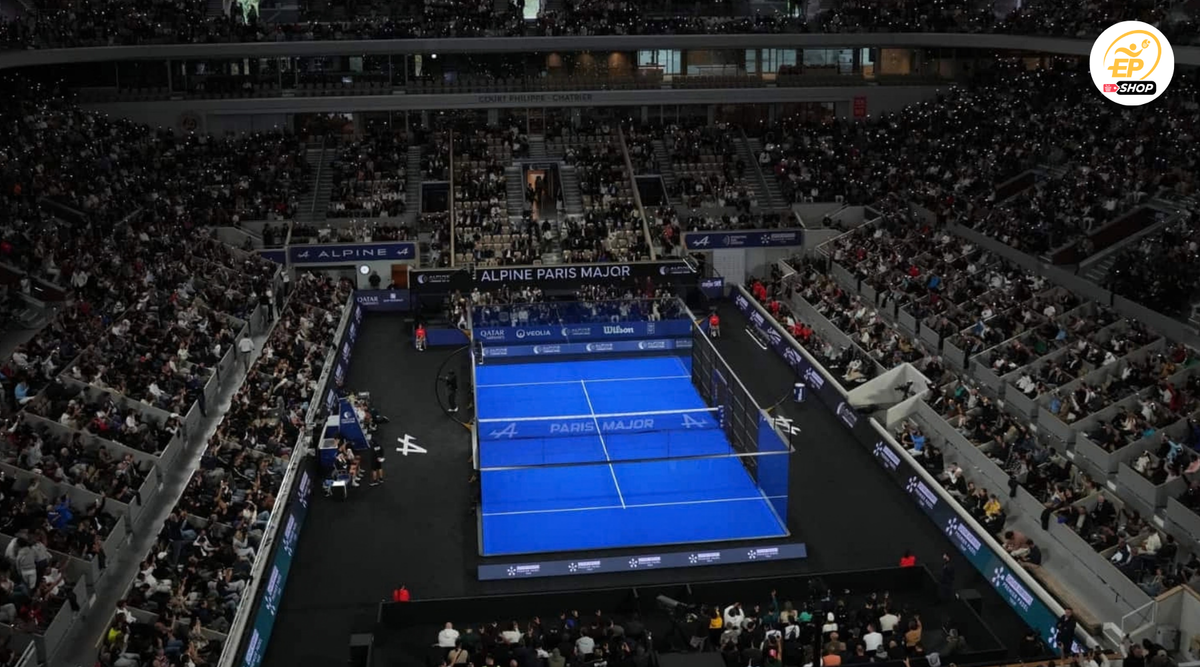
Finally, FFT licence holders, whether their licence covers multiple racket sports or just padel, get priority access to Roland-Garros tickets for one week each February, as well as tickets for other events. The same applies to major padel events held in France, including the Alpine Paris Major held at Roland-Garros. For a licence holder who follows the professional circuit, that’s no small perk, given how quickly tickets sell out.
How do you get a padel licence?
To obtain your FFT-affiliated padel licence, you will need to join a club that is affiliated with the federation. This ensures that you will be welcomed into a sports organisation that meets your needs and makes your playing experience easier.
Joining a club will also help you find a padel court more easily and improve your game, for example by learning how to serve well in padel.
Once you have chosen an affiliated club, the process of obtaining your licence is simple and convenient. Simply visit the Ten’Up app or the club's website, where you can upload the necessary documents and submit your application. By following these steps, you will quickly receive your licence certificate.
Join an FFT-affiliated club
Joining a club will also help you find a padel court more easily and improve your game, for example by learning how to serve well in padel. Not all padel clubs are affiliated with the federation: some private facilities rent out courts without being affiliated, so they cannot issue licences or organise sanctioned tournaments. If you want to compete, check a club’s affiliation before paying membership fees. Our article on playing at a padel club in France and abroad explains how things differ.
Once you’ve chosen an affiliated club, getting your licence is straightforward. Simply use the Ten’Up app or visit the club’s website to upload the required documents and submit your application. Follow these steps and you’ll soon receive confirmation of your licence.
Is a medical certificate required?
Minors can obtain their licence by completing a health questionnaire, unless they answer yes to at least one question, in which case they must provide a medical certificate issued within the past six months. Since the 2023–2024 season, adults no longer need a medical certificate to obtain a padel licence. That does not mean you should skip a check-up if you are returning to sport after a long break: padel is more demanding on the cardiovascular system than it may seem, as our article on the muscles used in padel shows.
How do you renew your padel licence?
Your licence is valid for one year, from 1 September to 31 August. If you hold a licence this year and want to stay with the same club next year, a renewal application will already have been created at your current club. If you change clubs, you’ll need to submit a new licence application through your new club. Watch out for a gap in cover: the licence expires on 31 August, and renewal is not automatic until the club has approved it. If you have a tournament in early September, it’s best to start the process in June or July.
The cost of a padel licence
Padel licence fees vary by age and type of licence. The FFT reviews the fees each season.
|
Type of licence |
Who it’s for |
Current season’s fee |
|---|---|---|
|
Padel licence |
Adults |
26€ |
|
Multi-rackets licence |
Adults |
33€ |
|
Multi-rackets licence |
Aged 7 to 18 |
23€ |
|
Multi-rackets licence |
Aged 6 and under |
13€ |
On top of these fees, you’ll need to pay the club’s membership fee. This is separate from the licence and varies widely between clubs, depending on whether it includes court access, open-play sessions or group lessons. Check both amounts before signing up: a licence alone does not give you access to courts.
The role of padel federations
Padel federations play a vital role in developing and promoting the sport. They set the rules, organise competitions and ensure players meet standards of fair-play. As a padel licence holder, you help support these efforts and strengthen the padel community. In France, there is no separate padel federation as such: the French Tennis Federation fulfils that role, as the sport is not yet sufficiently developed to have its own federation.
At international level, the International Padel Federation organises the professional circuit and manages the world ranking. The two systems are independent: an FFT ranking earns you no FIP points, and vice versa. The FFT also oversees the training of officials and coaches, from referees to padel coaches.
Frequently asked questions
Do you need a padel licence to play?
No, not to hire a court and play with friends; yes, to compete in a tournament sanctioned by the French Tennis Federation. The licence puts you in the national rankings and is required to enter any official competition, from P25 to P2000. Without a valid licence, the tournament referee will reject your entry.
How much does a padel licence cost?
The FFT sets the fee each season. It depends on whether you choose a padel-only licence or a multi-rackets licence covering padel, tennis and beach tennis, as well as the licence holder’s age for the multi-rackets option. You must also pay the club’s membership fee, which is separate from the licence and varies widely between clubs.
Where can you get a padel licence?
Only through a club affiliated with the French Tennis Federation. You then apply online via the Ten’Up app or the club’s website. Bear in mind that some private venues hire out courts without being affiliated, so they cannot issue licences. Check their affiliation before paying a membership fee if you want to compete.
Do you need a medical certificate for a padel licence?
Not for adults since the 2023–2024 season. Minors complete a health questionnaire and only need to provide a medical certificate issued within the last six months if they answer yes to at least one question. A check-up is still recommended if you’re returning to sport after a long break, as padel is more physically demanding than it looks.
How long is a padel licence valid?
One full sporting year, from 1 September to 31 August, regardless of when you sign up. Getting your licence in September therefore gives you twelve months of use; getting it in April leaves you just five. It is available from the June before the season starts, so you can plan ahead for autumn tournaments.
Summary
In short, a padel licence is much more than a ticket to play. It opens the door to a range of benefits, exciting competitions and a dedicated community. Choose the licence that best suits your needs — padel-only or multi-rackets — and make the most of your padel experience. Remember the steps: join an FFT-affiliated club, apply through Ten’Up and renew for each period from 1 September to 31 August. Adults need no medical certificate, and the licence gives you access to all sanctioned tournaments.
If you’re planning to play padel abroad, make sure you know the rules and licence requirements in the country concerned. And to approach your first competition with confidence, here are two useful reads: our guide to improving at padel and advice on choosing a racket suited to your level, which can make more difference in a tournament draw than you might think.