FIND YOUR RACKET
 COMPARE MODELS
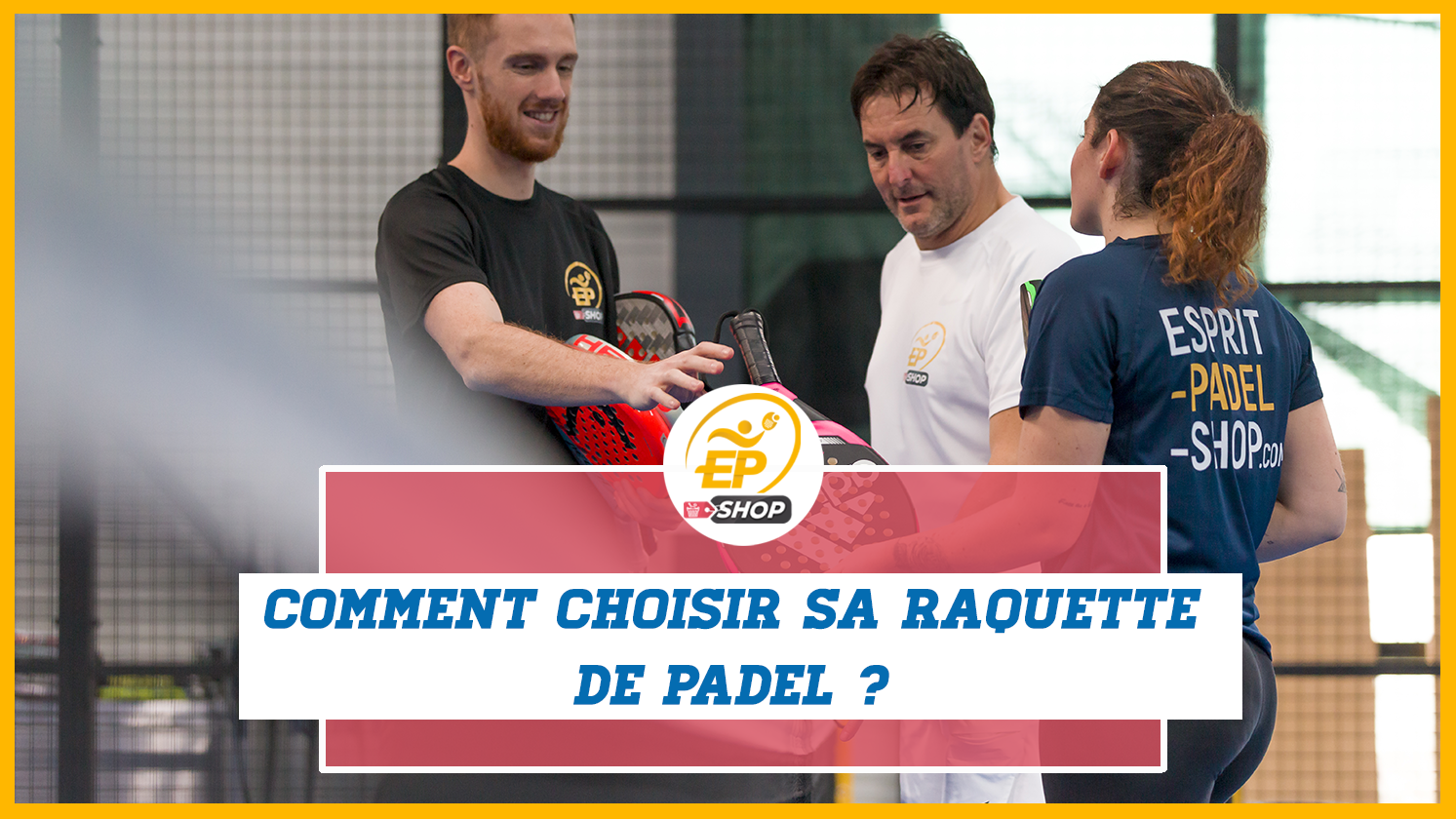
Already have your padel outfit and padel shoes? You might still be missing the most important piece of kit: the padel racket ! This fast-growing sport combines elements of tennis and squash and is played with a very specific type of racket.
With the many options available, it can be confusing to understand how to choose your padel racket. To help you select the ideal racket based on your level and preferences, we have summarised the important criteria to consider.
How do you choose the right padel racket: which criteria should you use?
Let’s start by exploring the 3 main characteristics of a padel racket and their impact on your game.
The shape
The shape of a padel racket is the first thing to consider, as it greatly affects the position and size of the sweet spot. The "sweet spot" of a padel racket is the area in the middle of its face where the padel ball can be struck with maximum precision. When the ball is hit on the sweet spot, the racket produces a clean, powerful feel with good control over its trajectory.
With that in mind, let’s look at the 3 shapes available for padel rackets:
- The round shape: round padel rackets offer a large hitting area for players looking to maximise power and the sweet spot. This shape is recommended for beginner to intermediate players seeking a forgiving racket with some control.
- The teardrop shape: the teardrop is the intermediate shape between a round and a diamond-shaped racket, offering a good balance of power and control. These rackets are ideal for players who already have good technique and want to improve their precision and ball control.
- The diamond shape: these rackets have a triangular shape that places the sweet spot towards the top of the racket. They are generally used by players with good technical skills. This shape concentrates most of the racket’s weight towards the top for increased shot power. However, they are less manoeuvrable and require more advanced hitting technique.

Weight
As we have just seen, the distribution of the racket’s weight according to its shape affects playing characteristics. But what about the overall weight?
Padel rackets are generally classified into 3 categories according to their weight:
- the light padel rackets (< 360g): light rackets are generally recommended for beginners looking for an easy-to-handle racket. A light racket offers better ball control, greater responsiveness and less fatigue during long playing sessions.
- the standard padel rackets (360 - 370g): these are the most versatile, so we tend to recommend them for intermediate players. They offer a balance between manoeuvrability and stability if you already have good playing technique.
- the heavy padel rackets (> 370g): as you might expect, the heaviest rackets are best reserved for advanced players seeking maximum shot power. Without the necessary physical strength and excellent technique, they can be difficult to handle.
Materials
Another element to consider is the materials that make up your padel racket. There are two types: foam for the inside of the racket, and fibres for its outer surface.
For the surface material, you can choose between fibreglass and carbon fibre.
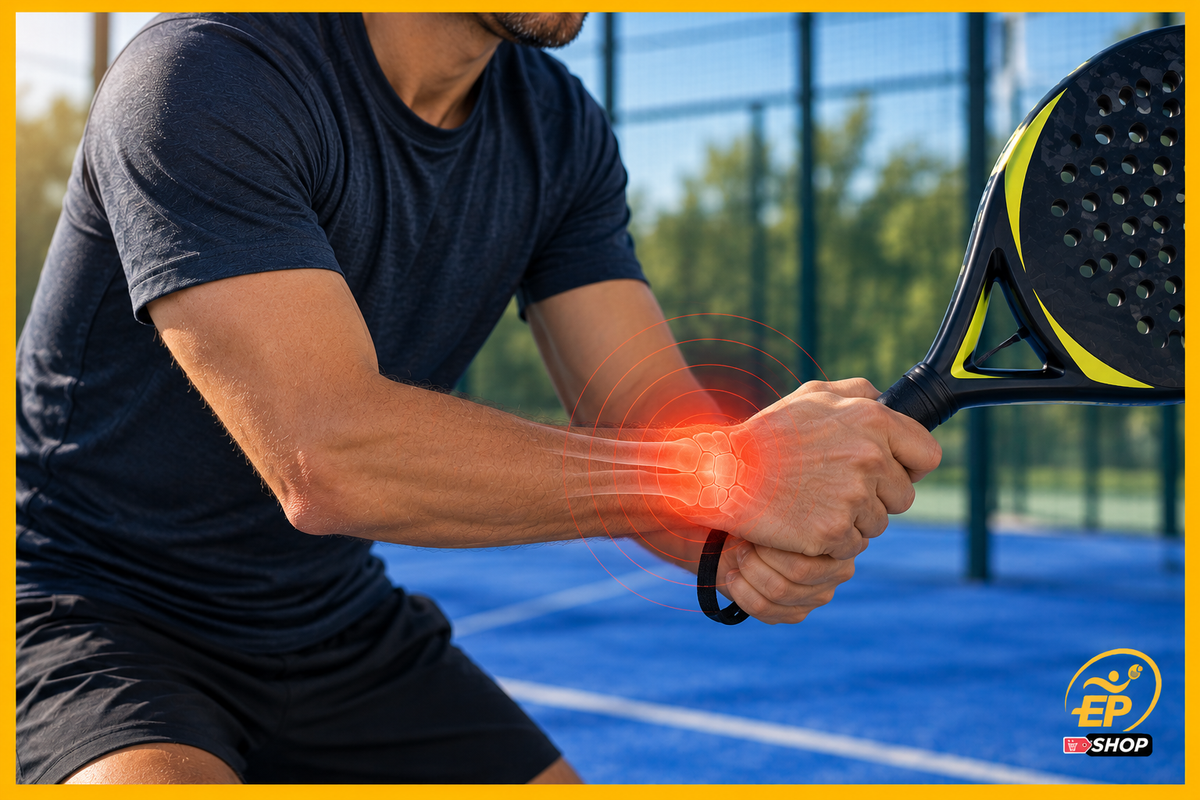
- Fibreglass is widely used in entry-level rackets. Its flexibility gives it greater elasticity than carbon. These properties help make the racket more forgiving and reduce unforced errors. What’s more, the shock-absorbing properties of fibreglass help reduce strain on the arm, making it an ideal choice if you’re prone to tendonitis.
- Carbon fibre is known for its strength and stiffness, giving a firmer feel on the ball. It is recommended for experienced players because it is less forgiving and more rigid. It costs more than fibreglass. Several carbon densities are available, ranging from 3k to 18k (the number of monofilaments incorporated into the pala). The higher the density, the stiffer the racket and the more its power/control balance favours attacking play.
- Foam
EVA rubber is often used for the central part of the racket, known as the core. Its flexibility can vary, affecting the feel and control of the ball.
Rackets with a soft foam core generally offer greater comfort and better vibration absorption. For a soft-foam racket, look for these materials: FOAM, EVA Soft or polyethylene.
By contrast, rackets with a hard rubber core deliver more power on shots. The firmest foams are EVA, EVA Mid and EVA Hard.

How do you choose your padel racket according to your playing level?
Which playing style influences the choice of a padel racket?
As you will have understood, choosing your padel racket depends mainly on your playing level. We will therefore summarise the features to look for when buying your new racket:
- If you’re a beginner: when buying your first padel racket, opt for a light racket for easier handling, and a shape and size that maximise the sweet spot. Choose a racket weighing less than 360g, but one that is large and has a round shape to maximise the hitting area. For materials, opt for a fibreglass face to keep the price at entry level and soft foam for greater comfort.
- Intermediate players will generally look for versatility in a racket of medium size and weight. Teardrop-shaped padel rackets with a good balance of control and power are a good choice if you have already mastered the technical basics. If you want more power, a diamond-shaped racket can also do the job.
- For the most experienced players, you can choose from any of the padel rackets available. A stiff racket with a hard rubber core and a carbon-fibre face will, however, be more suitable. All 3 shapes are options, depending on your playing style. It’s then up to you to choose the shape and carbon density for a pala tailored to your game.
Remember that the ideal combination of racket shape, weight, size and material can vary according to your preferences, so don’t hesitate to try different types of rackets.
Rackets for defensive players: which are the best?
Now that you know your playing level, let’s move on to the playing style to consider for your racket. If you opt for a defensive game where ball control takes prime over power, we recommend several rackets.
Nox Equation Advanced 2024
This Nox produces ranges of rackets focused on control, manoeuvrability and playing comfort. This racket, with a round shape, will give you greater stability when receiving and returning the ball. Featuring a fibreglass frame, this racket will be your ally in matches where defence is key.
Babolat Counter Viper 2024
If you’re an intermediate or experienced player, this second, higher-quality racket lets you play a fairly balanced game while still focusing on defence. This Babolat makes it easy to return balls while delivering power on smashes. It’s an excellent racket for defensive play.
Rackets for attacking players: how can you maximise power?
Wilson Bela Team V2 2023
Let’s get serious by introducing this fairly versatile Wilson racket, with which you can opt for a very powerful game while controlling your attacks and spin. Made of fibreglass and featuring a diamond shape, this racket will fulfil your desire to improve.
Bullpadel Ionic Power 2024
Let’s move on to a different budget and playing level and talk about this Bullpadel, well known among experienced players. This carbon fibre racket offers an aggressive playing style combining power and forgiveness. Still in a diamond shape, it will allow you to smash with precision and intensity.
Now that you know exactly how to choose your padel racket, all that’s left is to pick your playing outfit !
You can also watch this video to refine your choice and select the padel racket best suited to your playing style!
Where and how should you buy your padel racket?
If you are still undecided about choosing your padel racket, turning to an expert in the field can help. Here is why:
- Technical advice tailored to your situation: in addition to having concrete reviews and feedback on each model, specialist shops such as Esprit Padel Shop advise and support you in choosing your padel racket. Based on your needs and budget, our experts guide you towards the type of product offering the best value for money.
- A relationship of trust: by choosing a specialist website, you develop and improve alongside experienced padel players who can give you concrete, objective feedback.
-
Quality products: choosing a specialist padel website guarantees the quality of the products you buy. By choosing such a site, you can trust its selection and offering of high-quality rackets, durable materials and reputable brands. You can therefore play with complete peace of mind, knowing that you have reliable equipment suited to your padel practice.
- A warranty and protection: by buying from a specialist shop, you benefit from protection in the event of problems or manufacturing defects in the racket.
And if you’re torn between several options, we’ve created a padel racket comparison tool that lets you compare different rackets side by side at a glance.
FAQ
Which is the best brand for padel rackets?
There’s no shortage of padel racket brands, and each offers its own innovations, whether in rackets or, for example, padel shoes . At Esprit Padel Shop, you’ll find popular brands such as Babolat, Head, Adidas and NOX, as well as lesser-known names such as Dunlop, Starvie and BlackCrown. You’re spoilt for choice when it comes to quality rackets!
When should you change your padel racket?
It is important to know how to choose your padel racket, but also when it is time to change it. Of course, the first reason is when your racket shows obvious signs of wear, such as deformation or delamination. But it is also time to consider buying a new padel racket when your playing level has improved or your playing-style preferences have changed. Discover the criteria for choosing your padel racket according to your level or playing style in our dedicated guide.
How do you choose the size of your padel racket?
Contrary to popular belief, the size of a padel racket is not a decisive selection criterion, as most rackets have similar dimensions. Indeed, padel rackets generally have a standard size of around 46 cm in length and 38 mm in thickness. This means that the size difference between different rackets is minimal. Therefore, players do not need to focus on racket size when making their choice. Instead, it is recommended to consider other aspects such as shape, weight, balance and manufacturing materials to find the racket best suited to their playing style and personal preferences.
Why have your own padel racket?
There are several answers to this question. Buying a racket will allow you to stop using your club’s rental rackets and avoid spending an additional amount on every match. What is more, if you play often, it will quickly pay for itself. But the main reason lies elsewhere. Rental rackets are often entry-level and sometimes in poor condition. To improve as much as possible, you need a new racket made for you, your level and your style. A suitable racket will help you eliminate your mistakes more easily and strengthen your game. Finally, and not to be forgotten, the pride of having your own racket, different from everyone else’s, is also important! You can even match your clothes to its colour. Do not hesitate any longer and go choose your own padel racket!