FIND YOUR RACKET
 COMPARE MODELS
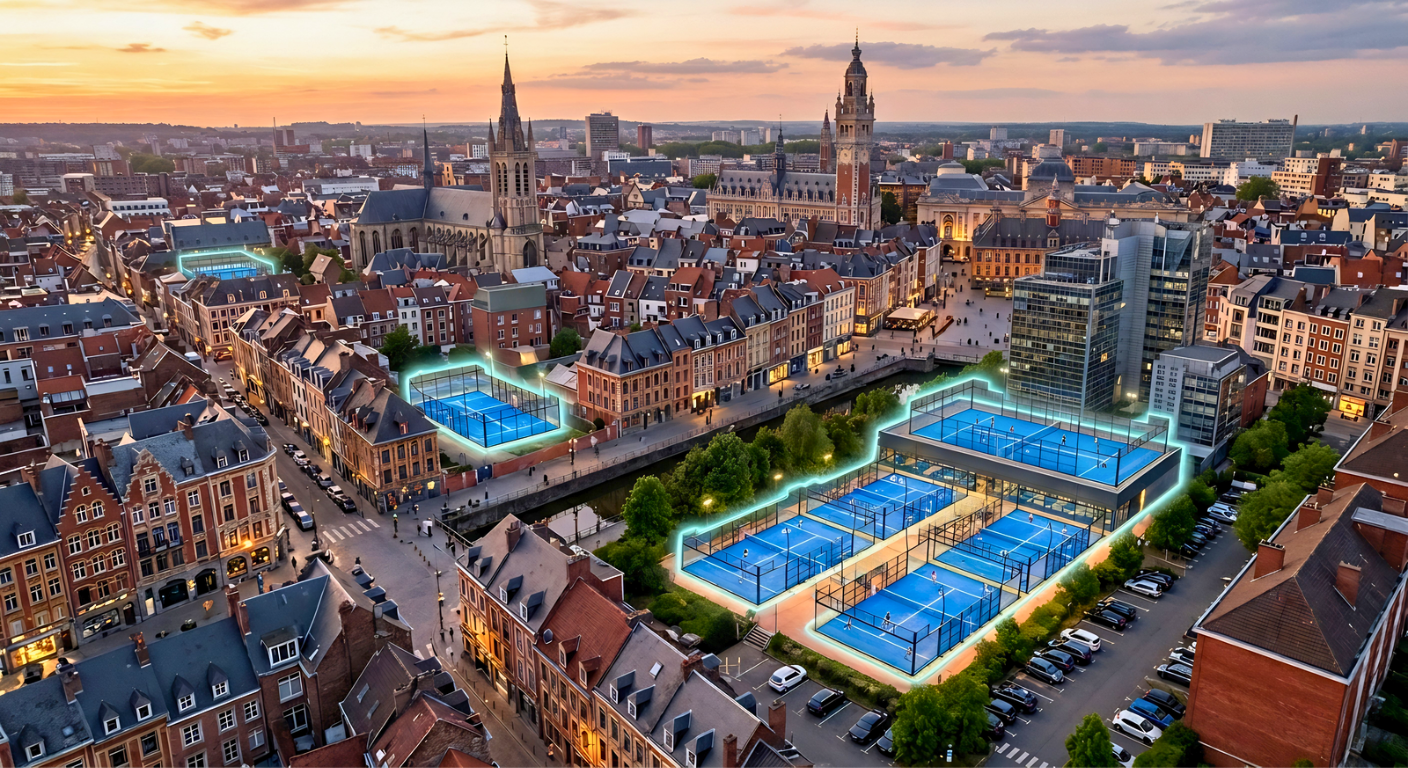
Padel in Lille? A sporting scene that's booming. Long dominated by the South, the French padel scene is catching up in the North, with the Lille metropolitan area leading the way. New indoor complexes, more established coaching programmes and tournaments every weekend.
Looking for a padel club in Lille in 2026? You now have plenty of choice. Panoramic courts, well-appointed clubhouses and opening hours stretching from 7 am to midnight, depending on the venue. For an area that wasn't in the top five two years ago, that's quite a turnaround.
In this article: the clubs to know, prices, the level you need (spoiler: none), and a word on the gear that makes a difference indoors.
Padel in Lille: a sport that has found its audience
Some national figures for context: France has more than 100,000 FFT padel licence holders, 3,000 courts and 850,000 regular or occasional players. The Hauts-de-France region still trails Occitanie and Provence-Alpes-Côte d'Azur, but is growing fast, driven in particular by the momentum around Lille.
Why has Lille taken to padel? A dense urban population, a large student community, a strong sporting culture (LOSC and regional tennis), and weather that naturally pushes people indoors. Padel in the Lille metropolitan area ticks every box. Students playing at weekends, professionals after work, former tennis players taking up a new sport: everyone can find a time that suits them.
The best padel clubs in Lille and the surrounding area
Our selection, chosen for court quality, how well the clubs are run and their atmosphere.
-
Padel District (Englos): Opened in September 2025, ten minutes from central Lille. Premium positioning, carefully finished facilities and a good spot for a club experience rather than just a court booking.
-
Urban Padel Lezennes: 7 indoor courts, open seven days a week and until midnight on weekdays. Accessible by car or bus (route 18). A reliable choice with a loyal community of players.
-
Le Shaft: The only established club within Lille itself, at B'twin Village near Porte de Valenciennes. 3 courts, including a panoramic one: a rarity in the area. Perfect for playing without leaving the city.
-
Padel Horizon Lomme: A major project for the Lille area, with 12 padel courts, 4 badminton courts and a panoramic clubhouse. Details to be confirmed as the opening progresses.
- Padel Break Bondues: A modern complex north of Lille, known for its regular tournaments. A good option if you want to try amateur competition.
Prices: how much does it cost?
For an indoor padel court in Lille, expect to pay between €24 and €48 an hour, depending on the time slot. Split between four players, that's €6–12 each.
- Off-peak times (weekday daytime): around €24–30 per court
- Peak times (evenings and weekends): typically €36–48
- Group lessons: €20–30 per session, often sold as a 10-session package
- One-to-one coaching: €50–80 an hour
You don't need a membership to play. Most clubs let you book a court: choose your time slot, play, and that's it. An annual membership (€150–300) starts to make sense if you play two or three times a week.
Starting out at a club in Lille: where do you begin?
You don't need to play like Tapia to walk into a club. All the established clubs across the Lille metropolitan area offer taster sessions and coached lessons for beginners. That's the great thing about padel: after two sessions, you're already playing a match.
As for the FFT, an FFT padel licence (around €30 a year) is only required for competition. You don't need one to play with friends or take lessons.
Our advice: take two or three introductory sessions with a coach to learn the basics, then book courts to practise until the movements become second nature. Buying your own gear can wait until you know where you're heading.
The gear that matters on Lille's courts
Almost all courts around Lille are indoors: that's the northern climate for you. It clearly affects two choices: your racket and your shoes.
The racket. Three shapes dominate. The round shape is forgiving and easy to handle, making it the default choice for beginners. The teardrop offers the best balance of versatility and power. The diamond delivers power but demands more of you, so save it until you have a little more experience.
For your first beginner padel racket on Lille's courts, look for a round shape, low balance, a soft EVA or FOAM core, and a weight of around 350–360 grams. Comfort and control come first.
If you're unsure, our El Selector tool asks a few questions and produces a tailored shorts-list. To compare the specs of two models, El Comparator saves time. And to explore the subject further, our beginner padel rackets collection brings together models approved by our team, while the guide how to choose the right padel racket covers everything from the beginning.
The shoes. On indoor synthetic turf, the sole makes all the difference. Ordinary running shoes slip and damage the surface. You need an omni or clay-hybrid sole, designed to grip without hindering lateral movement. Our entire padel shoes selection can be filtered by surface.
Accessories that make all the difference. An absorbent overgrip (essential when indoor courts get humid in winter), a frame protector and a thermal bag to keep balls pressurised: you'll find them all in our padel accessories section.
So, ready to hit the ball in and around Lille?
The padel scene around Lille has moved up a gear. Between the large complexes (4PADEL Seclin, Urban Padel, Padel Horizon Lomme) and urban gems like Le Shaft, you have plenty of places to play all year round.
A good way to get started: book a court for an hour to see if you enjoy it, then take two or three lessons to learn the basics. To choose your first padel racket or shoes, try El Selector, or contact us directly. We know the conditions in the North well and can point you towards gear that performs on the courts of your favourite padel club in Lille .