FIND YOUR RACKET
 COMPARE MODELS

Padel defensive techniques: Gain control on court
Padel is a dynamic and exciting sport, often associated with powerful attacks and acrobatic volleys. However, defence is just as crucial for success in padel. In this article, we explore padel defensive techniques to help you become a more complete player. We reveal essential tips for buying time, anticipating ball trajectories, and communicating effectively with your partner. Get ready to perfect your defensive game in padel!
Managing time in defence: The key to success
To excel in padel defence, do not underestimate the value of time. Whether you are a beginner or an experienced player, managing time in defence can make the difference in a match.
The basic position is very important, and keeping the ball in your half of the court for longer will allow you to control the game better.
These tips apply to all players, including those who play wheelchair padel. Just bear in mind that in this case, lateral movements are more difficult and it is best to avoid finding yourself at the volée.
The house: Your starting position
The first step in managing time in defence is to position yourself correctly on the padel court. Your ideal starting position is called "the house". This is where you need to be before the rally starts. The service line is just in front of you, and crossing this line means moving into attack.

Dancing with the ball
Defence in padel is not about standing still waiting for the ball to arrive. It is more like a dance for two with the ball. You must anticipate the ball's trajectory and position yourself accordingly.
Rather than running towards the ball, absorb its impact by taking a step backwards in the direction of its trajectory. This dance metaphor will help you better understand how to accompany the ball in defence.
Defensive shots in padel: Your arsenal
Now that you understand the importance of managing time in defence, it is time to review the main defensive shots in padel that you need to master to become a bulletproof defender.
The lob: buying time and controlling the game
The lob is one of the most important defensive shots in padel. It offers two key advantages: it allows you to buy time to reposition yourself, and it can put the attacker in difficulty if executed well.
Lobs are generally played diagonally. By playing your lob cross-court, you also reduce your opponent's attacking angles.
However, to hit a lob, you need to be in a favourable position. If you are in difficulty, it is better to make your opponents volley while you regain a suitable position rather than send a short lob and give your opponents a chance to finish the point.
Be careful, the weight of your racket can have a significant impact on the quality of your shots, so make sure you choose it carefully, as it could affect both your defence and your attack.
Cross-court play: varying trajectories
Cross-court play is a technique that involves hitting the ball diagonally, towards the player furthest away from you. This can create confusion and allow you to play with more freedom.
But do not overuse this technique! It can be predictable for your opponents. Use it wisely to surprise your rivals.
But the ultimate tip for surprising your opponents and forcing them to make errors in attack, is variation. Do not hesitate to vary trajectories (cross-court, down the line) or types of returns (lobs, volleys) so that your opponents do not get used to a specific pattern, in order to unsettle them.
Control the game with the walls: the walls are your allies
Walls are an integral part of the padel court, and you can use them to your advantage in defence. When faced with a difficult ball, do not hesitate to bounce the ball off the wall to unsettle your opponents. Mastering this technique requires regular practice.
If you would like to learn more about the par 3 and other more attacking shots, read our article on padel net techniques.
Other important tips to remember
Bend your knees to be ready to react
To be an effective defender, adopt a position with your knees bent, ready to spring in any direction. Your posture should allow lateral movement with side steps for better responsiveness. By turning your body sideways, you will be ready to return the ball correctly.
The importance of movement and the wrist: be dynamic
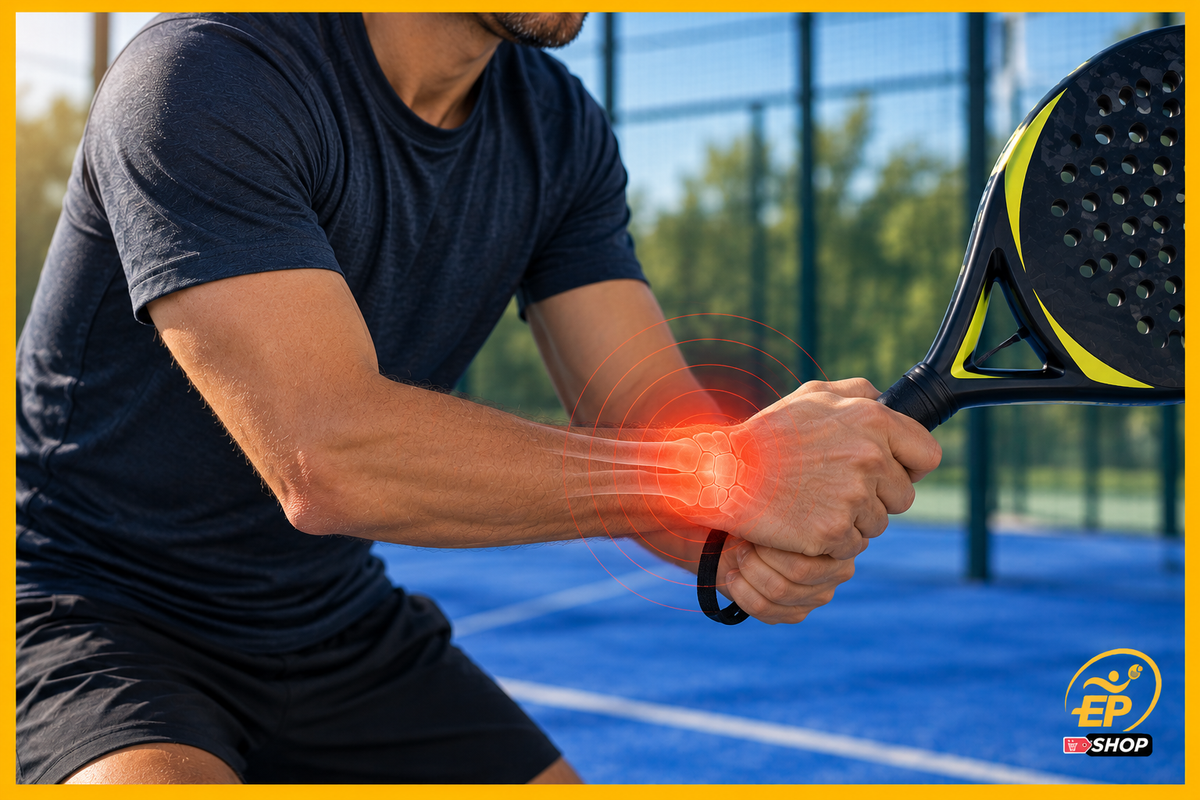
Padel puts a lot of strain on the arms and forearms, but avoid compensating by using other parts of your body, such as your wrist. You will be less effective over time and may get injured more easily. Strengthen your wrist to improve its resistance. Stay constantly on the move on court, ready to react quickly to your opponents' balls.
Of course, you will have understood that there is one thing you should not neglect: your physical preparation for padel, which will guarantee the physical endurance to maintain such positions and move quickly all over the court.
Reading ball trajectories: Anticipating to defend better
Anticipating ball trajectories is another essential point for good defence. With training, you will be able to understand in advance how the ball will move. This will allow you to position your padel racket optimally to return the ball correctly
Strategy and communication: The key to team play
Padel is above all a team sport, and effective communication with your partner is crucial for success. Here are a few points you can work on to improve your defence as a pair.
Establish a plan: be in sync with your partner
Before starting a match, discuss with your partner to establish a clear strategy. It is essential to have a plan in mind and understand how you can cover each other on court. Analyse the trajectory and power of the ball, anticipate your opponents' movements, and make sure you are in sync to better block your rivals.
Lobs and "cross-court play" in tandem: coordinate your efforts
Coordination between you and your partner is crucial in defence. Use lobs and cross-court play in a coordinated way to keep the pressure on your opponents. Make sure your shots are synchronised to maximise your defensive effectiveness.
Being patient as a team: managing concentration
Patience is essential when you play as a team. Padel matches can be long, and it sometimes takes several attacking shots to score a point. Focus on the game, maintain your concentration and do not rush your actions.
Even if your concentration decreases slightly as the match goes on, try to control it and motivate your partner to do the same to avoid costly errors.
Communication with your partner: build rapport
Communication with your partner is not only about the game, but also about the human relationship on court. Train together, learn to know each other's strengths and weaknesses, and set goals to improve at padel as a team. The more you train and practise your shots together, the more you will become a formidable pair on court.
In conclusion, defence in padel is an essential aspect of the game that requires particular attention. By using appropriate defensive techniques, anticipating ball trajectories and communicating effectively with your partner, you can become a solid defender and contribute to your team's success on the padel court.
So, put these tips into practice in your next matches and show your opponents that you are ready to do anything to defend your court!