FIND YOUR RACKET
 COMPARE MODELS

Choosing the racket you’ll play many matches with is often difficult. Padel is a relatively new sport that’s growing rapidly, with many brands in the market. There are hundreds of brands, each offering dozens of models, which makes choosing the right equipment a real challenge. That’s why we’re here with our blog posts to help you choose.
Here are the three mistakes we see most often among padel players looking to buy a new racket.
1. Choosing a racket that’s too light
People often think a lightweight padel racket helps them play better and reduces the risk of injury.
a. Do you really play better with a lighter racket?
It’s worth saying that a lightweight racket offers a better grip and greater manoeuvrability for most shots. But be careful: weight is a very important factor in a padel racket. If it’s too light, you may find yourself seriously lacking power. You might say: “But you don’t need power in padel!” And I’d reply: “Exactly!”
But when you play a forehand, a bandeja or a volée, you need the racket’s momentum to put what we call weight behind the ball. This weight gives the ball better pace off the racket and greater depth.
A heavier racket will also be more stable on impact, giving it greater forgiveness.
b. Are you less likely to get injured with a lightweight racket?
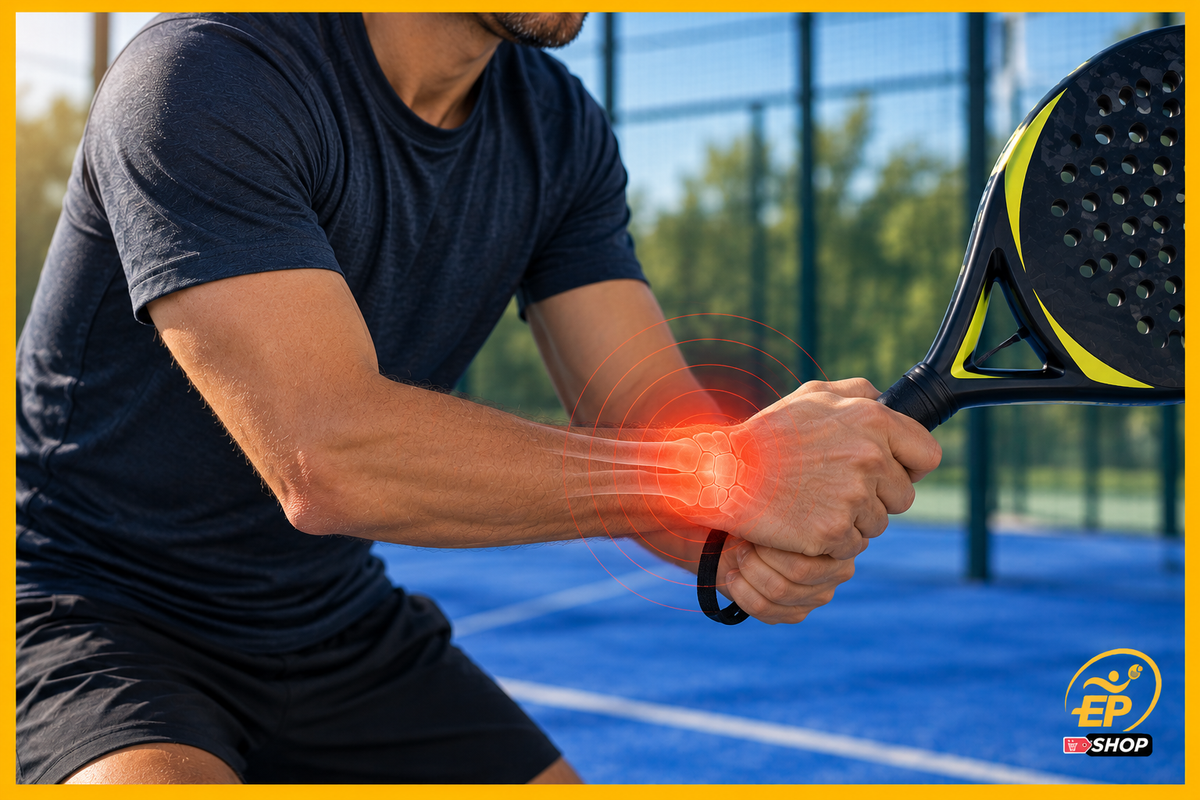
A racket that’s too light can actually make pain from conditions such as tendinitis and tennis elbow worse, rather than relieve it.
That’s right! With a very light racket, you tend to hit harder to send the ball as far as you would with a heavier racket. Hitting the ball harder puts more strain on your arm and increases vibrations in the racket, which could ultimately make any arm pain worse…
That’s why it’s important to find the right weight for your next racket. And not just the right weight, but materials suited to your needs too.
The average weight is between 360g and 370g. Lighter rackets can suit young players, women or beginners looking for greater manoeuvrability to help them improve quickly, but they may outgrow these rackets sooner.
2. Buying the same racket as the professionals
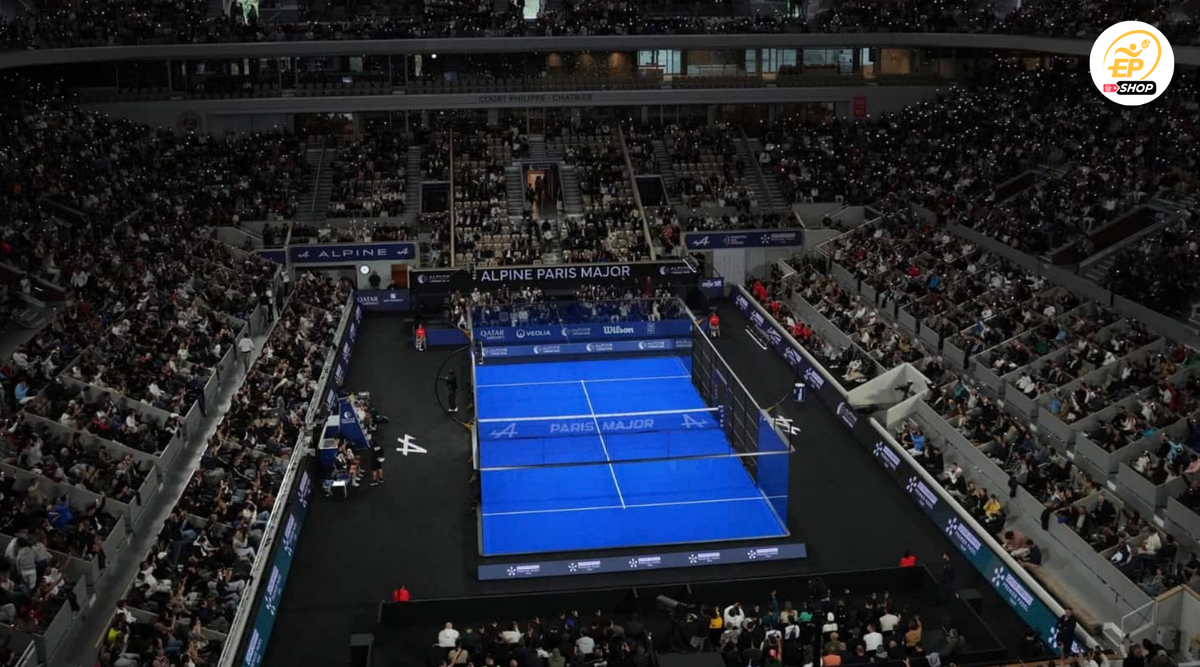
Videos like this are probably what made you want to work up a sweat on a padel court!
Professional players are hugely impressive, winning extraordinary points with cutting-edge rackets. These rackets meet specific needs that the players have developed over the years.
As you might expect, their needs are not the same as those of amateur players. Some rackets used by the world’s top padel players are comfortable and can be recommended to beginners and experienced players who want to enjoy themselves. Take Fede Chingotto’s Vertex 03 CTR, Ariana Sanchez’s Alpha Motion and Juan Tello’s Vertex 03 Comfort: all three are enjoyable, technologically advanced rackets that are very easy to handle. You can also read our blog posts comparing racket brands, such as Babolat vs Bullpadel, to help you decide.
In general, rackets used by professional players are not suitable for beginners: their characteristics do not make for a comfortable, enjoyable playing experience at that level. Babolat’s Viper rackets, for example, are designed for advanced players. That’s why the French brand has developed its racket line into several ranges:
- The Viper range, very stiff and explosive: Counter Viper / Air Viper / Technical Viper

- The Veron range, less stiff and easier to play with: Counter Veron / Air Veron / Technical Veron

- The Vertuo range, more flexible and much easier to handle: Counter Vertuo / Air Vertuo / Technical Vertuo

In short, you can buy the same racket as your idol, but be very careful about which model you choose. Do your research and, if possible, try it out first, or you could be disappointed when you play your first match with it.
3. Wanting a racket that’s too head-heavy
In padel, one of the great achievements is learning to hit the ball out of the court with a smash “out by three” or “out by four”. A head-heavy racket can indeed make it easier to put power into the ball. A racket is considered head-heavy when its balance point is 265mm or higher. Diamond-shaped rackets generally have the most weight in the head.
Their shape puts more material at the top of the racket. As you may have seen in the article "understanding rackets better so you can choose the right one", these rackets offer more power but are harder to handle.
It’s only natural, then, that attacking players who want to hit balls out of the court choose rackets with more weight towards the head. There’s something players are rarely told… If they can’t hit balls out of the court with a round or teardrop racket, they won’t manage it with a diamond-shaped racket either. Most of the time, it comes down to technique. And a head-heavy racket with very stiff foam can have the opposite effect to the one you want if your technique isn’t right.
That’s why, especially when you’re starting out in padel, it’s better to choose a racket that will help you improve quickly. Diamond-shaped rackets are therefore rarely recommended for players who want to learn quickly and give themselves the best chance of success.

Joffrey GILANT