FIND YOUR RACKET
 COMPARE MODELS
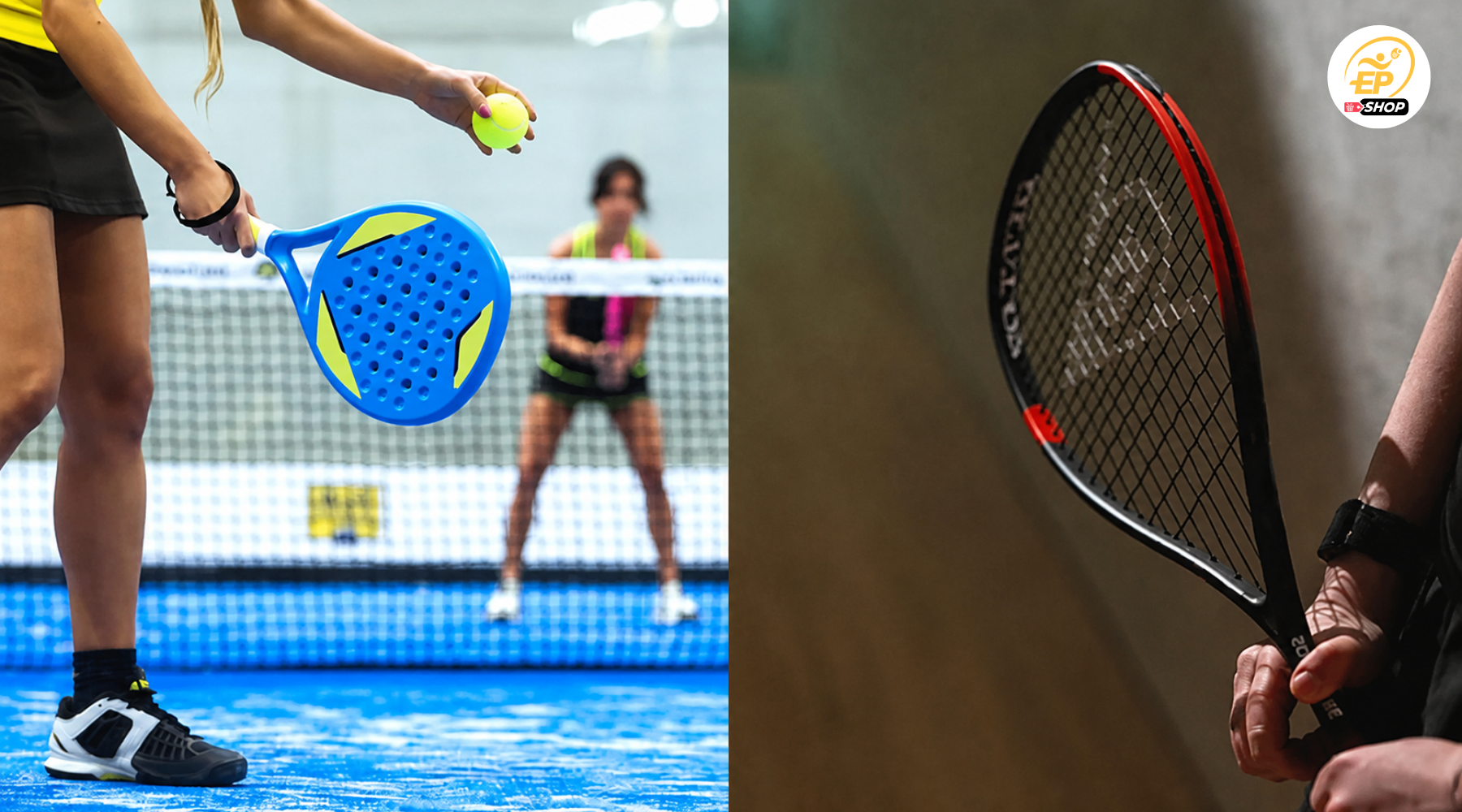
Padel and squash: two racket sports going head-to-head in a friendly battle to win over players worldwide! Although they share common roots, these two disciplines offer very different playing experiences.
Whether on a sunny padel court or in the confined space of a squash court, each sport attracts enthusiasts of all ages and levels. In this article, we take a close look at the key differences between padel and squash. Let's find out why both sports are enjoying such soaring popularity!
What is padel?
Padel is a racket sport played mainly in doubles, on an enclosed court with walls. It was invented in Mexico in the 1960s and quickly gained popularity, particularly in Spain and South America. The rules of padel are similar to those of tennis, but the game uses a lighter ball and a stringless, perforated racket. Padel attracts many new players thanks to its fun, social nature and accessibility.
If you want to explore this sport in more detail, we invite you to check out our article on the rules of padel.
What is squash?
Squash, on the other hand, is an individual or doubles sport played in an enclosed space, where players hit a ball against a wall. The origins of squash date back to 19th-century England. The game requires a light racket and a bouncing ball, and is usually played indoors. Squash is renowned for its intensity and fast-paced rallies, relying heavily on the players' fitness and strategy.
Key differences between padel and squash
Court and equipment
One of the most striking aspects distinguishing padel from squash is the court size. A padel court is 20 metres long and 10 metres wide, whereas a squash court is much smaller, measuring approximately 9.75 metres long and 6.4 metres wide. Furthermore, padel is played outdoors or in semi-covered facilities, while squash is traditionally an indoor sport.
When it comes to equipment, padel rackets are wider and shorter than squash rackets, and the padel ball is slightly larger and less pressurised than a squash ball, which affects the playing style and movements.
Scoring system
Padel and squash feature distinct scoring systems that shape the flow of matches.
Squash : Squash uses the rally point system. This means that every won rally scores a point, regardless of who serves. The player who wins the point serves the next one. Matches are usually played as best of 3 or 5 games, with a game won when a player reaches 11 points, provided they have a two-point lead. This dynamic format emphasises individual tactics and physical endurance, as every point is crucial.
Padel : In contrast, the scoring system in padel is similar to that of tennis, with points scored as 0, 15, 30, 40 and game. Matches are played in doubles, and to win a set, a team must reach 6 games with a two-game lead. If tied at 40-40, a decisive point is played. This fosters a more social and collaborative atmosphere, as rallies focus on teamwork.
Playing style
The playing style in padel is often described as being more strategic and less physical than that of squash. Padel players use the walls to return the ball, creating longer and more varied rallies. In contrast, squash demands fast execution and explosive movements, with every shot being decisive for the outcome of the point.
Accessibility and popularity
Padel is often considered more accessible for beginners, as it is easier to pick up the basics. Playing as a team also allows you to rely on your partner's support. In contrast, squash can seem more intimidating for new players due to its fast pace and the need to master specific movements.
The popularity of padel has skyrocketed in recent years, including in France, where many clubs are opening their doors to welcome this booming sport. In 2023, padel became one of the most played sports, while squash retains a loyal but more limited audience.
Physical and mental benefits
The advantages of padel
Padel offers a multitude of physical benefits, such as improving coordination, endurance and flexibility. This sport is also a fantastic way to socialise and connect with other players. Whether you are training or taking part in tournaments, padel promotes a friendly and welcoming atmosphere.
The advantages of squash
Squash, on the other hand, is an excellent workout to strengthen the heart and improve cardiovascular capacity. The dynamic nature of this sport helps to burn calories quickly, while building strength and lower-body power. By playing regularly, squash players can improve their agility and speed, which are essential qualities to excel in this sport.
The Padel vs Squash rivalry: a clash of rackets?
With the rising popularity of padel, some squash enthusiasts feel threatened. Many claim that padel, owing to its accessibility and social atmosphere, could divert the attention of squash fans. Criticisms are voiced about padel being perceived as an "easy" sport, branding it a "beginners' sport", whereas squash is often regarded as more technical and demanding.
This rivalry is not limited to recreational players; it also affects federations and clubs. In France, for example, debates often arise over the allocation of resources and facilities between the two sports. Squash clubs fear that facilities are being converted for padel to the detriment of squash courts, raising questions about the future of both disciplines.
However, this tension could also be seen as an opportunity. Some believe that the growth of padel can boost interest in other racket sports, including squash. Rather than competing against each other, these sports could benefit from joint promotion, thereby attracting a broader and more diverse audience.