FIND YOUR RACKET
 COMPARE MODELS
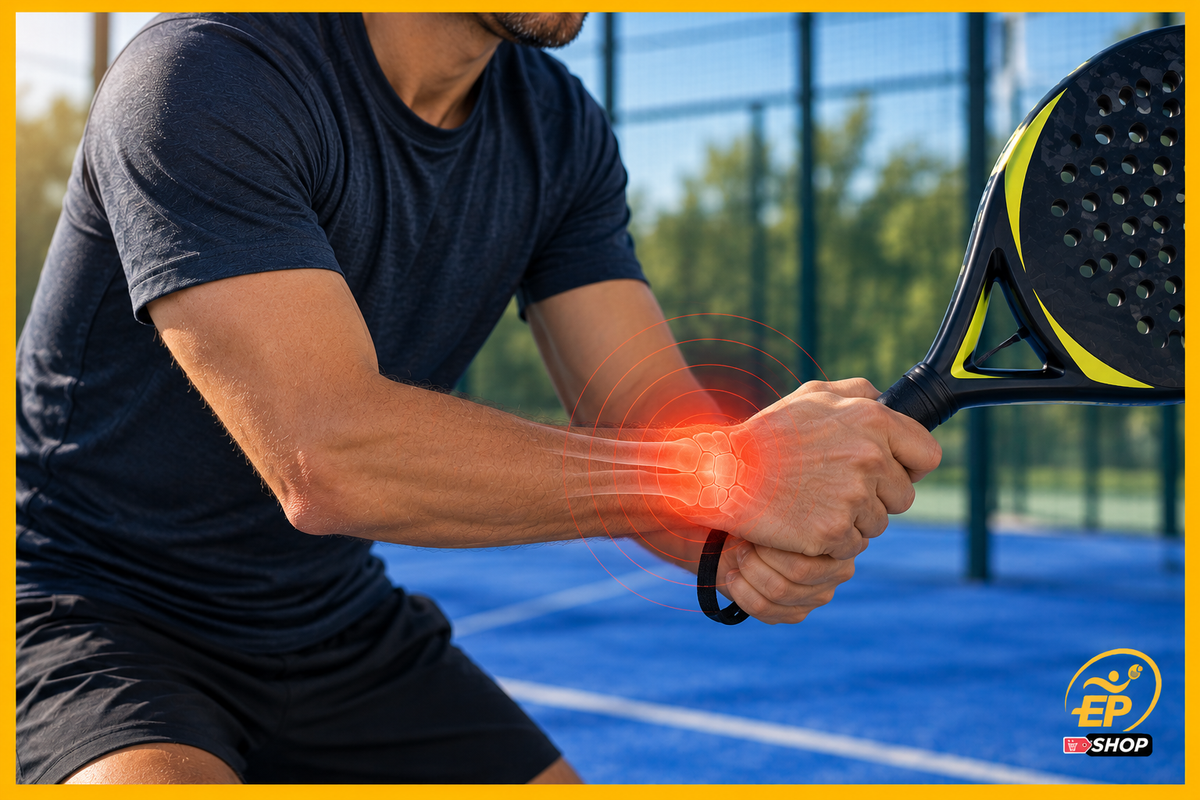
To properly hold your padel racket, the benchmark is the continental grip, also known as the hammer grip: you hold the handle as if holding a hammer, with the thumb and index finger forming a V on top. It is the most versatile grip, ideal for stringing together forehands, backhands, volleys and smashes without changing hands. Executed properly with the right pressure, it determines your power, your precision, and the health of your elbow. Here is how to adopt it and avoid the most common mistakes.
|
Key takeaways • The continental grip (or hammer grip) is the fundamental grip in padel. • The thumb and index finger form a V on top of the handle. • A single grip is enough: the game is too fast to change it for every shot. • Hold the racket firmly but without tension, to protect your wrist and elbow. • An unsuitable grip or handle forces you to compensate and tires your forearm. |
Table of contents
• The continental grip, the fundamental way to hold your padel racket
• The right pressure on the grip to play injury-free
• Choosing the right grip and handle size
• 4 common mistakes when holding your racket
• Frequently asked questions
• Summary
The continental grip, the fundamental way to hold your padel racket
How to position your hand correctly on the handle
The easiest method to find the continental grip takes just a few steps. First, hold the racket by the throat with your non-dominant hand, edge facing you. Then slide your dominant hand down along the handle, and wrap your fingers around it just like holding a hammer. Check the key reference point: the V formed by your thumb and index finger points towards the top of the handle. Your fingers wrap around the grip without squeezing too tightly, and the thumb helps stabilise the shot.
Why the continental grip is ideal for beginners
In padel, distances are short and the ball comes back fast: you simply don't have time to switch grips between shots. The continental grip solves this problem by remaining effective on most shots, from the back of the court to the net. It is also the safest for your joints. Before focusing on your grip, make sure you have a padel racket suited to your level: a pala that is too demanding forces you to compensate and slows your progress.
The right pressure on the grip to play injury-free
The number one mistake on court? Gripping the racket as hard as you can. Squeezing too tightly locks the wrist, stiffens the forearm, and reduces the manoeuvrability of the racket head. The result: less accuracy, more fatigue, and an increased risk of tennis elbow. The right image is holding a bird: hold your racket firmly enough so it doesn't fly away, but not so tight that you crush it.
In practical terms, aim for moderate pressure and slightly relax your fingers between shots, then tighten at impact to direct the ball. Also remember to hold the racket with your other hand between points to relieve tension. To take your technique and positioning further, our guide to improving at padel is the perfect complement to this grip work.
Choosing the right grip and handle size
Grip or overgrip: which one to choose
The grip is the original tape wrapped around the handle: it creates the connection between your hand and the racket. The overgrip, which is thinner, is placed on top to improve traction, absorb sweat and extend the life of the grip. Most players use both and replace their overgrip regularly, as soon as it becomes smooth or slippery. To choose based on your sweat level and playing style, read our guide on how to choose your padel grip, then browse our selection of grips and overgrips.
Adjusting handle thickness to your hand size
Your hand size and handle thickness directly affect your grip. A handle that is too thin forces you to compensate by squeezing excessively, whereas a well-fitted handle is held naturally without straining. If you have large hands, add one or more overgrips to increase circumference and comfort. Conversely, a handle that is too thick reduces manoeuvrability: it is up to you to find the right balance, even if that means testing several setups.
4 common mistakes when holding your racket
A few bad habits come up very often and hinder progress; they add to the other points covered in our padel techniques. Here they are, along with the right fix.
1. Gripping too hard: tension fatigues the forearm and promotes pain. Ease the pressure and only squeeze firmly at the moment of impact.
2. Keeping a tennis grip: too closed, it restricts manoeuvrability in padel, especially near the net. Switch back to the more neutral continental grip.
3. Changing grip on every shot: the game is too fast. Stick to a single, reliable grip so you don't get caught out.
4. Neglecting your grip: a worn grip becomes smooth and slips in your hand. Replace it at the first signs of wear to maintain control.
Frequently asked questions
Which grip should you choose when starting padel?
Without hesitation, the continental grip, also known as the hammer grip. Natural and versatile, it lets you play every shot without changing hands and better protects your elbow. Start with it to develop solid ball control and sound technical fundamentals. You can fine-tune later, but this grip is sufficient in the vast majority of situations.
Should you change grips depending on the shot?
For most players, no. In padel, the ball comes back too quickly to adjust your grip between shots. Only certain advanced players slightly adjust their grip on very specific shots. If you are a beginner or recreational player, stick with the continental grip: it remains effective in both attack and defence.
How to avoid elbow and wrist pain?
Pain almost always comes from squeezing too hard or from unsuitable equipment. Maintain moderate grip pressure, warm up your wrists before playing, and use an overgrip to absorb vibrations. Also check that your handle thickness properly matches your hand size. If pain persists, consult a healthcare professional.
How often should you replace your grip?
It all depends on how often you play. For a regular player, we recommend replacing the overgrip about once a month, or as soon as it becomes smooth and slippery. The original grip, which is more durable, needs changing less often, when it loses its tackiness or causes blisters. A fresh grip means restored control.
Summary
Holding your padel racket properly starts with adopting the continental grip, using a relaxed touch, and looking after your grip. These simple adjustments immediately improve your control, comfort, and longevity on court, while protecting your joints. The final piece of the puzzle is your equipment: to turn a good grip into real progress, choose a padel racket suited to your level and playing style.