FIND YOUR RACKET
 COMPARE MODELS
At the end of 2023, Premier Padel became the only major circuit after acquiring the World Padel Tour. The WPT had been running since 2013 and transformed professional padel in just 10 years. Here is a look back at what we remember and the advances the sport made thanks to the circuit over the years.
What is the World Padel Tour?
In 2013, the World Padel Tour was created to rethink the professional circuit, previously known as the Pro Padel Tour (PPT). For the first time, Spanish beer company Damm held a majority stake in the WPT and drew on players’ views to change how the circuit worked. The aim was to give the sport’s most visible ambassadors — its players — the recognition they deserved. The WPT introduced several measures:
- Expanding the circuit beyond Spain. Once the circuit was well established in Spain, it was time to take it abroad and bring it to a wider audience, making padel an international sport. Padel tournaments began to appear in South America and elsewhere in Europe, alongside those already held in Spain: Buenos Aires, Mexico, Rome and Paris, among others. Spectators in each country could discover the sport and watch the world’s best play it. The result? The number of registered players and padel courts soared in those countries.
- Increased prize money for players. Travelling around the world to compete in tournaments requires extra funding, as well as motivation beyond playing in front of a global audience. Tournament prize money was one of the reasons players joined forces with the WPT against the PPT.
- Broadcasting matches through the media. The World Padel Tour was also ahead of its time, quickly making tournaments available on television in some countries and, more widely, free on YouTube. In France, Canal+ acquired the rights. With the sport growing rapidly, this was an essential source of revenue for the organisation. The WPT’s YouTube channel and website were also very well developed: padel rankings and live scores, highlights and best-of videos uploaded quickly… Everything to satisfy fans and give them the fullest possible padel experience.
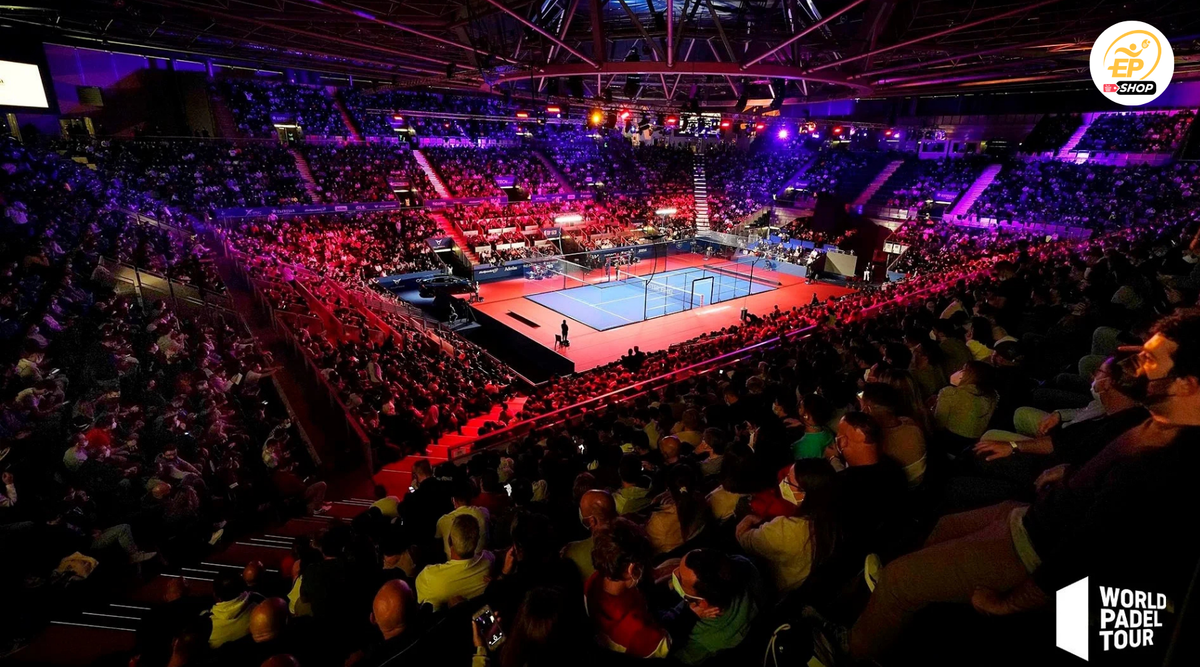
Over those 10 years, the WPT made great strides in boosting padel’s popularity around the world while trying to keep its players happy. It succeeded: the sport’s rising popularity was clear at the final WPT tournament in Barcelona in December 2023, where 15,779 spectators attended — a new record.
Why was the World Padel Tour replaced by Premier Padel?
For several years, the relationship between the World Padel Tour and its players has been strained. As early as 2018, most players had nearly moved to another circuit, the International Padel Tour, now renamed A1Padel. The circuit managed to retain its players at the last minute, but they still wanted higher pay distributed more fairly among all players. The WPT agreed to meet these demands while adding a near-exclusivity clause to the circuit, with the contract running until December 2023.
But in 2021, the creation of a rival circuit called Premier Padel by QSI (Qatar Sports Investments), led by PSG chairman Nasser Al-Khelaifi, changed everything. With the creation of the PPA (Professional Padel Association), which defends players’ interests with president Alejandro Galan acting as an intermediate, the pros began looking towards Premier Padel, which promised them greater financial security (prize money twice that of the WPT). However, the WPT’s exclusivity contract stood in their way. The result? A legal and financial battle between the players, Premier Padel and the WPT.
The World Padel Tour found itself under pressure from Qatar’s and Premier Padel’s financial resources, in much the same position as the PPT a few years earlier. Despite its resistance (often pushed too far), the 2023 season alternated between WPT and Premier Padel tournaments, and the Damm-owned circuit was acquired by QSI, leaving just one main circuit from 2024 onwards.
Premier Padel vs World Padel Tour: what are the differences?
2024 was Premier Padel’s first season as the main circuit, with several differences from the WPT. First, the number of tournaments: after 27 WPT tournaments and eight Premier Padel tournaments in 2023, 24 tournaments took place in 2024, plus the Master Finals in December. There were four majors, comparable to tennis Grand Slams, in Paris, Rome, Mexico and Doha. The remaining tournaments were split between P1 and P2 events, which award fewer points. At the end of the year, the final tournament brings together the season’s best pairs: the Master Finals take place in Barcelona for the grand finale. Fewer tournaments, more prize money and stars satisfied with how the circuit is organised.
WPT and Premier Padel: what are the consequences of the change?
This change took place gradually over two years, giving players time to adapt to the new tournaments. Nevertheless, the change and the new way of operating have had consequences. First, the number of tournaments has fallen, particularly in Spain. Some cities and organisers are disappointed that they no longer host tournaments. This internationalisation is also reflected in the treatment of lower-ranked Spanish-speaking players (those outside the world’s top 30), who are more numerous than players from other European countries where padel is still developing rapidly. In fact, those European players have an advantage when it comes to entering tournaments or qualifiers. There has even been talk of creating a second players’ association for lower-ranked Spanish-speaking players.
As for inequality, the disparities between the top seeded players and everyone else have not been resolved; in some cases, they have even worsened. Premier Padel places great emphasis on its headline stars, the best pairs in the world, sometimes neglecting the others. With padel still developing as a sport, it can be difficult for professionals outside the world’s top 30 to make a living and afford to travel, especially with fewer tournaments in Spain.
To conclude, the World Padel Tour has been a tremendous catalyst for padel internationally, introducing the sport to a wider audience through its tournaments and stars. It also helped create real excitement around the professional circuit and brought the world’s best players greater media attention. It was also the stage for many landmark moments, such as the split between Fernando Belasteguin and Juan Martin Diaz, the dominance of Juan Lebron and Alejandro Galan, and the rise to power of young players such as Arturo Coello and Agustin Tapia. All these moments made the WPT the most important professional circuit in padel up to that point.
Premier Padel’s rise to the top can be seen as a positive continuation of what the WPT began. The idea is to grow internationally as a circuit that attracts crowds from around the world to watch its stars compete across the globe. But it is important not to lose the very essence of padel, so dear to professional and amateur padel players alike: sharing the court and enjoying the game.