FIND YOUR RACKET
 COMPARE MODELS
Fifteen years ago, padel was a minor sport, played by only a few thousand people. Today, there are nearly 2 million players in Spain, including around 100,000 licensed players, making it the country's second most played sport after football and ahead of tennis. How can this remarkable growth in Spain and around the world be explained?
A little history…
1969, Acapulco, Mexico. Enrique Corcuera, an entrepreneur, decides to build a tennis court in his garden. The problem is that he does not have enough space behind his house. He therefore decides to create a smaller 20m by 10m court and build walls around it to avoid having to fetch the ball when his wife misses her shots. Padel was born. Introduced to Spain in 1974 by his friend, Prince Alfonso de Hohenlohe, padel quickly became a popular sport among Hispanic high society, particularly in Marbella, where the first official club opened. Later introduced to Argentina and then throughout Latin America, padel's popularity grew slowly but surely in the Spanish-speaking world. It experienced major growth in Buenos Aires, where it became the country's second national sport after football.

The first padel rackets and their inventor, Enrique Corcuera
The major evolution since the year 2000
The early 2000s were a pivotal time in the life of padel, culminating in the creation of the professional circuit, the World Padel Tour, in 2005. Thanks to the establishment of the WPT, more and more people are becoming interested in padel, and its reach is becoming increasingly international. Sponsored by the biggest padel racket manufacturers such as Bullpadel and Nox, the circuit is gaining more and more momentum, while more “traditional” racket brands such as Head, Babolat and Adidas are sponsoring more and more players.
Since then, padel has experienced exponential growth, even overtaking tennis in the ranking of the most played sports in Spain. Professional tournaments bring together thousands of people, and more and more clubs are opening, whether affiliated with tennis clubs or not.
The reasons for its success
But what are the reasons behind this sudden and surprising success? First of all, ease of installation. A padel court measures 20m by 10m, whereas a tennis court can be up to twice as large depending on the run-off area. Small municipalities are therefore more inclined to provide a padel court for their residents. Padel is also more accessible to everyone and less physically demanding. Younger people, but especially seniors, can therefore play without fearing serious injuries; the average age proves it: 39 years old.
Furthermore, the concept of padel is also very sociable. Clubs are often linked to a bar or restaurant, where people can share a beer or a meal before or after a match. During the pandemic, clubs even gained market share from bars, which closed earlier. More than a sport, padel is a way of life unique to Spain.
Covid also contributed to this rise in power over the past two years. As a non-contact sport played outdoors, padel was one of the sports least affected by the various government restrictions. Athletes who could no longer practise their sport naturally turned to padel, which greatly helped increase its popularity as well as the number of players.
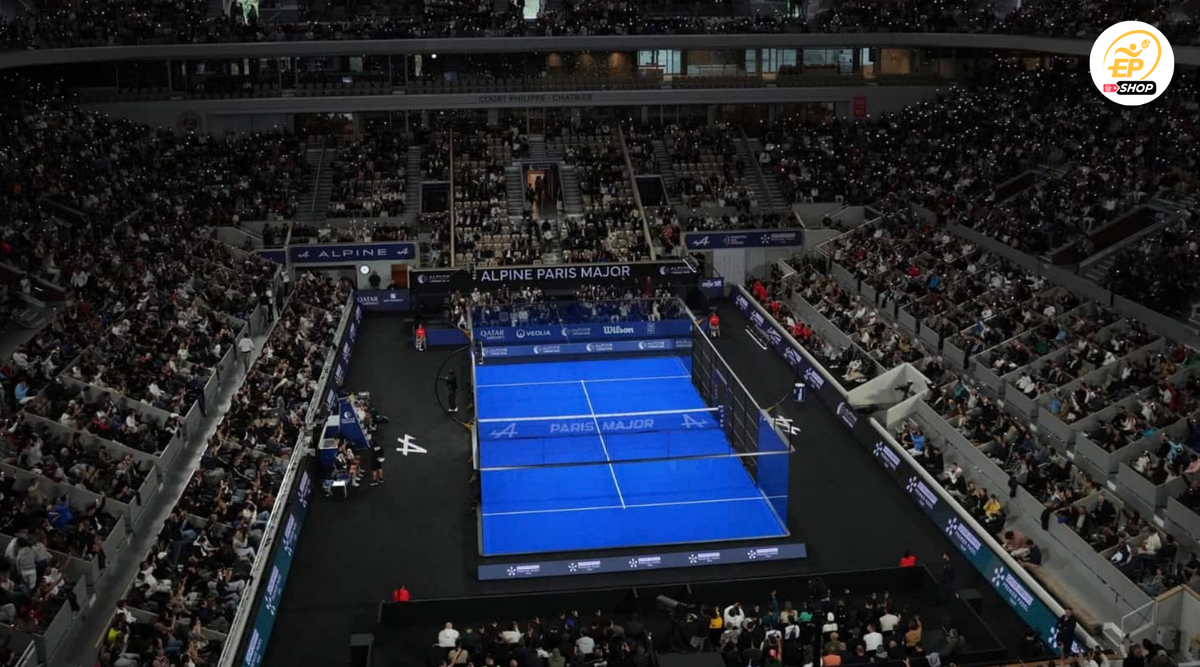
Finally, we can mention the WPT, which has enjoyed great success and whose players are mostly Spanish or Argentine. As we know, being represented internationally by an athlete from one's own country also helps increase the sport's popularity. Spanish venues are often full, as at the 2019-2020-2021 Master Final in Madrid, where approximately 10,000 people gathered in a packed venue.

Master Finals in Madrid
And in France?
In the hexagone, padel is a few years behind, but it is also making strong progress. There are 150,000 players, including around 15,000 licensed players, spread across 411 clubs throughout the country. Due to the less sunny climate, some clubs have opted for indoor courts, but the desire to create a sociable venue remains, with bars or restaurants accompanying the courts.
Another growth factor is that many professionals from other sports, particularly tennis, are taking up padel, such as Alix Collombon, a former professional tennis player who is now world number 20. Unlike the Spanish, France does not have a padel federation; a section dedicated to the sport is attached to the FFT. Padel therefore has the support of a major federation, with experience and resources that can help it grow steadily within the French sporting landscape. But will it make the right decisions to help the sport develop? The future will tell us...

Alix Collombon, world number 20
Another sign of padel's development is Canal Plus acquiring the WPT's TV rights for the next five years. The first broadcast was a success, with decent viewing figures for the 2021 Master Final. In addition to broadcasting in France, Canal Plus will air it across all its international channels. Padel is on the rise worldwide.
Having gone from a minor, little-played sport to a phenomenon in the Spanish-speaking world, padel continues to expand into other countries, including France. With the overall decline of tennis, the discipline has every chance of becoming the number one racket sport in the future.