FIND YOUR RACKET
 COMPARE MODELS
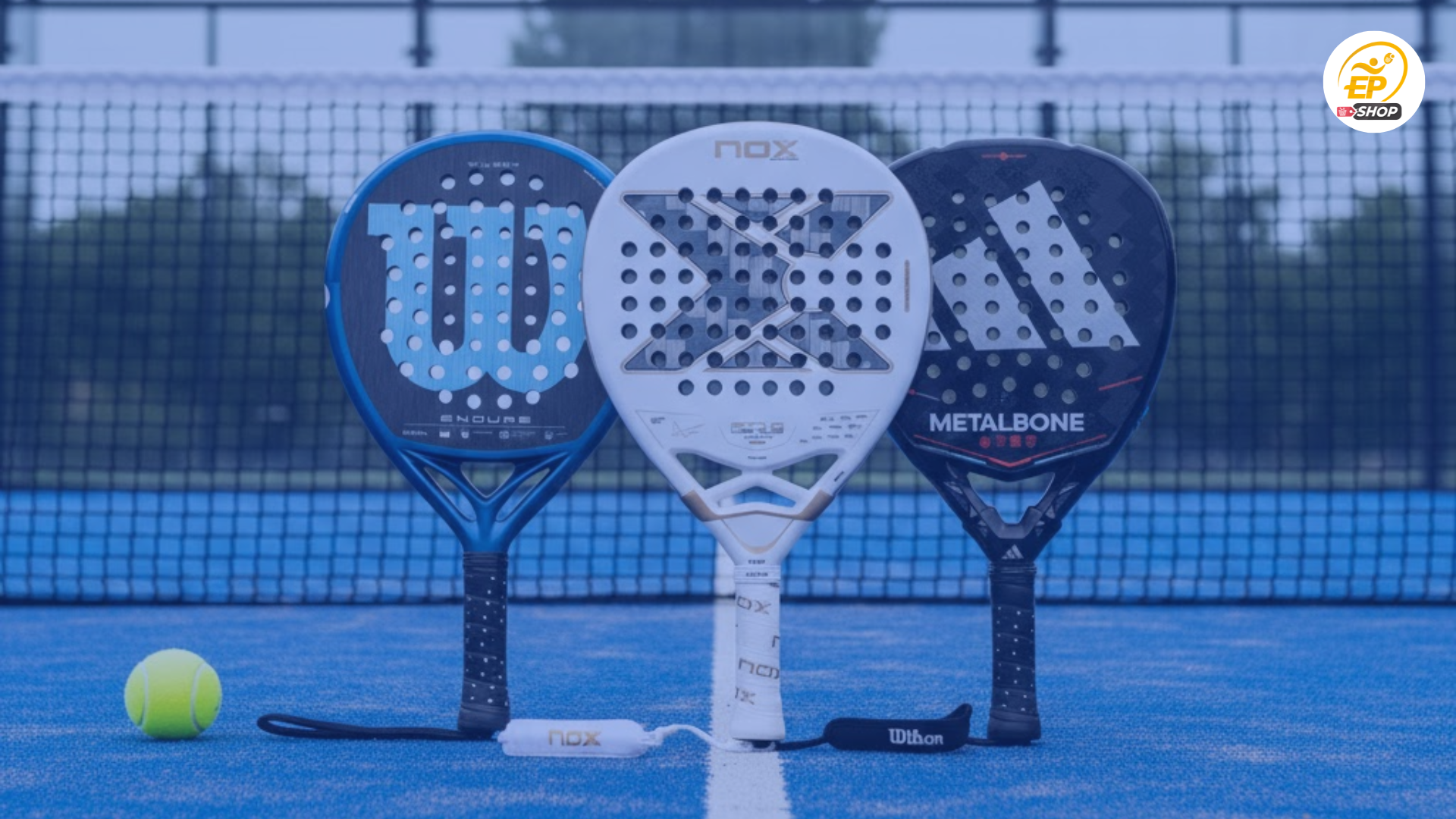
Between cutting-edge technologies and eye-catching designs, it is easy to feel lost. To make the right choice, let’s set marketing aside and focus on the technical details and your enjoyment of the game.
A padel racket (or pala) is packed with technology. Unlike a tennis racket, it has no strings but a solid core with holes.
1. Shape: Your first style consideration
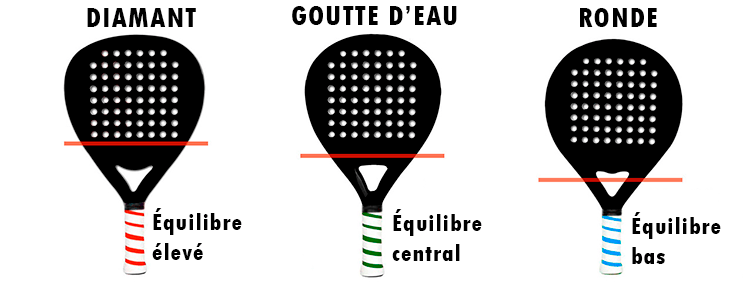
The shape determines the "sweet spot" (ideal hitting zone) and how the racket plays.
The balance is the point at which the racket rests on a pivot. It determines how "light" or "heavy" the racket feels in your hand.
-
Weight in the handle (< 265mm): The racket feels light. Ideal for quick reflexes at the volée and in defence.
-
Neutral balance (~270mm): The compromise for players who want to do it all.
-
Weight in the head (> 275mm): A "hammer" effect. Ideal for smashes (Par 3, Par 4), but watch out for your elbow (epicondylitis)!
3. Materials: The heart of the racket
This is where technology has advanced the most. It is no longer just about carbon, but also about density.
The surface material (faces)
-
Fibreglass: Flexible and forgiving. It absorbs vibrations and "propels" the ball effortlessly. Perfect for beginners.
-
Carbon fibre (3K, 12K, 18K, 24K): In general, the higher the number, the denser the weave and the stiffer the racket. Carbon delivers pinpoint precision and crisp power.
The core (foam)
-
EVA rubber: The most common type. It comes in several densities (Soft, Medium, Hard). The harder it is, the more control you have at high intensity.
-
FOAM foam (polyethylene): Very soft, it offers incredible "ball output" (a trampoline effect) and complete comfort for your joints.
4. Weight: Don’t go too heavy!
The average weight is tending to fall to protect players’ health.
-
Women / Juniors: 345g - 360g
-
Men (Standard): 360g - 375g
-
Attacking players: +375g
Expert tip: A light racket that you control perfectly is better than a heavy racket that lets the game dictate play towards the end of a match.
5. What’s new: Face finishes
Today, almost all rackets have textured surfaces (3D or sandblasted).
-
The benefit? Gripping the ball to generate more spin (a slicing bandeja or a brushed serve).
In summary: Which racket is right for you?
-
Just starting out? Round shape + fibreglass + Soft rubber.
-
Improving your game? Teardrop shape + 3K carbon.
-
Are you an attacking player? Diamond shape + 12K or 18K carbon + Hard rubber.