FIND YOUR RACKET
 COMPARE MODELS
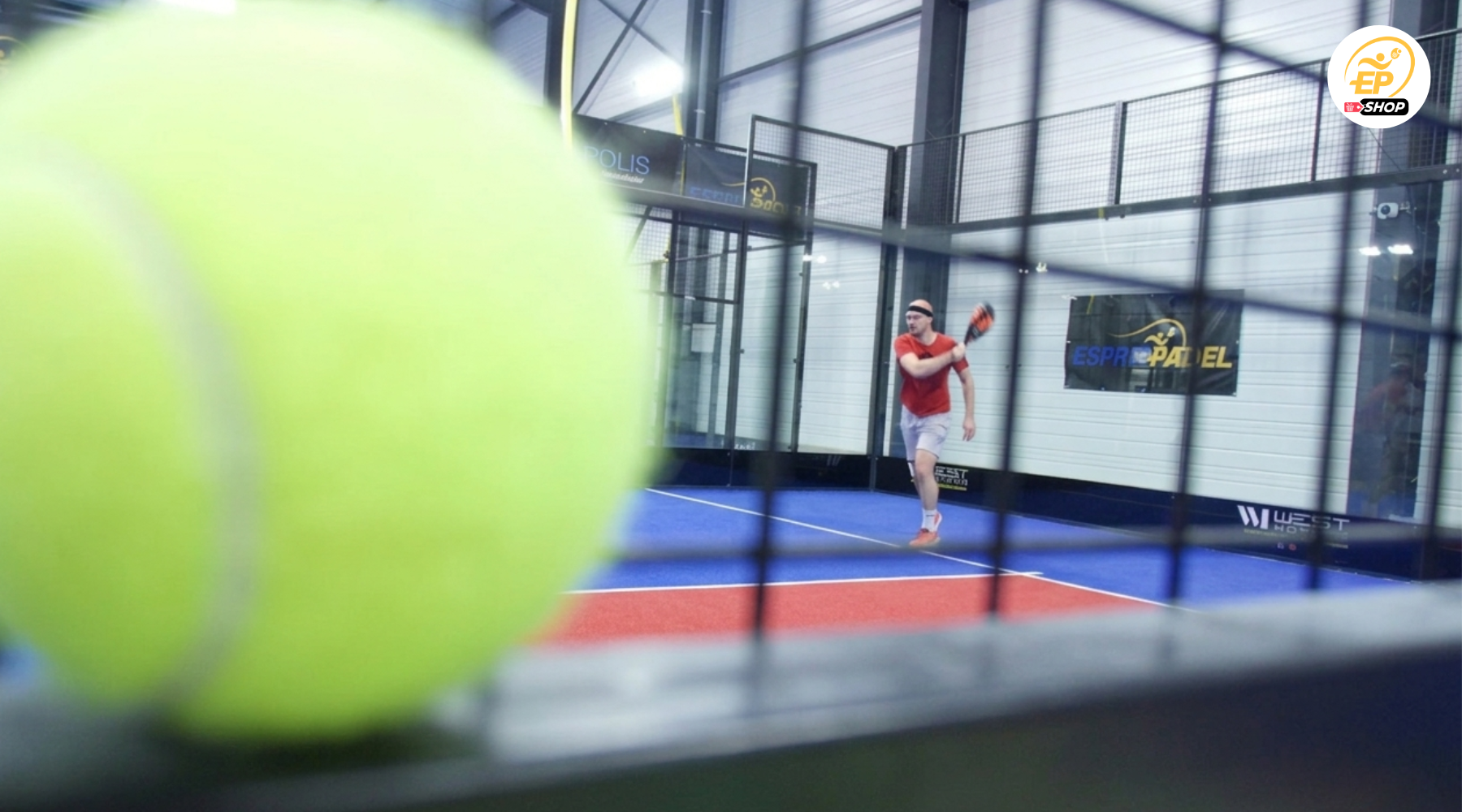
"Padel is the new Tennis" — but can you play padel with tennis balls?
It's round, it's (often) yellow, and a brand name is printed on it... It isn't easy to tell tennis balls and padel balls apart. Yet they are an essential element of the game and the enjoyment you get from playing, tailored of course to your expectations and skill level.
Yet, like every piece of equipment in sports, the specifications are strictly defined by international federations.
Characteristics of the padel ball
There are three notable differences:
- Ball pressure : In tennis, the ball must have an internal pressure of just over 2 bar, whereas in padel, it will be around one bar for padel balls.
- Ball bounce : a direct result of the pressure difference, the bounce of a padel ball will be lower than in tennis and will slow down the game.
- Size and weight : as tennis players are perfectionists (yes indeed), the weight of a tennis ball is strictly regulated and must be between 56.7 and 58.5g. For padel balls, this range is broader, between 56 and 59.4g. The size is identical for both types of balls, with a diameter between 6.35 and 6.77cm
These different standards allow manufacturers to create greater differences between each type of padel balls, and these differences will allow every player to find "their" favourite type of balls.

.
Which padel balls should you choose?
Casual players or beginners
When starting a new sport, or playing irregularly, it is generally easier when the pace is not too fast and you have enough time to get into position and return the ball!
In this case, you should opt for balls with lower pressure, the least "stiff".
Players who enjoy slower play or "classic padel"
Your goal is to make your opponent work hard and force them to defend countless balls gently running along the fence. A slow víbora down the middle or a beautiful bandeja brings you immense joy.
Without a doubt, "slow" balls are the ideal weapons to wear down your opponents. And luckily, every brand has developed this type of balls that highlight "classic" padel.
Babolat Plus balls:

This is the comfortable ball from Babolat that provides medium speed and great durability. One of its advantages is that it will remain fairly consistent throughout the various matches you play, both in terms of bounce and feel on the racket!
Head Pro balls

Head Padel Pro balls feature a reinforced core and premium felt quality that deliver control, precision and excellent durability.
Players who love fast-paced play or "modern padel"
Do you feel like a Juan Lebrón or an Agustín Tapia? Do you feel at home when the ball flies at 200 km/h and bounces fiercely off the glass? Is your religion Holy Par 3 and the Pope Par 4?
The different manufacturers have, of course, thought of you, and every brand has created balls to speed up play, particularly since the arrival of sand-free artificial turf courts (like those used by WPT or Esprit Padel ;-))
Below you will find examples of balls meeting these characteristics:
Head Pro S balls:

These are the official balls of the World Padel Tour and the best-selling balls. The Head Pro S is harder and livelier for faster play. This ball offers a clean, light and fast bounce, as well as good control.
Babolat Tour balls:
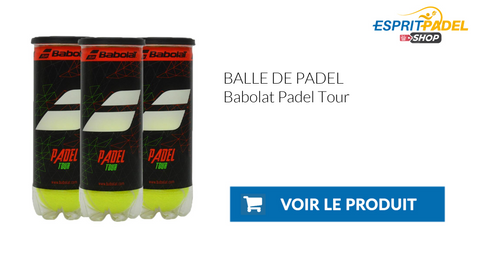
Babolat's foray into fast balls is a success. This competition-oriented fast ball is made of braided fibres that increase spin and improve durability.
Bullpadel Premium Pro:

This ball promotes fast play thanks to its liveliness. Its high-density rubber core doesn't require huge power to make it travel very fast. In addition, it offers great durability, which is an advantage for training sessions.
Lifespan of a padel ball
This is of course an aspect we are all mindful of, whether for economic or ecological reasons ! I would say that this lifespan also depends on what you enjoy on a padel court.
If you prefer playing a positional padel game made up of long rallies, bandeja, víbora and other "kick into the fence" shots, the balls can be kept for a few weeks. If your game relies on acceleration, par 3s or par 4s, the balls will only last for one or two matches maximum…
Costly and not very eco-friendly. There is a solution to improve both issues.
Ball pressurisers
The principle is simple. Balls lose their bounce because they lose pressure. Since rubber is porous, it is possible to "reinflate" them by subjecting them to external pressure.

This is exactly what Pascal Box offers with their system. Thanks to a simple system consisting of a sealed box and a pump (included) to increase the pressure inside the container, the balls are "re-pressurised" in less than 12 hours!
From my point of view, it is an essential accessory for every padel player!
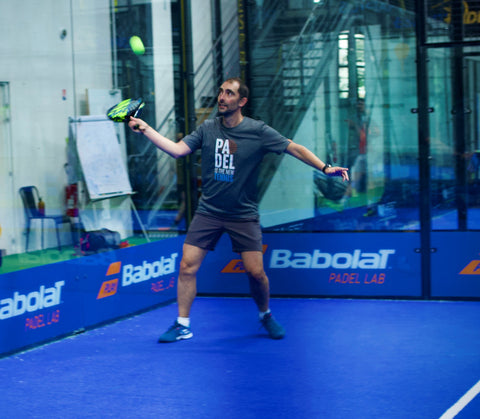 Sébastien Cornet, founder of Esprit Padel