FIND YOUR RACKET
 COMPARE MODELS
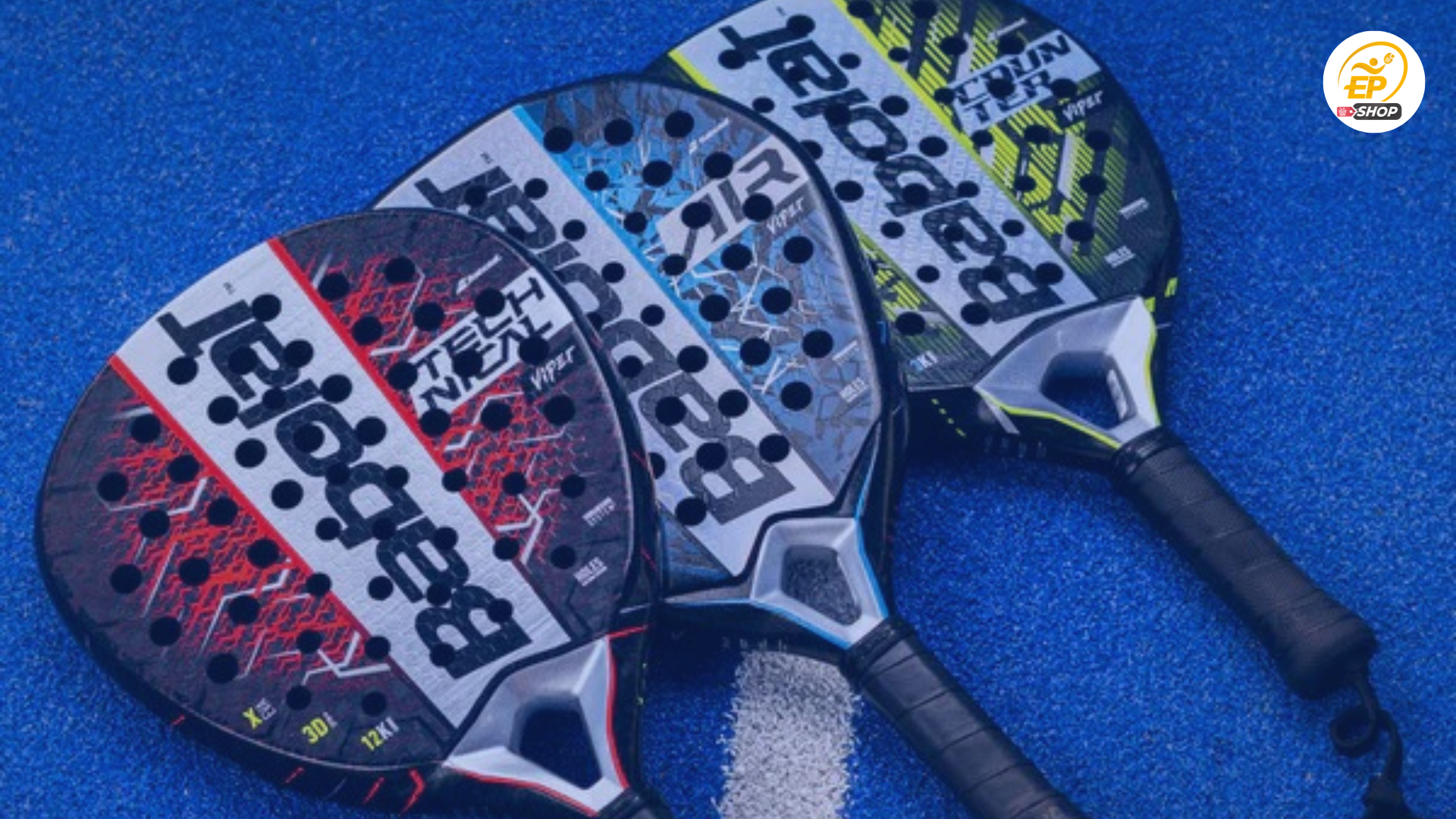
Choosing your padel racket shape is the primary key decision before making a purchase. Round, diamond or teardrop, each shape offers distinct technical features that directly influence your playing style, comfort and on-court performance.
Understanding the importance of padel racket shape
A padel racket's shape is not just a matter of aesthetics. It dictates weight distribution, the position of the centre of gravity and, consequently, your racket's overall balance. These elements directly influence your ability to generate power, control your shots, and manoeuvre your racket effectively during play.
Whether you prefer renowned brands such as Bullpadel, Babolat, Dunlop, Head, Wilson, Siux or Technifibre, they all offer these three standard shapes. Your choice should therefore be based on your level, playing style and progression goals before even considering the brand.
The round-shaped racket: control and manoeuvrability
Technical specifications
The round racket stands out due to its centre of gravity located lowest among the three shapes, creating what is known as a "handle-heavy" balance. This setup offers several major benefits for specific player profiles.
Advantages of the round shape
The optimal hitting area, known as the sweet spot, is particularly large on round rackets. This increased forgiveness helps maintain good control even on slightly off-centre hits, considerably reducing unforced errors. The exceptional manoeuvrability of this shape facilitates quick changes of direction and defensive reactions.
Who is it suitable for?
This shape is ideal for beginners discovering padel, as it is more forgiving of mishits. Casual players will appreciate its ease of use, whilst regular players without prior racket sports background will find it an excellent tool for improvement.
Even experienced players may opt for a round racket for specific tactical reasons. A defensive right-side player can thus maximise control to neutralise opponent attacks, whilst a powerful attacker may look to add more touch to their game.
The diamond-shaped racket: maximum power
Technical specifications
In contrast to the round shape, the diamond racket has its centre of gravity located in the racket head, creating a "head-heavy balance". This weight distribution generates significant leverage upon impact with the ball.
The advantages of the diamond shape
Power is the main asset of this shape. Every shot benefits from the momentum created by the weight concentrated in the racket head, significantly accelerating the ball. This feature proves devastating for smashes and decisive attacking shots.
Contrary to popular belief, manoeuvrability is not entirely lost, even if it remains lower than that of a round racket. Manufacturers constantly work on weight optimisation to maintain acceptable balance.
Target player profiles
The diamond shape is primarily intended for advanced players who already possess solid technique. The required precision and the management of head weight demand a certain level of experience. Intermediate players seeking extra power may also find it appealing, provided they have developed sound technique.
Former tennis players transitioning to padel will feel particularly comfortable with this shape. Their experience handling rackets allows them to take full advantage of a diamond racket's features. A power player will look to enhance their attacking qualities, whilst a right-side player gains aggression to finish off points.
The teardrop-shaped racket: the perfect balance
Technical specifications
The teardrop shape, also called drop shape or teardrop, represents the ideal middle ground between the previous two shapes. Its medium centre of gravity gives it a so-called "neutral" weight, delivering a harmonious balance between power and control.
The benefits of versatility
This intermediate shape combines the qualities of round and diamond rackets without their major drawbacks. The sweet spot is located in the centre of the face, offering good forgiveness while generating respectable power. This versatility makes it the most popular shape among players of all levels.
A universal choice
The teardrop racket suits a very wide range of players. From the ultra-powerful advanced player seeking more control to the motivated beginner progressing fast, as well as the regular player experimenting with different styles, this shape meets numerous demands.
If you are unsure about your playing profile or looking for a versatile racket capable of adapting to different match situations, the teardrop shape is a dependable choice that won't let you down. It allows you to explore both attacking and defensive play without major technical limitations.
How to choose the right racket shape for your game
Assess your playing level
Your padel experience is the primary selection criterion. A beginner will naturally favour a round shape for its forgiveness and comfort. An intermediate player might lean towards a teardrop to improve, whilst an advanced player will explore the diamond shape if looking for power.
Identify your playing style
Are you more of a defender or an attacker? Do you mainly play on the right or the left? These questions partly determine which shape suits you best. Defenders and right-side players will generally appreciate the control of a round racket or the balance of a teardrop. Attackers and left-side players often look for the power of a diamond shape.
Consider your goals
Do you want to compensate for certain weaknesses or accentuate your strengths? A powerful player may choose a round racket to add finesse, whilst a technical player might opt for a diamond shape to gain aggression.
The importance of on-court testing
Beyond all theoretical advice, your personal feel remains the decisive factor. Every player has a different build, strength and technique. Don't hesitate to ask your clubs to test different racket shapes. This hands-on experience will allow you to confirm or adjust your first impressions and fine-tune your choice based on real on-court sensations.
Other criteria to consider
Racket weight
Beyond the shape, the total weight of your racket significantly influences your game. It interacts with the shape to determine the overall feel and manoeuvrability.
Manufacturing materials
The composition of the frame and hitting surface also plays an important role. Modern materials such as carbon fibre, fibreglass, or EVA and FOAM cores affect ball feel and the durability of your racket.
Overall balance
Even within the same shape, different models can feature slightly different balances depending on their construction and the materials used. This balance directly influences your playing feel.
Key takeaways
- Three main shapes: round, diamond and teardrop, each suited to a specific player profile
- The round racket prioritises control and manoeuvrability, ideal for beginners and defensive players
- The diamond racket delivers maximum power, recommended for advanced players and attackers
- The teardrop shape offers an optimal balance between power and control, suitable for all levels
- The centre of gravity determines the main characteristics: low for control, high for power, medium for versatility
Choosing your padel racket shape is an important decision that directly impacts your playing pleasure and progression. Round shape for control, diamond for power, or teardrop for versatility, each option offers distinct advantages tailored to different player profiles.
Remember that all preferences and styles have their place in padel. The key is finding the racket that matches your specific needs and feels right in your hands. To explore the full range of rackets available in these three shapes and find the one that will accompany your progression, visit Esprit Padel Shop, where all racket shapes await you.