FIND YOUR RACKET
 COMPARE MODELS
Becoming a padel referee: the ultimate guide
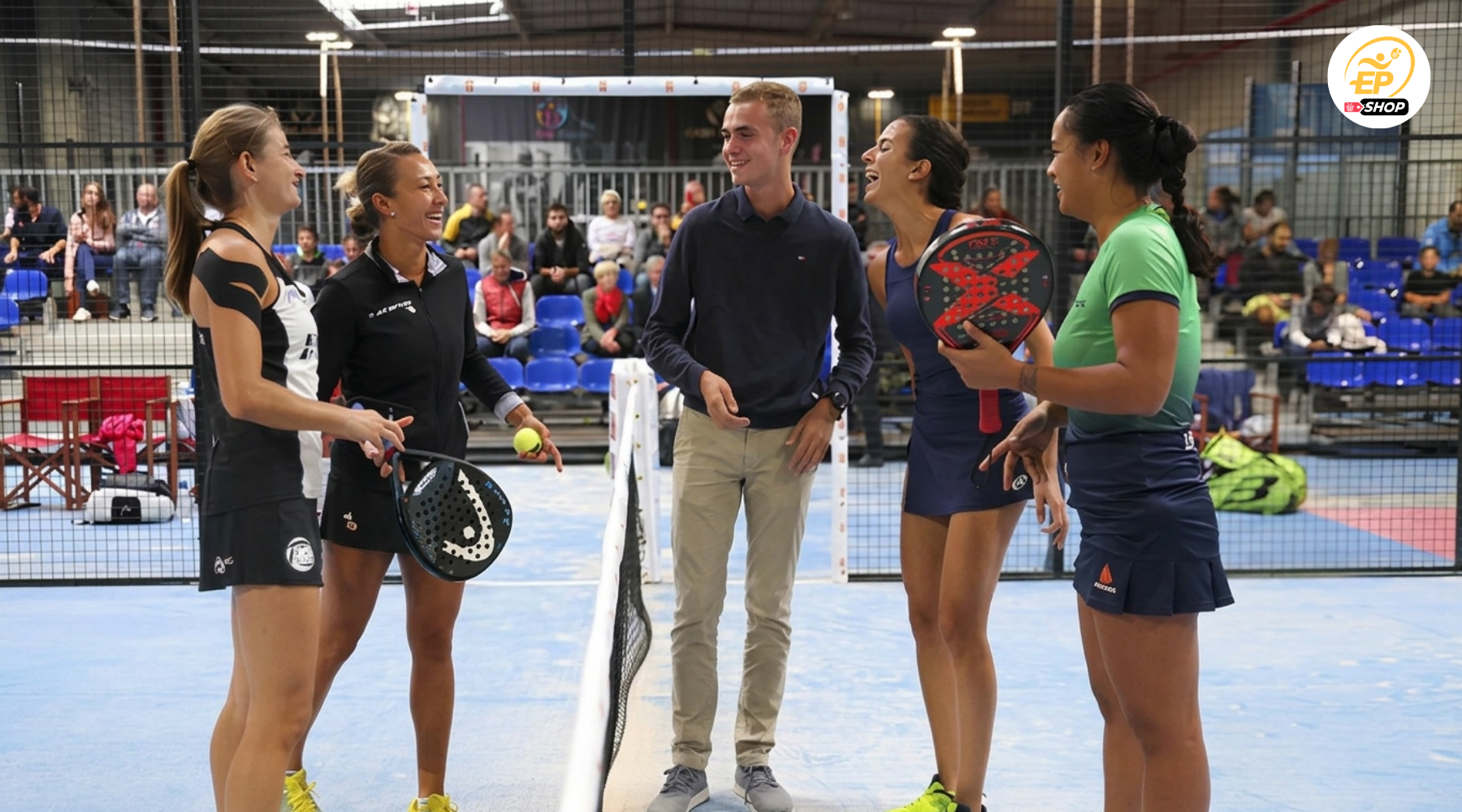
As in all sports, matches must be officiated impartially. In padel, however, the rules are a little different. First, let’s define the umpire’s role. In padel, the chair umpire has a less prominent role than in tennis, since most balls that are out of play are fairly obvious (net or glass). Nevertheless, an umpire is needed for serves and for balls that land between the ground and the glass. At professional level, video review is also available to replay points in slow motion before the umpire makes a final decision. In amateur tournaments in France (non-professional events from P25 to P2000), there are often no chair umpires, and players officiate their own matches. However, an accredited tournament referee must be present for the tournament to be officially approved.
Tournament referees work hand in hand with umpires when they are present. They manage the draws, the allocation of seeds and often the organisation of the tournament. For wheelchair padel, it’s no different: a chair umpire is present and officiates in the same way as in able-bodied competitions, though some rules are different, of course.
The qualities required to become a padel referee
Technical skills
Padel tournament referees (also known as JAPs) have had to obtain a dedicated padel qualification since 2020. Indeed, prior to that, tennis tournament referees (JATs) could officiate in padel. However, the French Tennis Federation (FFT) aims to separate the two disciplines with a view to creating the French Padel Federation. This dedicated training course is available online to anyone over 18 and lasts between 7 and 15 hours depending on initial skills.
For the padel referee (AP) training course, you must be at least 13 years old and pass an internal league examination in order to officiate within that same league.
Both tournament officials and umpires need a thorough knowledge of the rules of padel and the padel glossary so that candidates make as few mistakes as possible.
Interpersonal skills
Beyond keeping score in padel and judging balls, umpires must also resolve disputes between players when they arise and address any behavioural issues on court. They may even have to deal with aggressive people. In every case, they must follow the rules to the letter and do everything they can to ensure the match runs as smoothly as possible for players and spectators.
The tournament referee must also show patience regarding players' reactions. But the key quality of a tournament referee is undoubtedly organisation. You need to be very well organised and focused to draw up the schedule, call pairs on court on time, and ensure the tournament runs smoothly.
Physical fitness
Although the referee must know padel inside out, they do not need to have a background as a player. There is no need for an athletic build. However, it is essential to have a sharp eye as well as quick reaction times to be as accurate as possible. The goal remains unchanged: make as few errors as possible and ensure the match runs smoothly.
Training courses available to become a padel referee
Referee and tournament referee training courses are provided by the FFT as well as the leagues associated with the federation. They have recently become available entirely online and can be taken by anyone wishing to become a referee. Once this test is passed, referees are assigned to the league that issued their qualification and can officiate only within that league (region in France). The tournament referee, on the other hand, can officiate anywhere in France. A tournament referee can also work for a single club if it hosts many tournaments. They are then referred to as an affiliated tournament referee.