FIND YOUR RACKET
 COMPARE MODELS

As we know, padel terminology is often Spanish, the language of the sport’s country of origin. You’ll often hear about the Bandeja and Vibora, but what are they, and how do you play them well? Our team of specialists, with welcome help from François Authier, a top 10 player in France, has taken a closer look at these shots. Master them, and you could take your game to the next level.
High balls are very common in padel, particularly when you lob an opponent to push them to the back of the court. But when the lob falls short, you have several options to avoid losing your position at the net. The first is the smash. It’s often the first choice, especially if you come from tennis, but it isn’t necessarily the most effective. A well-placed shot with the right amount of spin can make life much harder for your opponent. That’s where the Bandeja and Vibora come in.
The Bandeja: ideal for pushing your opponents back.
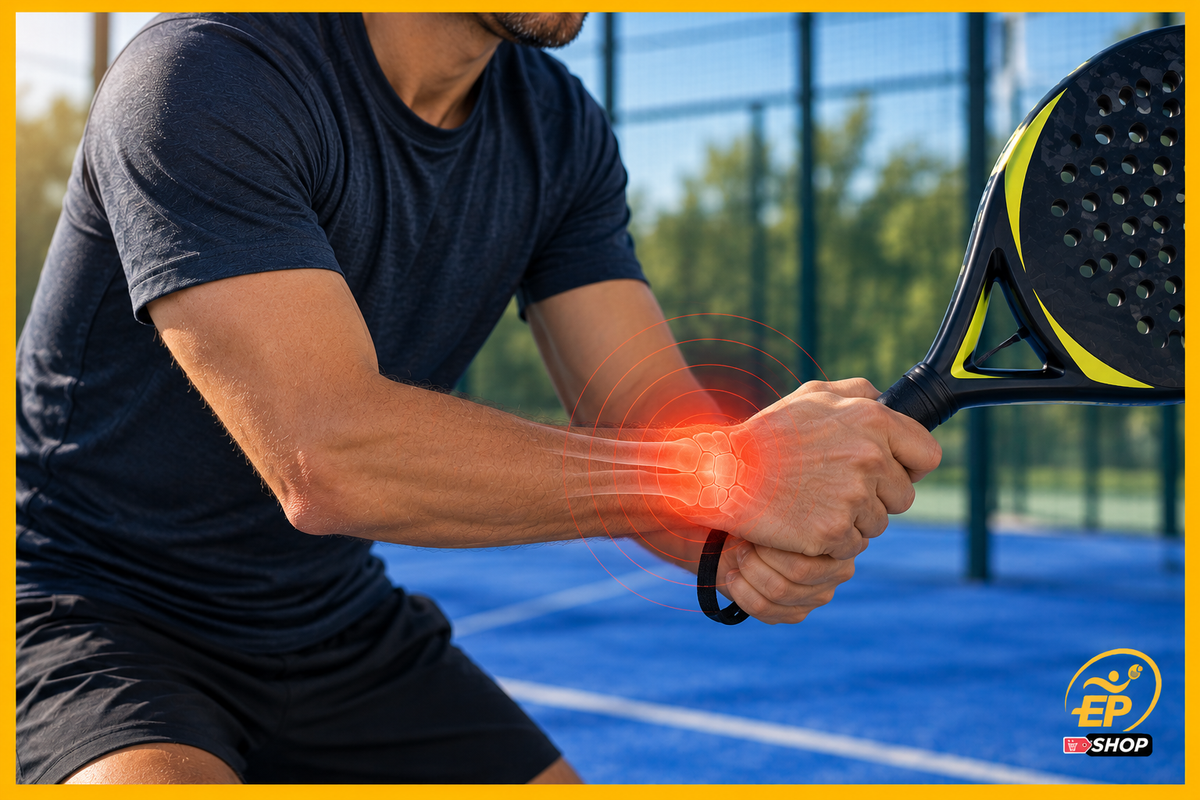
The Bandeja (Spanish for tray) is a primarily defensive shot, used to hold your position at the net and make it harder for your opponent to return the ball. Prepare with the racket at head height. The Bandeja can be played flat or with slice, but the racket should be held in a tray-like position to make the shot as safe as possible. Then follow through with the ball to improve your accuracy and place it where you want, finishing with your arm across your body. Keep your wrist firm throughout.
To illustrate all this, here’s a video featuring Sanyo Guiterrez, world number 5, to help you understand how to play this shot:
The Vibora: put your opponents under pressure.
Unlike the Bandeja, the Vibora is an attacking shot, used to finish points or at least create chances to do so. It requires a different preparation: bring the racket behind your head to put as much spin as possible on the ball and surprise your opponents when it kicks off the glass. For the Vibora (Spanish for viper), take the ball later, as it is dropping, so it skims the net and keeps the bounce low. Accent your wrist movement at the end of the swing to generate spin that stops the ball rising after the bounce.
To help you hit your best Viboras, here’s an instructional video featuring Sanyo Guiterrez, who has one of the best Viboras in the world:
Thanks to this article, you now know all about the Bandeja and Vibora. These two shots are padel essentials. To progress beyond a certain level, you need to master them, and having a racket that suits your style will help you improve your game! For help choosing one, don’t hesitate to contact one of our experts.
Discover more articles on different padel shots, such as the smash out of the court, on our Padel Blog.