FIND YOUR RACKET
 COMPARE MODELS

Like many padel players during lockdown and the restrictions, I missed padel — a little, a lot, like mad.
Our legs were itching to move, and our eyes kept drifting towards our padel gear left by the front door "just in case".
Sometimes we’d do a few little hops, as if preparing to return a shot, or swing an imaginary forehand; the more technically minded might practise a bandeja, or even a perfectly timed rotation.
Some even subscribed to the World Padel Tour YouTube channel to keep visualising the game.
In short, we missed padel like mad.
For many of us, padel is, of course, about having fun — a game with friends followed by an aperitif — but it’s also about the adrenaline of competition and tournaments. Whatever the P ranking, what matters is the concentration, the tension, the joy of winning and the bitterness of defeat.

There’s just one thing that takes the shine off it all, at least for me as a former tennis player and a sportsman in my forties (and then some…): the pace of tournaments and playing match after match. Yes, three, four or five matches in a weekend is often hard for most of us to manage. The number of times I heard "I’m dead" on the courts at our latest tournament last weekend confirms it...
With the first "Los Maestros", the over-45s tournaments at Esprit Padel, and the over-55s coming soon (we haven’t settled on a tournament name yet, so ideas are welcome), I thought it was time to share my "experience" and give you four tips for getting through a weekend tournament AND still being able to walk on Monday morning.
Tip no. 1: Sleep, hydration and nutrition
Nothing revolutionary about this first tip. It’s simply about preparing and looking after your body before a demanding bout of exercise — at least, if you run around the court.
Sleep:
Sleep is the best way to ensure your body is rested and ready to perform. So avoid staying up all night, have a little soup and get eight to ten hours’ sleep.
When you wake up matters too: if you’re due to play at 10 a.m., you need to wake up two hours beforehand to give your muscles time to get going.
Hydration:
Staying properly hydrated during exercise is especially important — and no, I’m not talking about a post-match beer.
Start preparing before the competition by drinking regularly from the moment you wake up.
Once you start playing, drink from the outset and then take two or three small sips at least every 10–15 minutes. You should drink a minimum of one litre of water per hour of sport.
If you don’t take this seriously, a range of consequences can follow, some more serious than others:
- A 1% drop in body water reduces muscular efficiency by 10%
- Fatigue sets in quickly when you’re dehydrated
- The risk of muscle injury rises quickly, particularly in the calves of padel players

To replace the minerals you lose during exercise and get a boost while you play — thanks to the sugar — sports drinks can be a good idea. But be careful: they mustn’t be your only source of hydration! If you drink sports drinks, you also need a bottle of water and should drink both regularly.
Nutrition:
Nutrition is an extremely complicated subject, and I’m not really qualified to give you a definitive lesson on it. Still, here are a few pointers to guide you:
- Carbohydrates should take priority
- Protein helps muscles function, but you should favour lean sources of protein
- Fat should be limited
- Choose foods according to your intolerances, of course
The goals are simple: have enough energy throughout the activity, even when it involves bursts of effort, reduce recovery time and improve recovery.
Tip no. 2: Warming up and stretching
Warm-ups:
Ah, warm-ups… Most of the time, ours amount to hitting a few balls on the court just before starting a match, with all the intensity a padel match can bring…
That’s not what you’d call a warm-up.
The aim of a warm-up is to prepare your muscles, joints, ligaments and brain for the effort ahead.
Just as you did as a child, start by moving all your joints: ankles, knees, hips, wrists, elbows, shoulders and neck. Work your way up from your feet to your head. Once you’ve loosened up, it’s time to warm up those muscles. To do that, simply jog, then move through a series of drills: "heel flicks", "high knees" and "cross-steps". Finally, if the club hosting the tournament has the facilities, 10 minutes on an exercise bike will complete the ideal warm-up. Then all that’s left is to step onto the court and catch your opponents cold…
Stretching:
Contrary to what you might think, stretching immediately after a match is not recommended. In fact, it can make existing tiny muscle tears worse! The endorphins produced during exercise may mask the pain from these injuries, and stretching could aggravate them. So be careful!
On the other hand, stretching well after exercise, for example in the evening between the qualifying rounds and the main draw, will leave you feeling relaxed, but it will not improve recovery. For that, nothing beats a really cold shower to reduce inflammation caused by tiny muscle tears… Other products I’ll discuss later can help with this too.
Tip no. 3: Know your weaknesses and use the right gear to protect yourself
That’s both the advantage and the disadvantage of being over 40. We have weak points and we know what they are — in theory, at least.
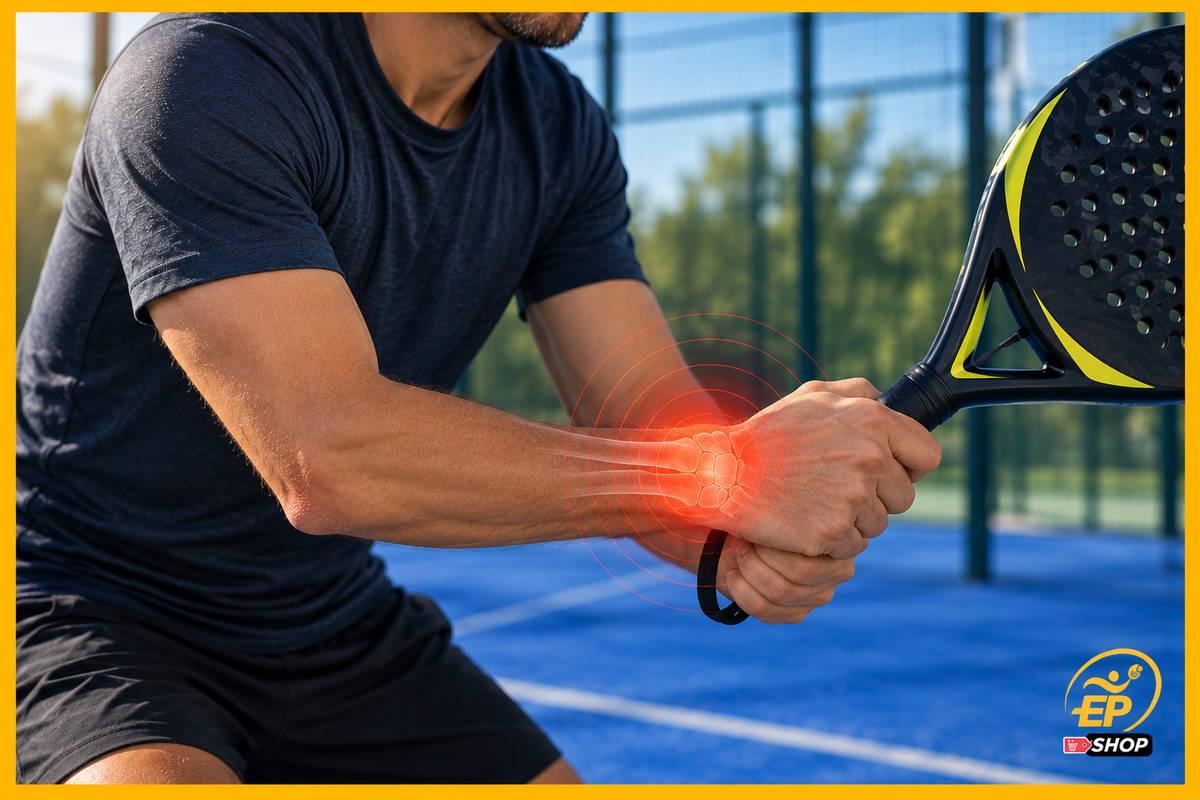
Many of us have had injuries of varying severity: cruciate ligaments, menisci, recurring adductor or back injuries, or pain in the arm — wrist, elbow, shoulder… I won’t give you an exhaustive list, but these problems vary widely from player to player and, to top it all off, often come together.
Knowing your weak points means you can act before they become unbearable. For example, ligament problems are often less severe when you stay properly hydrated throughout the day — and I’m not talking about pints of beer, obviously! It costs very little and is highly effective.
At Esprit Padel Shop, we’ve created a health and prevention section to guide you towards products we’ve tested and approved. I’ll leave you to take a tour and find what suits your needs. If you can’t find what you’re looking for there, it’s worth taking a tour of Sport-Protech by Yann Obitz.
Right, here goes: these are the two products I consider essential for playing padel and that save me a lot of discomfort after matches.
The first, more discreet and therefore easier to accept, is the cross-compression shorts from Mc David. In short, their compression technology helps support and stabilise your adductor muscles. It’s like having strapping applied by a sports physio. Essential for avoiding those minor (or major) aches during and after exercise!
The second product attracts far more teasing because it’s more visible and more of a sign of getting older — but hear me out! I’m talking about CEP recovery socks. It sounds like magic, but I’ve tried them and it’s real: these socks help muscles warm up faster, minimising the risk of injury. They also reduce post-exercise muscle soreness, helping you play again the next day — ideal for tournaments!
The value of these products is increasingly recognised: you see them more and more at tournaments, especially, of course, in the over-45s events (and soon the over-55s!).

Depending on your weak points, there is protective gear for every part of the body. My advice is to forget what other people think and protect yourself!
Tip no. 4: Equipment to help you recover
I’m going to talk about equipment, but first, the basics of recovering well after a day of tournament play. One little thing I discovered fairly recently to help avoid feeling sore the next day (you never know, you might make it to the quarter-finals or semi-finals...) is BCAAs. I’ll leave you to look them up on the internet; we have some at the club. They’re amino acids that our bodies can’t make themselves (valine, leucine and isoleucine)
The key things to remember about taking them are that it:
- reduces muscle breakdown,
- minimises the depletion of glycogen stores,
- reduces the effects of ‘central nervous system fatigue’.
If some people prefer to avoid pharmaceutical products, I recommend looking at massage equipment, from simple Blackroll rollers to more sophisticated devices such as the Flowfeet foot massager, with the Flowgun massage gun in between. They all have the same aim: to help muscles relax, promote blood circulation and significantly improve recovery. There is a psychological benefit too: taking good care of your body does your esprit good and helps you return to the court feeling refreshed for the rest of the tournament!
Note: an update after two tournaments back in action
I’ve just reread the article, and I still stand by every point.
But it’s clear I left out something very important... physical preparation...
Given the state I was in after the first day of each of my first two tournaments back, I know I need to work on my fitness a bit. I intend to share what I learn with you, but that’s for another article, where I’ll explain what I’ve done and how it has affected my performance...
See you soon!

Sébastien Cornet, founder of Esprit Padel