FIND YOUR RACKET
 COMPARE MODELS
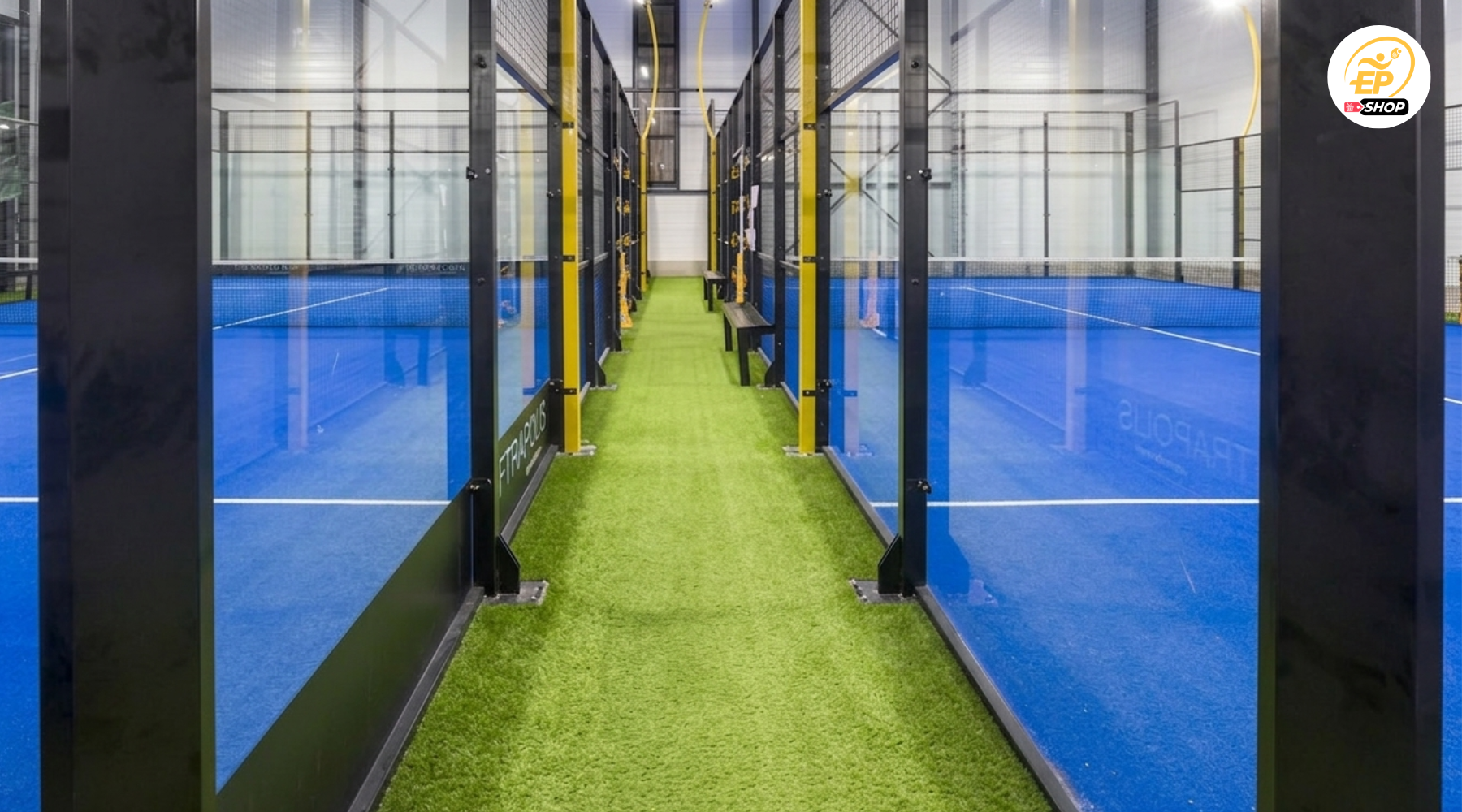
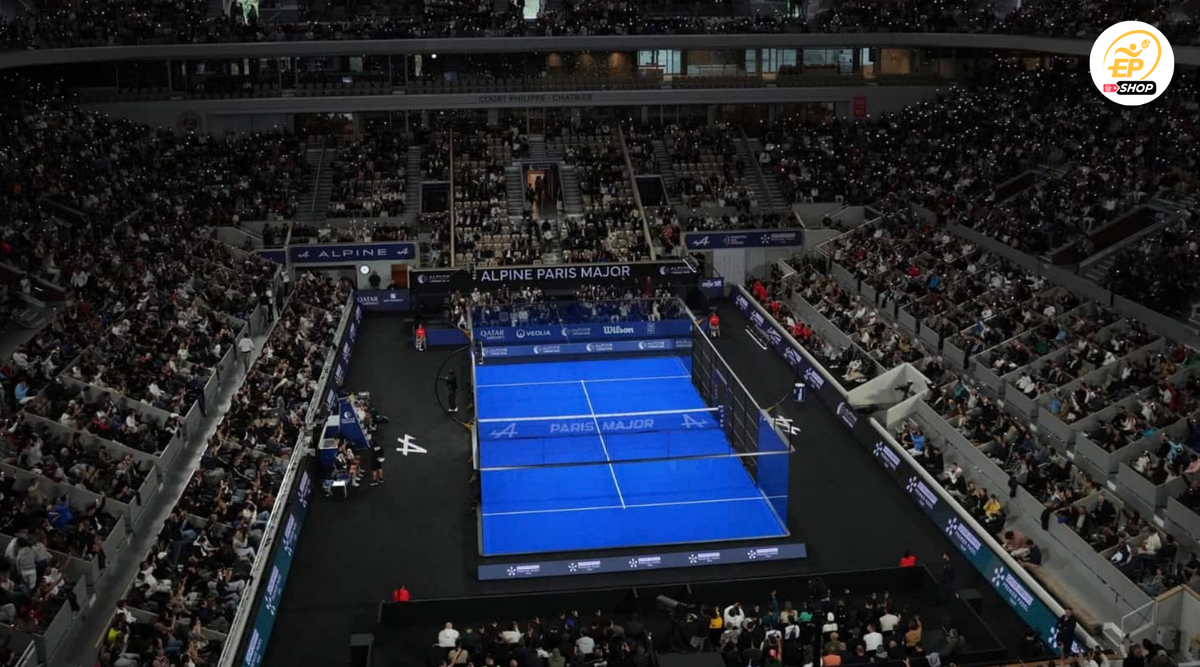
For any padel enthusiast, the padel court has a certain magic: the clear glass, the bright lighting highlighting the turf colour—all the ingredients come together to showcase the players during a match.

It is no coincidence that all of us have stopped to watch matches, whatever the level of play.
The play is beautiful because the stage is magnificent.
In this article, I will detail the differences found across existing structures, along with their pros and cons. Everything you need to get great-looking courts...
Synthetic turf (and not carpet…)
There is plenty to say about synthetic turf, and naturally so, as it heavily influences gameplay. I won't go into colours, of course—everyone is entitled to their opinion (even if anyone with good taste prefers blue courts…).
In the not-so-distant past, the main question for court turf was choosing between poly and monofilament. But with the arrival of "sandless" carpets, this distinction shifted towards whether turf has sand or not.
Let's clear things up right away: no, these carpets (like Mondo's Supercourt XN) are not truly "sandless". This new texturised fibre technology significantly reduces the amount of sand required to "protect" and stabilise the carpet fibres.

The consequences of this reduction in the amount of sand on the turf are numerous.
You might think I'm obsessing, but the first is visual: the colour of the courts is more intense, more vibrant, and therefore more enjoyable to play on.
The second is more relevant to club managers. Less sand means less sand in players' socks, and therefore less sand in the showers, and so? Well, fewer blocked drains.
Another pleasant aspect for managers is less court maintenance (mind you, I didn't say no maintenance!), even if adding sand regularly remains necessary. Without this added sand, the courts could sound hollow over time.
The final consequence, and not least, is that the game is slower on "sandless" turf, and sliding is no longer possible. As a result, ball manufacturers have had to design livelier balls, such as the Head Pro S, the Babolat Tour or the Bullpadel Master, to satisfy fans of par 4s and other par 3s... The end of sliding has brought another equipment evolution: clay court shoe outsoles have given way to mixed studded and herringbone soles, as seen on Babolat's Premura or the Hack Hybrid Fly.

Court structure: panoramic or classic


Lighting: LED / Halogen
The finishing touch is lighting the whole thing.
Let's dwell for a moment on the different shapes of the light posts. The various options—straight, curved, or V-shaped—each give a distinctive look to the court. It is worth noting that more and more indoor clubs are choosing to light courts directly from the ceiling.
In reality, the choice between LED and halogen is barely a question anymore.
Halogen lighting is poor quality, yellowish in colour, slow to warm up, and very energy-hungry.
In contrast, LED lighting is very white without being glaring, instantly reaches max power, and uses far less energy than halogen.
The amount of light across every part of the court is strictly regulated by the FFT and must reach 300 lux without too much variation between different points.
Currently, the best solution to achieve this result is to install eight 200W spotlights per court
Further details
My goal was not to make a buying guide, but rather to describe the different elements needed to create a "great-looking" padel court.
I would still like to mention a few points where caution is advised. I recommend paying close attention to the quality of the screed under the turf, as it can cause numerous complications.
The quality of the steel, especially if the court is outdoors and exposed to the weather, is also an essential aspect.
If you have any other questions, you probably know how to reach me...

Sébastien CORNET, Founder of Esprit Padel