FIND YOUR RACKET
 COMPARE MODELS
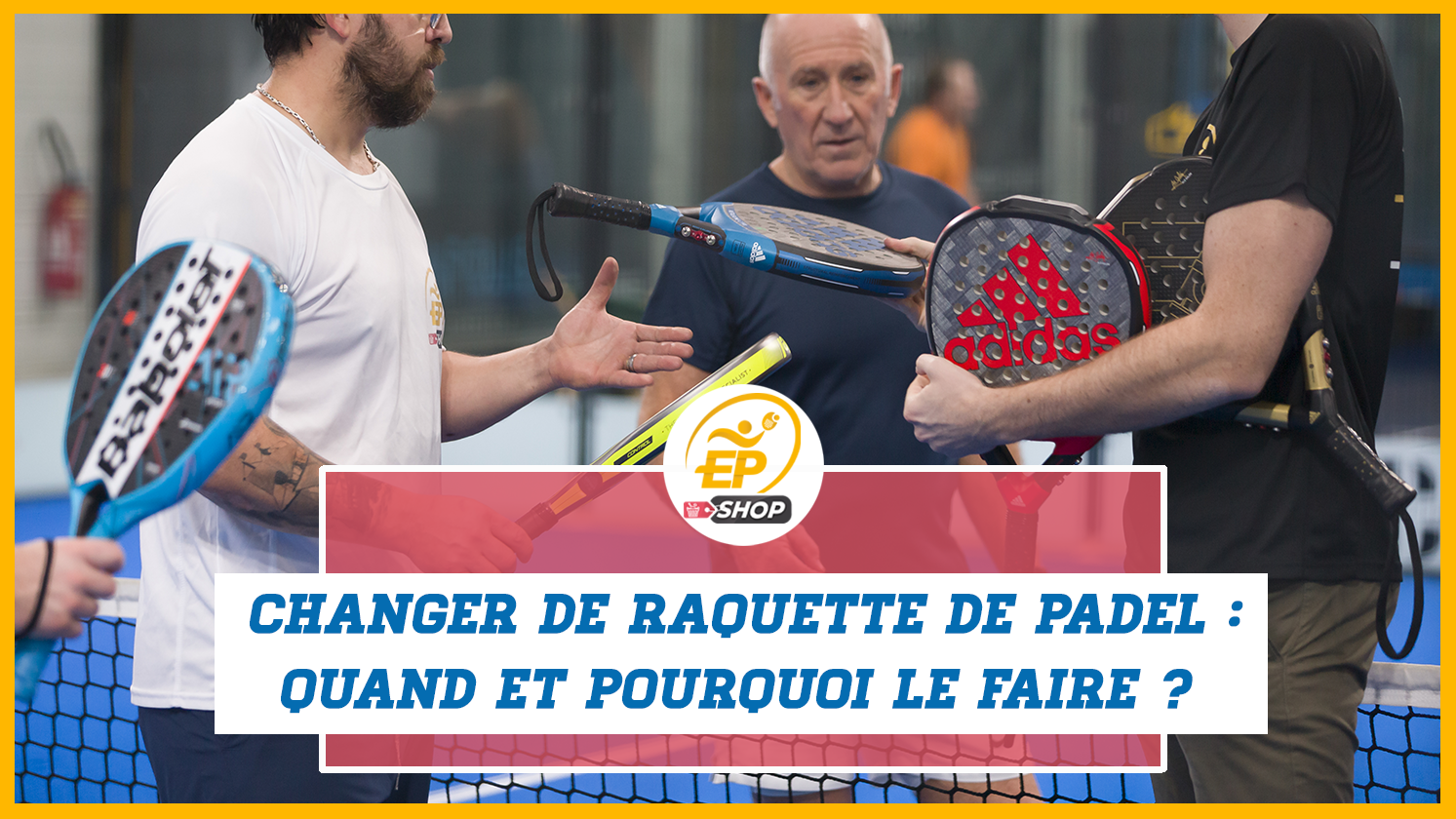
Choosing a padel racket is, as we know, quite difficult. You need to take several factors into account and find your way among the hundreds of models and dozens of brands available on the market. After reading through the many articles from Esprit Padel Shop, you have finally found your holy grail and your pala satisfies you completely. But some questions remain: When and why should you change your padel racket? Should you get the same one again? What are the signs of weakness in a pala? These are the questions we will answer in this article.
Evolution of playing level: so that your padel racket keeps up with your progress
It is every padel player's goal: to improve. Whether through lessons or simply by playing often, a beginner's learning curve is often exponential. You therefore need to adapt your equipment accordingly, starting with the racket. Beginner rackets are often easy to play with, comfortable and forgiving, but can sometimes lack punch or advanced technologies. That is why, once they reach a certain level, players need a better racket to keep improving.
Among all the parameters of a racket, changing the face material is very important when choosing a racket. Beginner palas are often made of fibreglass, whereas more advanced rackets are made from a carbon/fibreglass blend or entirely from carbon. This new element adds stiffness to shots, for greater power and precision, while slightly sacrificing the playing comfort beginners need.
Evolution of your playing style: more control, power or versatility?
Over the course of a player's career, it is not uncommon to see them change their playing style. Whether to adapt to a partner or simply out of preference, switching from a power player to a control player or vice versa is quite common. To make the transition as smooth as possible, it is often necessary to change rackets.
And the main feature to change is the racket shape. If you need more manoeuvrability and ball control, opt for a round racket. With their balance close to the handle, round rackets are ideal for controlling most of your opponents’ shots and sending the ball where you want. With a diamond shape, you can use the weight at the head of the racket to deliver powerful smashes and viboras. The intermediate, teardrop shape has its balance in the centre of the face and sits between the other two shapes.
Wear and tear: rackets do not last forever…
It is perfectly normal for a racket to wear out and become damaged over time, like any other product. Depending on how you use it and how often you play, time takes its toll and can affect a racket's performance. The foam can, for example, soften, causing it to lose density and therefore effectiveness. To ensure your racket delivers the best possible performance, you need to replace it regularly according to how you use it; as soon as you feel your racket is different day after day, it is time to part with it! Allow around 5 to 6 months for a semi-professional player who plays several times a week, 1 year for an intermediate player who plays once a week, and a year and a half or even 2 years for beginner players. Unless the racket breaks against a wall…
Breakage: frustration or manufacturing defect?
Sometimes a pala breaks and can no longer be used because the crack reaches the core of the racket and affects the frame and foam. Two main causes are often mentioned. The first is an impact that is too severe against glass or fencing, which cracks the frame. In this case, there is no secret: you need to replace the racket. The other possibility is a manufacturing defect. As all palas are handmade (which is why the weight can vary from one model to another), manufacturing defects can sometimes occur and abnormally damage your racket. But do not panic, we are here for you. Our after-sales service takes back all rackets affected by manufacturing defects and replaces them with new ones, all as quickly as possible and free of charge. Visit the Returns Policy section on our Esprit Padel Shop website!
So, how can you extend the lifespan of your pala?
There are several ways to help your racket last longer. First, avoid taking your frustration out on it! You might not think it, but that is often why padel rackets break so quickly. Then there are accessories such as frame protectors that stick to the edge of your racket and reinforce it. Ideal for shots hit too close to the glass walls and mesh fencing.
One of the greatest threats to a padel racket, and especially its foam, is extreme temperatures and temperature changes. So avoid leaving your racket in the boot of your car, for example, in winter or summer. The solution to help prevent damage to your racket: padel bags. Most padel brands offer bags with insulated compartments, ideal for storing rackets and protecting them from these temperature changes that affect the foam as well as the frame, which can then break much more easily.
Moisture is also a danger, particularly for the foam, which can swell and make your racket much harder to play with. To keep moisture away from your racket, store your padel bag in a dry place. If you play outdoors, rain will not directly damage your racket, but you should dry it thoroughly with a towel to prevent water from seeping into the foam. It is also important to protect your racket from the sweat in your clothes after a session. That is why we recommend keeping them separate using the bags’ different compartments.
Padel rackets are fragile items that need to be looked after so they last as long as possible while delivering the best possible performance. As mentioned above, they need to be replaced regularly and well protected to preserve their qualities!